Fugitive lab owner extradited to US over alleged $547m Medicare cancer testing fraud

A laboratory owner who spent more than three years as a fugitive has been returned to the United States to face charges over what prosecutors describe as a nationwide scheme to bill Medicare $547 million for medically unnecessary cancer tests.
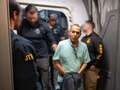
Khalid Ahmed Satary, 54, was arrested on July 20 by unnamed “regional partners” in the Middle East while carrying a fake Mexican passport under a false name, the U.S. Department of Justice said this week. He appeared in federal court in Virginia and faces health care and wire fraud, kickback, and money laundering conspiracy charges. He has not been convicted, and the most serious counts carry up to 20 years in prison.
Between 2016 and 2019, prosecutors say, Satary controlled Clio Laboratories in Georgia, Performance Laboratories in Oklahoma, and Lazarus Services in Louisiana. Patient recruiters and telemarketing call centers targeted Medicare beneficiaries by phone and at health fairs, while telemedicine doctors allegedly approved cancer genetic tests without treating and often without even speaking to the patients.
Samples were then sent to the laboratories, where a single test could generate between $10,000 and $20,000 in Medicare reimbursement, according to prosecutors. Recruiters and doctors allegedly received kickbacks for generating samples and orders.
Records cited by The Atlanta Journal-Constitution included a message in which Satary said Clio had received $8,000 per test and an email offering $1,200 for each comprehensive test referral.
Most of the claimed amount came from Performance, which prosecutors said billed Medicare $413 million after enrolling as a provider in late 2018. Clio allegedly billed $121 million and Lazarus at least $13 million.
The $547 million figure is the amount billed, not what the laboratories collected. A 2020 federal court order summarizing the indictment said Medicare paid Satary’s network about $134 million. The latest Justice Department statement does not provide an updated total for paid claims, recovered money, or affected patients. Acting Attorney General Todd Blanche said the scheme “preyed on thousands of elderly patients.”
Satary was originally charged during Operation Double Helix, a 2019 crackdown in which 35 defendants allegedly billed Medicare more than $2.1 billion for unnecessary genetic tests. The wider network solicited hundreds of thousands of elderly or disabled people nationwide, according to the Justice Department. Patients often never received their results, or the results were of no use to their treating doctors.
TheAtlanta Journal-Constitution reported that Satary, who was born in Gaza, arrived in the United States on a student visa in 1992. He served more than three years in prison after pleading guilty in a counterfeit-music case, then built a network of medical laboratories.
Prosecutors opposed his release after the 2019 indictment, but Satary was freed on a $500,000 cash bond and barred from health care work. He allegedly continued working with Houston laboratories, missed a December 2022 court hearing, and fled. The FBI added him to its new Most Wanted Fraudsters List on June 23, and he was captured less than a month later.
The arrest was announced by the National Fraud Enforcement Division, created in April. Under the order establishing the division, its head assumed operational control of the existing Health Care Fraud Unit; the structure was not created specifically for Satary’s case.
In a separate case, Florida laboratory owner Daniel Hurt agreed to pay more than $27 million in restitution after admitting that he used telemarketers and kickbacks to generate thousands of medically unnecessary cancer genomic tests, for which Medicare paid over $25 million.

Technology & Business Editor
Read more similar news:
Comments:
comments powered by Disqus