New technique that can detect dementia while you sleep developed by scientists
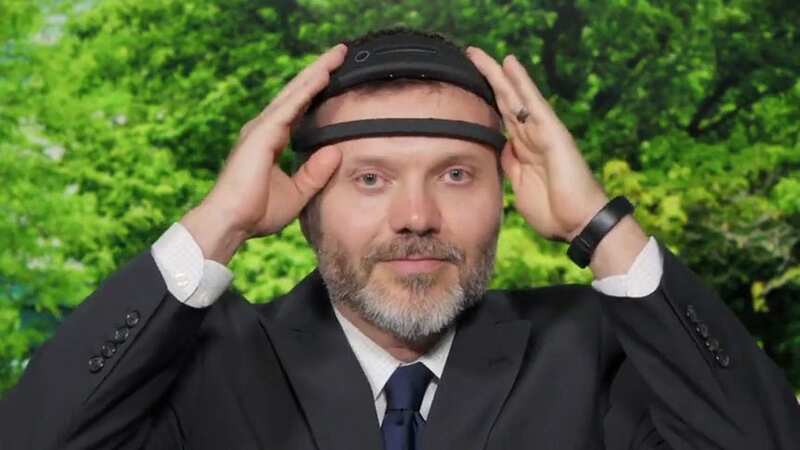
A headband that can detect early signs of Alzheimer’s disease whilst you sleep has been developed by scientists.
The device monitors brainwaves and can flag up signs of the disease years before a diagnosis. Described as a fitness tracker for the brain, it can pick up the earliest stages of the disease before any symptoms are present.
The study from researchers at University of Colorado Anschutz Medical Campus and Washington University in St. Louis and published in the journal Alzheimer's & Dementia is the largest of its kind to date.
The team used electroencephalography (EEG) from the headband to detect brain wave patterns related to memory reactivation in sleep. Their results identify a relationship between EEG readings and levels of specific molecular changes indicative of pre-symptomatic Alzheimer’s disease.
 The device monitors brainwaves and can flag up signs of the disease years before a diagnosis (SWNS)
The findings further demonstrate that early stages of mild cognitive impairment due to Alzheimer’s disease can be detected in the EEG signals.
 England star Joe Marler reflects on lowest point after fight with pregnant wife
Dr Brice McConnell, assistant professor of neurology at the University of Colorado School of Medicine and study senior author said: “This digital biomarker essentially enables any simple EEG headband device to be used as a fitness tracker for brain health.
“Demonstrating how we can assess digital biomarkers for early indications of disease using accessible and scalable headband devices in a home setting is a huge advancement in catching and mitigating Alzheimer’s disease at the earliest stages.”
Researchers analysed data from 205 ageing adults, identifying measurable problems with memory reactivation in association with levels of proteins such as amyloid and tau that build up in Alzheimer’s Disease.
 Dementia has been known to destroy families (SWNS)
Dr McConnell said: “What we found is these abnormal levels of proteins are related to sleep memory reactivations, which we could identify in people’s brainwave patterns before they experienced any symptoms.
“Identifying these early biomarkers for Alzheimer’s disease in asymptomatic adults can help patients develop preventative or mitigation strategies before the disease advances.”
Researchers say this is an exciting step towards using wearables as digital biomarkers for disease detection.
Dr McConnell added: “We are just scratching the surface with this work, paving the way for affordable and easy-to-use devices to monitor brain health.
 The headband in all its glory (SWNS)
“This is proof of principle that brain waves during sleep can be turned into a digital biomarker, and our next steps involve perfecting the process.”
Many studies suggest that diet is a huge impact factor on the brain's ability to think and remember, one of the most noticeable things to go with dementia. The findings have led to research on eating patterns and whether they might make a difference, says the National Institue on Aging (NIA).
The NIA have suggested the Mediterranean diet or the related MIND diet, which have been associated with cognitive benefits in studies. These emphasise fruits, vegetables, whole grains, fish, and other seafood. It should also include unsaturated fats such as olive oils with low amounts of red meat, eggs, and sweets.
 'So fed up of tiresome pal flirting with my husband and always putting me down'
A variation of this, which is more dementia focused, is called MIND (Mediterranean–DASH Intervention for Neurodegenerative Delay). DASH (Dietary Approaches to Stop Hypertension) diet has been shown to lower high blood pressure, a risk factor for Alzheimer’s.
The 10 healthy food groups as proscribed by the MIND diet is:
- Leafy green vegetables, at least 6 servings/week
- Other vegetables, at least 1 serving/day
- Berries, at least 2 servings/week
- Whole grains, at least 3 servings/day
- Fish, 1 serving/week
- Poultry, 2 servings/week
- Beans, 3 servings/week
- Nuts, 5 servings/week
- Wine, 1 glass/day*
- Olive oil
The MIND diet limits servings of red meat, sweets, cheese, butter/margarine and fast/fried food. The amount of alcohol is also limited as the body handles booze differently as you age.
Read more similar news:
Comments:
comments powered by Disqus