Buckingham Palace advertises £50,000-a-year job close to King Charles' heart

King Charles is recruiting a £50,000-a-year carbon emissions expert to work at Buckingham Palace.
The new expert will keep an eye on the greenhouse gas output at the King’s London home. An advert for the job posted online says: “Duties will include providing carbon footprint data tracking, reports, and work to improve data accuracy for all company emissions.
“Whilst the key focus of the role will initially be on our GHG emissions, this will likely expand to other environmental, social and governance initiatives which you’ll help drive forward.” The official job title is sustainability data reporting manager.
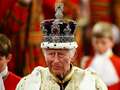
 King Charles is a lifelong environmentalist (Getty Images)
The job advert continues: “The Royal Household is placing environmental sustainability at the very forefront of all we do. We are dedicated to reducing our impact on the planet, with immediate action focused on reducing our carbon emission and energy usage, and achieving a carbon zero state.”
The King, 74, is a lifelong environmentalist with a long history of campaigning for better conservation, organic farming and tackling climate change. He proudly owns an Aston Martin which has been modified to partly run on bioethanol made from surplus English white wine and cheesemaking whey, with a mix of 85% bioethanol and 15% unleaded petrol.
 Kate Middleton swears by £19.99 rosehip oil that helps 'reduce wrinkles & scars'
 The job pays £50,000 (DPA/PA Images)
And about 90% of the energy for his office comes from renewable sources, with half of that generated on-site from solar panels, biomass boilers and heat pumps, and the remainder using electricity and gas bought from renewable sources.
Read more similar news:
Comments:
comments powered by Disqus