Holiday warning as virus-carrying mosquitoes immune to bug spray invade Europe
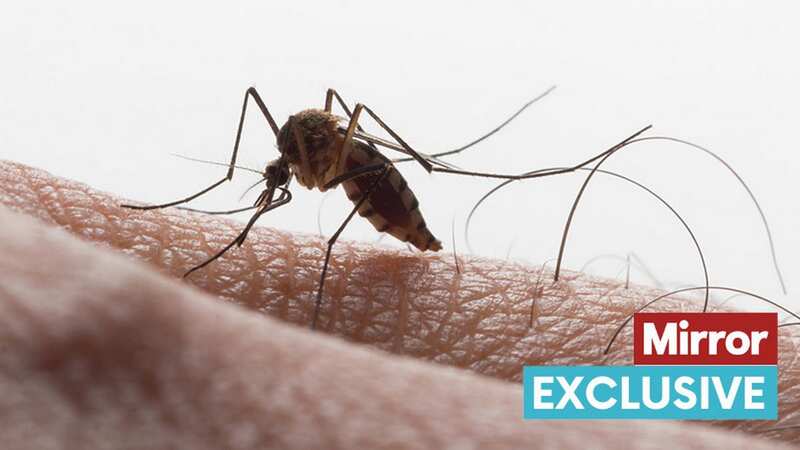
Holidaymakers heading to Europe have been warned of a rise in rare virus-carrying mosquitos that cause paralysis - and may be immune to bug spray.
Popular holiday spots like France and Greece have been hit with a wave of new cases from the Culex Modestus tropical mosquito which is a known carrier of the West Nile virus (WNV).
The mosquito causes an illness that used to be mainly associated with central Africa, but recently it has been spreading through Europe and caused three deaths this year.
Professor Alain Kohl told the Mirror: "I think without a shadow of a doubt, we will see a lot more West Nile in parts of Europe."
More frequent heatwaves and flooding as a result of climate change have created more advantageous conditions for the pests. In Italy 25 cases of WNV have been reported this year, followed by eight in Greece and three in France. There have been two deaths in Greece and one in Italy so far this year, with close to 100 last year according to the European Centre for Disease Prevention and Control (ECDC).
 Eight remote and beautiful but brutal jobs if you want to leave it all behind
 Mozzies are becoming increasingly resistant to bug spray (Getty Images/iStockphoto)
Worryingly, scientists at the Centres for Disease Control and Prevention in America have warned that Culex mozzies have become increasingly resistant to bug sprays. Research has shown that not only are mosquitoes unaffected by the insecticide, but those exposed to it are actually living longer. "You want a product that's gonna be able to knock them down, not do this. It's not a good sign", Roxanne Connelly, a medical entomologist with the CDC told NBC News.
Most cases of West Nile virus do not cause symptoms, but around one in five people get headaches, severe tiredness, muscle aches, vomiting, rashes and eye pain. And around one percent of people get a form of the illness called poliomyelitis syndrome that affects the brain and can be fatal. "It's an infection of the central nervous system and it's effectively a brain infection", Professor Kohl from the Liverpool School of Tropical Medicine told the Mirror. It is an uncommon but serious manifestation of the infection that causes acute flaccid paralysis.
Professor Kohl said the mosquitos carrying the virus are "quite common" and "mainly nocturnal." He urged travellers to wear appropriate clothing, "although mosquitoes can potentially bite through material, so it's a good idea to figure out, if you're going somewhere with West Nile, to wear the right materials." While he did say that it can be a "very severe disease", he also conceded: "It is also not a virus that's really an immediate threat to pretty much everybody who goes out to infected countries."
He continued: "Most people would be very unlikely to be exposed to West Nile that frequently so immunity levels to West Nile are probably genuinely quite low. Not having a higher level of immunity is always a contributor to a virus spreading if you have like an explosive outbreak or an epidemic. So yes, it is always your concern, of course, when a virus moves into a new area, but there's some sort of concern that needs to be levelled against what we can do. Vector control is really one of the pillars of controlling transmission and that's always why preventing is better than curing."
The Culex mosquito has also been found in the UK, in Kent and Essex and the UK Health Security Agency has known that an outbreak of West Nile virus has been possible since 2012, when large populations of this species were discovered in marshes in south-east England. West Nile does not spread from person to person and it is only the Culex mosquitoes that can spread the virus. The bugs become infected when they bite sick birds, then spread the virus to people through another bite. There is no treatment or vaccine.
Read more similar news:
Comments:
comments powered by Disqus