Scientists genetically engineer virgin births in animals in world first
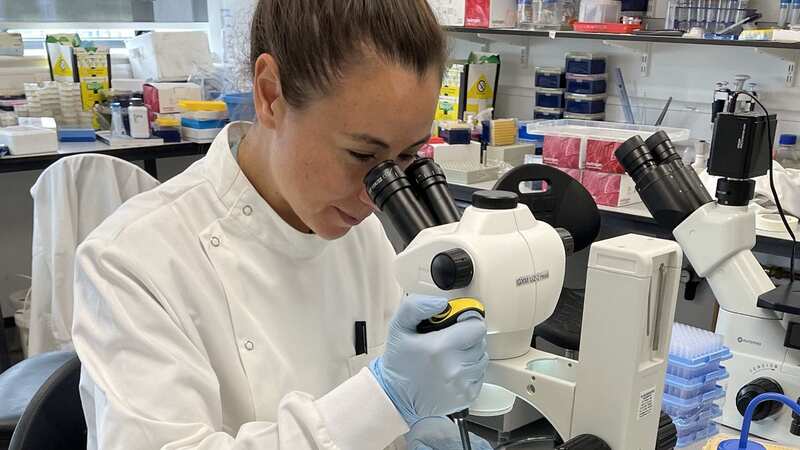
Cambridge scientists have discovered how to genetically engineer virgin births in animals.
The British team are the first to create animals where an egg develops into an embryo without fertilisation by sperm. They altered genes in fruit flies so they could almost clone themselves and reproduce without fathers.
Dr Alexis Sperling, a researcher at the University of Cambridge, said: "We're the first to show that you can engineer virgin births to happen in an animal. It was very exciting to see a virgin fly produce an embryo able to develop to adulthood, and then repeat the process."
The virgin offspring were always female and themselves retained this genetic ability to produce offspring without males. Also known as facultative parthenogenesis, virgin birth has been documented in species of birds, fish, lizards and snakes, and more recently in crocodiles.
It is thought that virgin births can be a survival strategy for species living in isolation and on the brink of extinction. The ground-breaking study acts as a warning that crop pest species could evolve to reproduce much more rapidly - with devastating impacts for human food supplies.
 Furious chimp launches bottle at girl filming him leaving her bleeding at zoo
Dr Sperling said: "In our genetically manipulated flies, the females waited to find a male for half their lives - about 40 days - but then gave up and proceeded to have a virgin birth.” The researchers also found up to 2% of the second generation of female flies with the ability for virgin birth produced offspring, which only took place when no males were around. These flies mated and reproduced when male flies were available.
Dr Sperling said: "If there's continued selection pressure for virgin births in insect pests, which there seems to be, it will eventually lead to them reproducing only in this way. It could become a real problem for agriculture because females produce only females, so their ability to spread doubles."
Dr Sperling said she hopes to eventually investigate why virgin birth in insects may be becoming more common, particularly in pest species. The study, which involved more than 220,000 virgin fruit flies and took six years to complete, is published in the journal Current Biology.
Scientists identified the genes that were switched on or off when females reproduced without males. The offspring of virgin births are not exact clones of their mother but are genetically very similar. Virgin births in animals that normally reproduce sexually are rare and are often only observed in zoo animals when the female has been isolated for a long time.
The research team first studied the genetic makeup of two strains of another species of fly, called Drosophila mercatorum. One of the two strains requires males to reproduce, whereas the other reproduces only through virgin births.
Scientists identified which genes were switched on or off in the strain able to reproduce without fathers. The researchers then alternated what they presumed were the corresponding genes in the model fruit fly - Drosophila melanogaster.
Dr Sperling highlighted that it would have been incredibly difficult to have conducted their experiments on any other animal, as the Drosophila melanogaster has been the model organism for genetics research for decades, as its genes are so well understood.
Read more similar news:
Comments:
comments powered by Disqus