Nigel Farage’s Clacton by-election gamble risks backfiring as Reform faces growing pressure
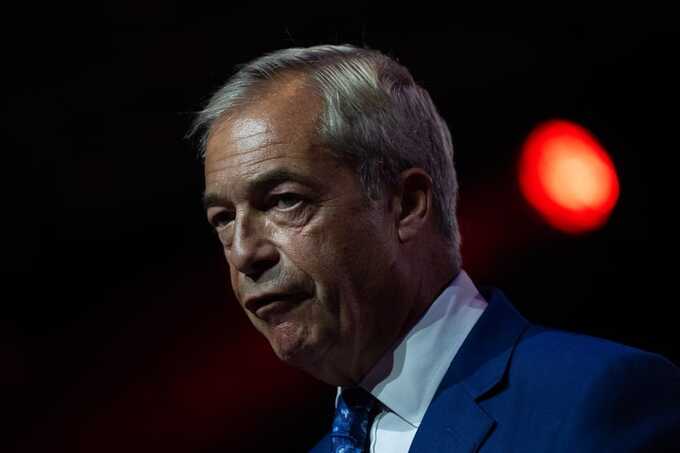
Reform UK leader Nigel Farage’s latest attempt at a political fightback risks becoming an own goal for his political future.
Question is, what does it mean for his growing populist party?
Faced with a parliamentary inquiry into a financial scandal, Farage stunned Westminster by resigning as a member of parliament for his constituency in Clacton, then immediately announcing he would run in the resulting by-election.
The aim was to present the race as a chance for voters — and not parliament — to judge the allegations, but Farage’s strategy quickly unraveled. Rather than take the bait, the country’s main political parties dismissed the exercise as a political stunt and declined to contest the Reform leader’s seat, leaving him to campaign in an increasingly surreal contest against Britain’s fringe candidates.
Chief among Farage’s current opponents is Count Binface. An “intergalactic space warrior” from the planet Sigma IX, Binface campaigns in a silver cape and trash can-shaped helmet on a manifesto that includes capping the price of a 99 Flake ice cream at 99 pence, and granting television presenter Claudia Winkleman’s bangs a listed-building status. Also, Binface is not alone — eight other fringe candidates have also entered the Clacton race.

Farage’s plan was to stage a defining political confrontation, a showdown with the political establishment. Yet his campaign has become one dominated by ridicule.
Of course, there is little reason to believe he will lose. Clacton is Reform’s safest parliamentary seat, and he won almost half the vote there in 2024. Binface, meanwhile, has never secured more than 1 percent in any election.
But the contest has acquired an uncomfortable symbolism for the Reform leader. According to an Ipsos poll, nationally, more people would like Binface to win — which says a lot about the extent to which this by-election has become a vehicle for mocking Farage rather than reinforcing his authority.
And winning an uncontested stronghold against novelty candidates will do little to answer the questions now hanging over both Farage and his party — questions that extend well beyond Clacton.
Reform has been leading national opinion polls since spring 2025, but its support has eased from around 31 percent to roughly 27 percent. And while those numbers are historically strong for the party, they would be insufficient for a parliamentary majority under Britain’s electoral system.
At the same time, Farage’s personal ratings have dipped, and senior party figures increasingly worry about competition on the party’s right — such as from Rupert Lowe’s new Restore Britain party.

arage’s by-election was intended partly to reassert his authority over his party at a time when its internal tensions have become increasingly visible. The party is still integrating its original insurgent leadership with the former Conservative ministers and MPs who defected from the Tory Party in recent months. Public disagreements — including clashes between Home Affairs Spokesperson Zia Yusuf and Treasury Spokesperson Robert Jenrick over deportation policy — have exposed competing visions of how Reform should broaden its appeal. And rather than projecting unity, the Clacton campaign risks reinforcing the perception the the party struggling to manage rapid growth.
More damaging still is what comes after the by-election.
If Farage returns to Westminster, the parliamentary inquiry into his possible failure to properly declare donations will resume. Should the inquiry conclude that he breached parliamentary rules — and should MPs vote to suspend him for at least 10 sitting days — Clacton could face another by-election through the recall process if 10 percent of its constituents sign a petition. And unlike the current contest, that election would almost certainly attract the full participation of the country’s major political parties, creating a genuine electoral test.
Polling already suggests the allegations against Farage have cut through. According to a YouGov survey, around 60 percent of voters believe he behaved improperly over donations. And the danger for Reform here is obvious: A movement built on attacking establishment politics risks appearing vulnerable to precisely the same accusations it has long leveled against its opponents.
This matters because Reform’s central political challenge is no longer mobilizing protest voters — it is broadening its coalition.
To win power, the party needs to lift its national vote share into the 30 percent to 40 percent range by attracting center-right voters who remain hesitant about Farage. Instead, recent weeks have forced Reform onto the defensive, concentrating on holding its existing base together rather than expanding beyond it.

None of this means Reform’s rise is over. The party’s sweeping gains in May’s local elections demonstrate it possesses strength and electoral reach far beyond anything achieved by Farage’s previous political endeavors. And the party still remains well-placed to emerge as Labour’s principal challenger in the next general election.
But that is precisely why the Clacton by-election matters. On paper, it should be one of the easiest victories of Farage’s career. But politically, it risks becoming something altogether different: Not the triumphant relaunch he had hoped for but a reminder that even comfortable victories can leave deeper problems unresolved.
Farage is still likely to have the final vote count. Whether he will have the last laugh is much less certain.

Editor-in-Chief
Read more similar news:
Comments:
comments powered by Disqus