Andy Burnham’s devolution agenda could reshape Britain — if he overcomes Whitehall resistance
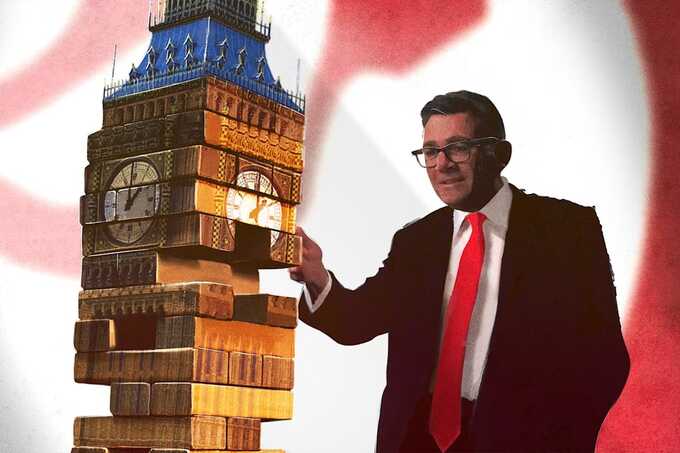
Why does the UK have sluggish growth? Why does the British state struggle to deliver the basics? Andy Burnham has a good and persuasive answer to this question: that government has become too centralised, that too much of what it does is better done by the cities, towns and regions, and that by pushing power out of Whitehall, the country can achieve both a stronger economy and a more effective state.
As reported by FT, while some of his solutions are better than others, Burnham’s overarching thesis is correct. The UK is a world leader in how much government spending is both raised and allocated nationally. The result has been tiers of government without meaningful power or a vested interest in driving up growth. A risk-averse central state hesitates to experiment with policy delivery and frequently ends up with “one size doesn’t fit anyone” policies.
Burnham is far from the first politician to recognise this — without George Osborne, there would be no Greater Manchester mayoralty, and without that, there would be no third act for Burnham, a politician twice defeated for the Labour leadership but who is set to become prime minister by acclamation. Still, he is the first politician to enter Downing Street as a committed advocate for, and beneficiary of, devolution.
However, while this is good news for anyone who wants a less centralised UK, it did not become a champion in centralisation simply due to the lack of committed devolutionists in positions of power. There are strong political forces that drive the centralisation of more and more power in Whitehall — ones that Burnham will have to take great care not to revive.
The first is that, broadly speaking, what strong devolved government needs is large quantities of people, money and power. Creating local authorities or mayors that have all these things often produces boundaries that local people do not like or recognise. As Burnham himself experienced as mayor, not all of Greater Manchester’s constituent boroughs were initially supportive of the idea of the role itself. Managing the complicated politics of where, exactly, devolution will happen is why Sir Keir Starmer’s local government reorganisation hasn’t come to anything much. For Burnham’s to be more successful, he will have to overcome both Whitehall’s centralising instincts and also its well-learnt risk aversion.
When Harold Macmillan’s government created London’s modern boroughs, it did so with far fewer consultations and much less care for local feeling than modern governments. It still took six years to go from the initial blueprint to passing the new boroughs into law, and a further two for the new boroughs to begin administering the capital. Just nine of the 32 boroughs were able to agree a new name for themselves without ministerial interference.
This is where Burnham’s Downing Street of the North is a clever idea. What he needs to do is present the shift of power from Whitehall to city hall as something being done to Whitehall, when the reality is that it will be just as much about doing something to city halls that not everyone will like. Although it is rare to find people who long for London’s older boroughs, not everyone will thank the government for devolution at first.
Tackling British political aversion to risk-taking will have benefits that extend well outside devolution: the same approach that leads to death by a thousand consultations, to departments that take ages to sign off or make decisions, is the one that has to be dismantled. This is true both if Burnham is to succeed in giving power away but also if the central state is to improve at the responsibilities it retains, whether that be building more nuclear power stations or providing genuinely modern defence policies.
One danger is something Burnham is already alive to: that devolution is seen not as empowering the whole country but as the victory of one region over another. He was wise therefore to praise London and to namecheck the South West and the East of England, two regions that Labour’s internal debates about devolution often seem to forget.
But the bigger and perhaps most dangerous obstacle to him is that the shift of power is, in practice, a boost for town centres and cities against the suburbs, which will lose power more often than not at a devolved level. As those same suburbs demonstrated in the 1980s and 1990s, if they find that the new arrangements are not to their liking, they are more than capable of outnumbering the cities at a general election. Burnham’s big task is to make sure that his devolution agenda doesn’t end up creating local government that is powerful, effective, but unloved by middle England.

World Affairs Correspondent
Read more similar news:
Comments:
comments powered by Disqus