Bloomberg investigation exposes how caravan tycoon Bob Bull’s £1.9bn empire collapsed
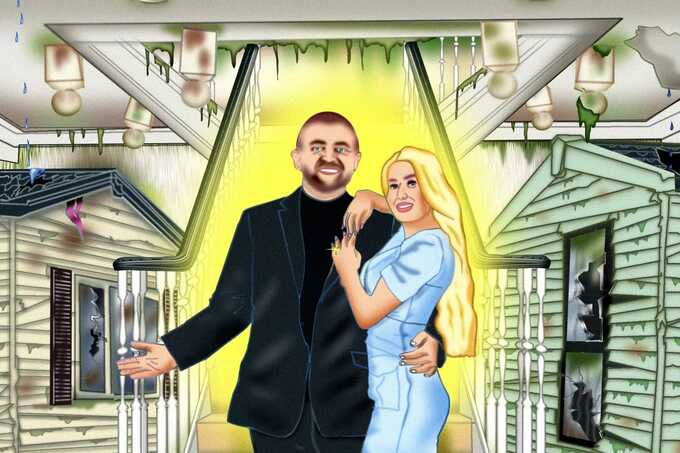
“I’m grateful, but I don’t flash it about,” Bob Bull said.
As Bloomberg reports, he’d just posed for a photo next to the Ferrari parked in front of his mock-Georgian mansion, which had six bedrooms, a swimming pool and a bowling alley. Ten more luxury vehicles were lined up nearby, including two baby-blue Lamborghinis, matching the favorite color of his fiancée, Norwegian model Sara Nilsen. She stood smiling at his side, wearing a thigh-length blue dress and stiletto heels. All the cars had personalized number plates: BULL, S4RA, SAR6S.
Off-camera but displayed prominently on the lawn of his Hampshire estate in southern England, a reminder of the source of Bull’s wealth: a single-story box with yellow slats and a glass door, known to his British customers as a caravan.
Americans would call them mobile homes or trailers. Either way, the idea is that they’re compact enough to move, or cheap enough to offload. The British versions, conforming to the national stereotype, tend to be smaller and less shiny, but they hold a similar promise: the freedom to live as you want, or to leave if you can’t. Caravans were the key to Bull’s estimated £1.9 billion ($2.5 billion) fortune, earning him a place on the London Sunday Times’ 2023 ranking of the richest Britons and this accompanying photo shoot.
Bull, then 45, told the newspaper his long-shot success story. He was born into a family of Gypsies, the descendants of Romani peoples who came to the UK centuries ago and who, unlike their counterparts elsewhere, largely refer to themselves by the term. At 13 he left school to work at his dad’s caravan park, hauling gas canisters. (That is, propane tanks. Disclaimer: The authors of this story are British and will use Britishisms to describe local customs and places. Translations will continue to be provided.)
After Bull’s first venture ended in bankruptcy, at age 38, he bounced back with a new company called RoyaleLife. He acquired hundreds of rural plots, saying he planned to fill them with caravans, or, as he called them, “modular-build bungalows.” This buying spree was fueled by a golden era of private credit, a form of nonbank lending that’s grown into a $1.8 trillion market. Bull borrowed from European private equity houses, a Manhattan hedge fund and a US trailer park giant to transform muddy fields, at least on paper, into valuable residential developments.
British media fawned over Bull, calling him “Bob the Builder,” a reference to the popular UK children’s television show. Claims circulated that he’d created more budget homes than anyone else in the country. RoyaleLife, meanwhile, pitched itself as a purveyor of affordable luxury that was “changing lives for the better,” according to CEOWorld magazine.
Bull reinvented himself in Visionary Founder style. He got a hair transplant, had his teeth whitened and paid for gastric band surgery. When that wasn’t enough to offset his taste for full English fried breakfasts, he started taking Ozempic. Fifty pounds lighter, he donned a black turtleneck for the Sunday Times photo shoot. Only his eyes, weary and wrinkled, showed signs of stress.
Bull worried constantly about the business, Nilsen explained to the paper. “What’s the worst that can happen?” she asked. “You lose everything, f--- it. You’ll still have me.”

Even as Bull made his rich list debut that May, creditors were pursuing his companies in court. Three months later, a judge found that one of his key operating entities was “hopelessly insolvent.”
Six months later, it collapsed. By the end of the year, he was declared personally bankrupt for the second time, with outstanding debts totaling £725 million.
His lawyers told his personal creditors they could expect to recover less than half a percent of what they were owed. Among the few meaningful assets he could offer was the watch on his wrist. The cars outside his mansion were all rentals. “Mr. Bull’s previous claims to be very wealthy were wrong,” Rory Brown, a lawyer for one of his creditors, told the judge.
This account of Bull’s swift rise and swifter fall is based on previously unreported legal and company records as well as interviews with him and more than a dozen of his employees, investors, contractors, business partners and customers, some of whom requested anonymity to discuss confidential matters. The mess Bull and RoyaleLife left behind is still unraveling. Some of those living in his parks have been left ruing broken promises and lost savings. Bull himself has retreated from view, claiming that he’s being hounded by organized criminals.
Then there’s the missing cash. RoyaleLife collapsed owing at least £1.5 billion. Bull’s financial backers have been left asking what, exactly, went wrong. The most pressing question, though, is also the hardest to answer: Where did all the money go?
Bull moved around a lot as a boy, transferring from school to school. Like many children in the Gypsy community, he endured prejudice and bullying. One day, he recalls, a girl refused to show him her pet rabbit because she was convinced he would eat it. Soon he stopped telling classmates about his background.
Gypsies and other Traveller groups with Romani or Irish heritage have long faced such prejudice in the UK and elsewhere. Today, not all Gypsies live in caravans or speak the language of their ancestors, but they face barriers to education, health and employment, as well as hostility from the mainstream population.
Bull’s father, Bob Bull Sr., took him out of school permanently when he was 13. “You’ve got to grow up,” Bull Jr. remembers his father telling him. He was instructed to learn the family business: running licensed caravan parks.
The idea of caravan holidays began in the early 1900s, when wealthy landowners took inspiration from the horse-drawn carts occupied by traveling Gypsies. By the 1950s, caravan parks had sprung up all over the UK’s coastline, providing an escape for ordinary working folk, or a place to retire, or simply somewhere to live for those who couldn’t afford a house.
Gypsy entrepreneurs including Bob Bull Sr. seized the opportunity. A huge man with the bearing of a Victorian ringmaster, Bull Sr. taught his son about the trade. For Bull Jr.’s first job, delivering gas for caravan stoves, the Bulls earned a profit of £5 per bottle. “When you shake hands, count your fingers afterwards,” Bull Sr. would say. His shrewdness with money gave Bob what he would later describe as a privileged upbringing.
Bull Jr. attended at least one private school and spent time interning at a local attorney’s office. He learned to calculate how many standard caravans could fit on an acre of land, as well as more esoteric skills, such as how to navigate Tree Preservation Orders. And he picked up a working knowledge of Britain’s complicated zoning laws. He bought his first park in 2007, setting up next to one owned by his father. He’d just turned 20.
There were early signs of how far Bull was willing to go for success. In 2013 he pleaded guilty to unfair commercial practices after selling retirement caravans to older customers on land that had been approved only for temporary, holiday accommodation. The pensioners lost thousands. Bull agreed to compensate them in full and escaped with a small fine. “This was a particularly callous example of a company exploiting people who simply wanted a home,” said Eddie Coventry, an official with the Gloucestershire County Council, in a newspaper article at the time.
Three years later, Bull was bankrupt. Legal records showing what happened aren’t publicly available, but he says the proceedings started after he fell out with his then-business partner over Bull’s failure to pay back money he’d borrowed from their company. An unpaid electricity bill tipped Bull into insolvency, he says.
Bull’s father came to the rescue with a loan, agreeing to help his son start over with a new venture. They gave it a grand name to reflect their grand ambitions: RoyaleLife.

Caravans remained a crucial component of the average British vacation even after the advent of cheap flights to southern Europe, holding their place in the national culture alongside fish and chips or donkey rides on the beach. Families might tow mobile caravans around the country or opt for static models near the sea, paying a pitching fee for the pleasure. In return, park owners provided facilities ranging from a lone toilet and tap to cafes and swimming pools. (Another disclaimer: Both authors of this article have stayed in caravan parks.)
For some, the appeal extended to living in caravans year-round, propped up on bricks or concrete blocks instead of wheels and thus removing the mobility that made the caravan popular in the first place. Price was the main draw for many full-time residents. It’s possible to buy a used caravan for roughly a tenth the cost of the average UK house. As with US trailer parks, though, some British sites have historically carried the stigma of poverty and desperation. The most downtrodden residential parks developed a reputation as a haven for drugs, crime and mean-looking dogs.
Bull and his father saw a rebranding opportunity. RoyaleLife wouldn’t call its homes caravans. Instead they’d be “bungalows,” set in “exclusive gated developments” with street names intended to evoke a bucolic England: Juniper Way, Beech Tree Rise and Hawthorn Avenue. The Bulls planned to target customers who were older and wealthier than the usual caravan enthusiasts.
Part of the draw of caravan living comes from the difficulty of accessing Britain’s countryside. Green spaces are off-limits to developers by default, making the prettiest spots near impossible to build on. There are, however, legal carve-outs for holiday resorts, Gypsy and Irish Traveller sites, and even nudist communities. Those in the know could exploit these loopholes.
In 2017, Bull bought the first RoyaleLife properties from family and friends in the Gypsy community and immediately applied for permission to install permanent dwellings. When he got the certificate of official approval, the sites could double or triple in value overnight, based on a single piece of paper.
Bull didn’t even need to build anything to profit, because he used the land as collateral for more loans. The model he pitched was key: Whereas residential fees on a traditional holiday park yielded just a few hundred pounds a year per plot, Bull said he would sell static caravans to retirees for £300,000 each. Lenders saw the potential and were happy to buy in before ground had been broken.
RoyaleLife wouldn’t call its homes caravans. Instead they’d be “bungalows,” set in “exclusive gated developments” with street names intended to evoke a bucolic England
Bull’s first private loan was £45 million from Topland Group, a UK real estate investor better known for flats and luxury hotels. Then came £200 million from London-listed investment firm ICG Plc. Bull brought his father to a lawyer’s office to put pen to paper. “You do realize you’re signing a document for £200 million?” he asked an emotional Bull Sr. They celebrated with ICG executives over steak and wine in the Mayfair district. (A spokesperson for Topland didn’t respond to a request for comment. ICG declined to comment.)
Private credit professionals liked the way Bull talked up metrics such as “gross development value” and “projected annual unit sales velocity.” One day he took a group of ICG employees down to Dorset to visit a recently acquired site that a nudist colony had occupied. Bull asked the suits to look past the naked, leathery flesh and imagine instead a sophisticated retirement community.
He and the private credit executives couldn’t have come from more different worlds, but they seemed to understand each other. Both sides grasped the importance of a compelling story and borrowed cash. And though Bull was thirsty to receive that cash, many lenders were unusually eager to dispense it. The UK risk-free rate sat at about 1%, and if funds didn’t disburse the money they’d raised, they were leaving management fees on the table.
Private asset funds, regional banks, family offices — everyone, it seemed, was desperate to lend to Bull. Avenue Capital Group, headquartered in New York, gave him a £186 million facility. ICG (again) and Octopus Real Estate added yet more millions. (Avenue and Octopus declined to comment.) Bull bought every piece of land he could find, refinanced, then bought more.
Preparing the sites for habitation proved to be slower going, but some RoyaleLife parks did have usable roads and amenities — at least 17 by the end of 2019 — and they needed to find residents. To help sell caravans to the more skeptical denizens of middle England, Bull enlisted Jane McDonald, a former cruise ship singer and daytime TV presenter, paying her £500,000 a year as a brand ambassador. With her Yorkshire accent and budget celebrity charm, McDonald projected the perfect mix of glamour and accessibility. In one RoyaleLife advert she toured a show bungalow, admiring the cooker hobs (stovetops), utility room and toilet. “Flippin’ ’eck!” (“No way!”) she exclaimed. “We’ve got chandeliers. That’s posh!” (A spokesperson for McDonald declined to comment.)
Not everyone appreciated Bull’s style. Residents near a RoyaleLife park in Hampshire complained that the imitation Greco-Roman pillars marking the entrance were a “monstrosity.” But the idea of simplified living, fresh air and country views appealed to many more. RoyaleLife began offering to help customers sell their existing homes, downsize to a static caravan and keep the difference as a lump sum to enjoy in retirement.

Bull’s personal life took a turn upmarket too. He’d been married twice before and had two sons (the first was named Robert Bull, naturally, making for three generations’ worth). But his previous relationships had ended in heartbreak.
Bull encountered Nilsen during a night out in London in 2021. When she left on a trip to Spain soon after, he sent 200 red roses to her hotel room. “I knew I was punching above my weight because she’s stunning — everywhere we go people look at her,” Bull told the Sunday Times. “I thought, If I’m going to go through this again, I’m going to go for a 10 or an 11.”
Nilsen admired his kindness, describing him as “a teddy bear” in the article. “We’re gonna do your teeth. We’re gonna do your hair. We’re going to make you lose a lot of weight,” she recalled saying. “I’m going to make you the best you can be.”
Bull’s allure for lenders depended on his alchemic gift for turning unremarkable but protected patches of England into multimillion-pound assets. The best way to exploit planning regulations, he learned, was to claim some historical precedent for people living or building things there. One RoyaleLife property, valued at less than £3.8 million in 2021, was dotted with huts that had formerly been used by paintball enthusiasts to re-create the 1964 Battle of Nam Dong in Vietnam. Bull’s consultants argued to the local authority that the existing structures helped establish enough precedent to justify a cluster of “bungalows.” They succeeded. Armed with a so-called lawful-use certificate, Bull had the property revalued at £79 million and made it collateral for a loan from US trailer park firm Sun Communities. (In a statement, Bull’s attorney said Bull wasn’t involved in valuations, which were carried out by independent professionals.)
RoyaleLife was prepared to push the rules to the limit in pursuit of higher valuations. Lawyers have argued that another of its parks, Royale Heights, couldn’t have been built as planned given the presence of two lakes; the proposed number of caravans couldn’t physically fit on the dry land available. Bull’s employees had every incentive to exaggerate. More homes meant more cash from future sales, which meant a more valuable asset to borrow against.

Records show that at least some of the money Bull got from private credit markets ended up going to members of his extended family. He bought many of RoyaleLife’s properties from family members at sky-high prices that he could pay only because of the influx of cash from lenders. Around the time RoyaleLife began its spending spree, for example, a company co-owned by one of Bull’s cousins acquired a campsite near Portsmouth for £625,000.
The land was nothing special: a field overshadowed by a cellphone mast (cell tower) and served by a concrete building for toilets. Two years later, Bull bought it for £3 million in an “off-market transaction,” according to a valuation report from real estate firm Savills. (A spokesman for the cousin’s family disputed the sale price and said any markup was justified by work that went into advancing the planning process.)
Roughly half the parks were just fields or “random strips of land in the middle of nowhere,” a former manager says
Six months later, RoyaleLife valued the property at £4.65 million. The plot was sold last year with no permanent dwellings added, for £625,000, the original purchase price. It had gone from dirt to gold and back again, within the space of six years. “There was a RoyaleLife valuation and a normal valuation,” says a rival park owner. “A lot of caravan people got rich, really rich.”
At one point the company appears also to have resorted to forgery to further its borrowing. Bloomberg Businessweek reviewed two valuation reports used in loan applications that included planning permissions local authorities denied having issued. One certificate, dated 2021, was rendered in full, including the signature of an official at East Dorset District Council, which no longer existed as such. The local authority had merged and changed names two years earlier. A spokesperson for the reformed council confirmed that the certificate wasn’t genuine. (Bull’s attorney denied Bull’s involvement in forgery and said RoyaleLife transactions were carried out by lawyers and planning professionals.)
In an era of easy money, it would appear, no one was looking too hard at what exactly Bull was building, or not, with his borrowed millions. But the Covid-19 pandemic would test his business model to the breaking point.
In May 2020, RoyaleLife’s biggest lender, ICG, agreed to let Bull defer loan repayments. The pandemic was peaking in the UK, and with the country locked down, fewer people wanted to buy or rent caravans. The following year ICG paused repayments outright, to give RoyaleLife time to refinance or find someone to buy the company.
At first the possibilities looked golden. Sun Communities was considering buying RoyaleLife for as much as £2 billion, Bull says. He deployed his distinctive charm on a visiting Sun executive over a traditional English meal. “You’ve got to try this stuff,” Bull recalls telling the American, introducing a pot of vivid paste. “It’s called Colman’s mustard.” He sent the man home with a jar as a souvenir. In the end, Sun spurned Bull and decided to acquire another British caravan holiday operator. (Sun didn’t respond to requests for comment.)
Cracks began to appear in RoyaleLife’s relationship with ICG. Why was Bull missing interest payments and using cash flow to buy more sites, its representatives asked? “We have to develop,” Bull says he replied. “If we don’t develop, we don’t sell. If we don’t sell, we don’t earn any money.”
Only, Bull still wasn’t doing much developing. Of the up to 200 sites in the RoyaleLife portfolio, only a handful were actually earmarked for development and only two had any active construction work, says a manager who worked there in late 2022. A few parks looked like the one in the Jane McDonald adverts, but roughly half were just fields or “random strips of land in the middle of nowhere,” the manager says.
Some of the properties that did contain caravans were crime-ridden or manifestly unsuitable for permanent residence. Billing Aquadrome, near Northampton, was both. Built on a flood plain near a wastewater treatment plant, all the occupants had to be evacuated in 2020 after heavy rain. The following year a Billing resident stabbed a neighbor after taking a cocktail of drugs. Beset by misfortune and foul-smelling effluent, the park became a punchline for cruel jokes. “I love Billing Aquadrome,” comedian Alan Carr said on national television in 2022. “It’s got a beautiful view over the sewage works.”

With little to sell, RoyaleLife struggled to pay its bills, let alone service its colossal debts. Contractors and bailiffs would turn up at the company’s Hampshire headquarters demanding cash, says an employee who joined in 2021. Bull hired a security team to guard the office, until their invoice also went unpaid.
Bull’s lavish spending showed no signs of slowing, however. He and Nilsen moved into the six-bedroom mansion near RoyaleLife headquarters. He bought her a white horse, an Akhal-Teke, one of the world’s rarest and most valuable breeds. The couple took a Valentine’s Day helicopter ride to Monaco, where a private yacht carpeted with red roses awaited, and flew business class to stay at an exclusive £1,500-per-night Caribbean resort.
Meanwhile, some of Bull’s companies neglected to pay their taxes during this period. The British tax authority was on the verge of shutting 13 of them down when ICG agreed to lend Bull another £25 million to cover the bill. Asked about it later, he said he was too busy expanding the business to deal with the tax demand.
Bull’s personal and corporate lives were so entangled, it was hard to tell them apart. His son, sister and father all had senior roles at RoyaleLife, as did his father’s boyfriend. (Bull Sr.’s sexuality was more or less open, but rarely discussed.) Bull says he took £300 million in personal loans from the company, arguing that he needed the funds to acquire sites for development. A judge would later describe Bull’s accounting practices as “scant.”
“I was the business,” Bull says when asked about his personal expenditure and company loans. “We took £5 million a year out as a family. Five million is f--- all for what I went through.” (Through his attorney, Bull later denied both the £300 million in loans and the £5 million personal expenditure.)
Bull’s relatives weren’t immune from his financial troubles. In 2022 he missed down payments on several agreements to purchase property from them. One, a veteran caravan park owner and relation on Bull’s father’s side named Tony Barney, sent Bull an email the following January with a one-word subject line: “Liar.”
Barney’s patience had clearly run out. “Everything is documented black and white either you are paying or not you have had plenty of time to pick the phone up,” he wrote. “You have f---ed me around for 18 months and you ain’t f---ing me around.” He copied other relatives and caravan industry notables to the email, the latter including Peter Fury, uncle of former heavyweight boxing champion Tyson Fury, aka “the Gypsy King.”
Barney signed off in typically expressive style, using British slang borrowed from a Romani word meaning “man”: “I Love You Mush x.”
(A lawyer for Barney says that Bull had defaulted on an agreement worth £32 million, then attacked creditors with a “vindictive campaign” in the press, but that Barney would rather devote his time to running his business than “engage in a public slanging match [exchange of insults] with Mr. Bull.”)
Under intense pressure from creditors, family and trading partners, Bull turned in desperation to the last person he could find who was willing to lend him more money. It was a decision he would come to regret above all others.
Fred Doe is at the rougher end of the caravan business. Formerly Maurice Sines, he changed his name after various scrapes with the law, including being identified by Irish police in court documents as an associate of a gang affiliated with the Kinahan drug cartel, one of Europe’s most feared organized crime groups.
Fred, as he’s universally called, is diminutive, with a shaven head and a hulking bodyguard-driver at his side. He’s been criticized in the British Parliament for threatening residents of his caravan parks. His son was convicted last year of involvement in the infamous theft of a golden toilet from a British stately home (country mansion).
In Fred’s telling, he’s a self-made entrepreneur who’s overcome illiteracy and discriminatory police harassment. Asked by Businessweek about his underworld connections, he says, “An association does not make a criminal.” Most of what’s said about him is “rubbish,” he says, though he doesn’t shy away from his reputation either. His fleet of cars included one with a personalized plate reading VILAN.
When Bull asked him for a short-term loan in the summer of 2022, Fred agreed to hand over £3 million, with an interest rate of 100% per month. Telling other creditors about the money he had coming in, Bull euphemistically described the source as “third-tier lenders.”
Once again, he was slow to settle — too slow for Fred’s liking. As a result, Bull alleges, he was subjected to an intimidation campaign in which Fred tried to frighten him by invoking his relationship with the Kinahan cartel. Fred denies this. “It was nothing to do with them people,” he says; rather, he applied legal pressure only to get his money back.
Either way, the mood around RoyaleLife darkened. Bull hired two additional security teams for his personal protection — muscular guys with tattoos. They guarded his house 24 hours, and Bull stashed a bulletproof vest inside.
His employees weren’t so fortunate. RoyaleLife’s chief operating officer got a home visit from one of Fred’s former associates, which scared the man’s wife so much she called the police. Caravan park managers got calls from people they’d never heard of, demanding the keys to static homes on the sites as compensation for loans they never knew existed.
Meanwhile, Bull was still trying to find someone to buy his company or refinance its billion-plus pounds’ worth of debt. This too was proving difficult. Bull’s creditors from the Gypsy community bombarded RoyaleLife’s broker with calls, asking for updates.
In May 2023, Fred lost patience with Bull and filed a legal petition to put one of the RoyaleLife group of companies into insolvency, in an attempt to force the issue. “He was feeding us so much bulls---,” Fred recalls. “Enough is enough.” The move triggered a rush by Bull’s other creditors to file claims protecting their interests, a domino effect that would spell the end for RoyaleLife.
It was at this moment, with his backers wavering and enemies circling, that Bull appeared on the Sunday Times rich list. By posing with his model-fiancée and his car collection, Bull says, he was trying to project an image of success to other potential investors. But his father was furious that their detractors got a glimpse of his lavish lifestyle. “You didn’t need to tell anyone,” Bull Sr. told his son. “You’ve bred hatred.”
At first, Bull Jr. tried to carry on as before. In June 2023, less than two weeks after he was sued by his own lawyers over unpaid legal fees, he and Nilsen took a private helicopter to visit Saint-Tropez and tour his favorite wine-growing region. Then Bull Sr. died suddenly following a stroke. Bull was distraught, convinced that stress from the business had caused his father’s death.
After that, his troubles mounted quickly. The judge in a creditor lawsuit found that RoyaleLife’s main holding company “appears to be hopelessly insolvent.” Bull tried to reassure customers and investors with a statement to a Bloomberg News reporter. “It is very much business as usual,” he claimed. It wasn’t.
Few borrowers can claim to have left behind as much bad blood as RoyaleLife
Court-appointed administrators took control of RoyaleLife’s portfolio, seeking to sell its assets and recover money for creditors. The company’s properties turned out to be worth much less than their claimed valuations suggested. The flood of RoyaleLife caravan sites on the market sent prices tumbling further.
With employees and contractors going unpaid, uncollected garbage piled up at the residential parks, according to Christopher Chope, a member of Parliament who raised the issue in the House of Commons. Thousands of people were suffering, Chope said, “while they see that the proprietor and owner of that company was the second-highest new entry in this year’s The Sunday Times rich list.”
Bull hunkered down at his mansion, now protected by a kennel of Dobermans. He spent his time there fielding phone calls and, Nilsen says, drinking heavily. One night the couple were assaulted at a bar in the early hours, leaving them both bloodied. There were no arrests or criminal charges, and no evidence of any connection to Bull’s financial situation. But with his growing sense of persecution, Bull was convinced it was a targeted attack. He hired private investigators to dig up dirt on some of his creditors. British tabloids circulated his claim that he’d been extorted by Irish gangsters.
In December 2023, Bull followed his companies into insolvency, thanks to personal guarantees he’d made on some corporate loans. According to court filings, he owed £725 million. Despite his troubles, within weeks of being declared bankrupt, he was talking publicly about a comeback. He told the Sunday Times he believed his lenders would back him again. “I don’t say he’s perfect,” Bull said, referring to himself in the third person. “But he ain’t too bad.” He told Bloomberg News he was hoping to get new funding from “Jews in Manchester.”
In a televised interview with the GB News channel, Bull first blamed his plight on vulture hedge funds, then pointed the finger at Russia’s president, whose military campaign had triggered higher interest rates. “Mr. Putin, I’m afraid, nobody saw that guy invading the Ukraine.”
Bull’s mansion was seized and put up for sale online, where Reddit users mocked its polished soullessness. “A fart would echo in that house for days,” one commenter wrote. Nilsen, now Bull’s wife, took a trip overseas with her girlfriends to escape the stress, then returned home to Norway to be with her family. They are still married, according to Bull, and talking on the phone every day. Bull “never had a plan B,” she said in an emailed statement. “My life revolved around him, and it came to a point where I lost myself.”
Many of the loans made during the height of the easy-money era look ill-judged now. In a decade defined by the caution of big banks, the private credit funds that replaced them may not have been cautious enough. Some fear that bad loans were made to doomed companies, risking another financial crisis. Collapses at Renovo Home Partners, software provider Medallia and car-parts maker First Brands Group have left investors reeling. But few borrowers can claim to have left behind as much bad blood as RoyaleLife.
Insolvency practitioners have been trying to sort through the wreckage of the more than 200 loosely affiliated companies under Bull’s control. At one property, RoyaleLife turned out to have sold the same caravans to multiple buyers. Administrators also unearthed faked invoices from a well-known caravan manufacturer, an apparent attempt to get more loans backed by phantom units. Most of the missing money remains unaccounted for.
In the middle of 2022, Bull was so hungry for cash that he and RoyaleLife began selling what can only be described as caravan-backed securities, an exotic and legally questionable product. Individual investors handed over £100,000 to £150,000 on the promise of guaranteed quarterly payments that slowed then stopped altogether.
The squabble over RoyaleLife’s remaining assets has led to some surreal encounters, with creditors from very different ends of the business spectrum competing to get paid first. On one occasion, Fred Doe cornered an ICG representative outside a courtroom seeking priority, according to two people familiar with their conversation. Despite Fred’s tough reputation and habit of jabbing at body parts with an outstretched finger, the executive was unmoved. ICG is worth billions, the executive said, and its lawyers relished drawn-out lawsuits. Fred, in contrast, was funding his claim personally. Who was likely to last longer in a legal dispute?
The two sides settled shortly afterward, court records show. Both Fred and ICG declined to comment on the deal. “I’m a minnow,” Fred says of the case generally. “Why would I put on boxing gloves with a champ?”
As for RoyaleLife’s residents, many found the reality of caravan living didn’t match what they’d seen in brochures. Margaret Glennon, a retiree who runs the residents’ association at Ranksborough Hall Park near Birmingham, says Bull’s employees ignored requests to fix leaking roofs, smelly drains and unreliable electric supply. “I just paid for the work myself,” she says. “I wanted peace.” Glennon’s neighbor decided to fight but died while waiting for repairs.

Ranksborough is now under new ownership and management, as is Billing Aquadrome, an hour’s drive to the south. Maddie Vann, a 30-year-old bartender, bought a caravan there in 2023. She says the sales team didn’t tell her the park was in a flood zone. In 2024, residents had to be evacuated four times. Vann lost thousands of pounds from the damage to her home. The new operator has promised to improve flood defenses, but she’s had enough. “I’m going to move out,” she says.
Tim Stacey, a Falklands War veteran who ran security at Bull’s mansion, says he’s still owed about £150,000 and had to cash in his personal pension to pay staff after his invoices went unpaid. He watched Bull’s defiant newspaper and television appearances with growing disbelief. “I couldn’t believe it,” Stacey said. “He’s Walter Mitty.”
Apart from bankruptcy, Bull has faced few legal consequences from the collapse of his bungalow empire. RoyaleLife’s creditors appear to have given up pursuing Bull personally for their losses. Most have taken over the caravan parks their loans were secured against, to be sold or run for profit. One ICG fund has reported to investors that it expects to lose more than half the money it loaned to Bull’s businesses. As for the missing millions, they’ve proved hard to trace.
Bull initially declined interview requests from Businessweek, saying he was busy doing consulting work in Germany and Dubai. “Lost so much the industry makes me bitter,” he said in a text message.

Then, in November 2025 he agreed to meet at a train station bar in London. He arrived dressed in a white woolen hat and jumper (sweater), looking like an extra from a boy band Christmas video, flanked by a public-relations adviser.
During a two-hour conversation, Bull was rueful, wisecracking, tearful, angry and overflowing with resentment. It was easy to see how he’d persuaded lenders to support him, and also how he’d driven many to distraction. When confronted with inaccuracies in his account, he shifted ground quickly then pointed the finger at perceived adversaries.
Bull spent little time dwelling on the harm his actions had caused. If anything, he portrayed himself as a victim, at different moments blaming ICG, regulators and the small British market. “Never grow a business past £500 million,” he said. “The UK really can’t handle that.”
Bull saved his harshest words for counterparts in the static caravan sector, including members of his extended family, who he believes abandoned him when he needed them most. “We’ve made them fortunes,” he said. “You fall over and see things you don’t want to see in life.…” He trailed off. “F--- all. No help. Nothing.”
Some in the industry had been speculating that Bull was trying to get back into the caravan game, but he denied it. “My name is mud,” he said. “It’s finished now.”
What next then for Bob Bull? Having reached the top and lost it all, he was going to try again somewhere new — somewhere where his taste for flashy cars, fake teeth and enormous neoclassical houses wouldn’t stand out as much. “Straight to America,” Bull said. —With Sinead Cruise and Libby Cherry
Politics Editor
Read more similar news:
Comments:
comments powered by Disqus