Leadership crisis dominates headlines as Starmer’s government rolls out major policy overhaul
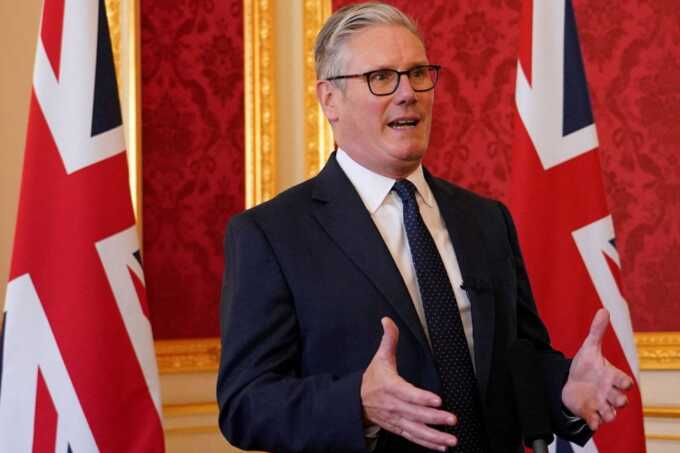
Amid the headlines focused on Keir Starmer’s struggle for his political survival, many may have overlooked the flurry of policy announcements his Government has made over the past few weeks.
This comes as the Prime Minister insists “our plan is working,” highlighting that net migration has sharply decreased to its lowest level since 2021, inflation has dropped to 2.8%, and the UK was the fastest-growing economy in the G7 in the first quarter of the year.
No 10 is also eager to emphasize that homicides in England and Wales are at their lowest levels since the 1970s, and knife crime is down by 10% compared to last year.
NHS waiting lists in England are also at their lowest in three and a half years, with the “largest single month performance improvement in 17 years” observed in the latest figures.
No 10 cites this as evidence that the PM and the country are on the right track. These announcements have come alongside a range of policy measures aimed at shifting the narrative around this Government.
Here are some you may have missed.
Economy, Tax & Cost of Living
This month, the Chancellor announced the ‘Great British Summer Savings‘ scheme: VAT will be reduced from 20% to 5% on children’s restaurant menus, children’s cinema/theatre tickets, and admissions to attractions (theme parks, soft play, zoos, museums) from 25 June to 1 September 2026. Its estimated cost of £300m will be funded by closing a tax loophole utilized by oil and gas firms with overseas operations.
As part of that scheme, free local bus travel is being introduced for 5–15-year-olds in England throughout August (a £100m fund), on top of the existing £3 bus fare cap, which has now been extended to March 2027.
Following campaigning by the Unison union, claimable mileage rates for those who drive for work are being increased by 10p for 2026-27, backdated to April – the first rise in 15 years. It should give workers an extra £120 for 6,000 business miles.
More controversial among environmentalists is the fuel/motorist support package (set against the Iran conflict): the 5p fuel duty cut has been extended to the year-end, there’s a 12-month road tax holiday for hauliers (up to £912/vehicle), and tax on red diesel is down to its lowest rate in over 20 years.
Tariffs are also set to be suspended on 125 everyday food items (garlic, avocados, mangoes, nectarines, vegetable and olive oil, baked beans, chocolate, sauces, soft drinks), building on another batch of tariff suspensions in April, with a ‘warning’ to retailers to pass savings on.
New anti-profiteering powers will enable consumer watchdogs, including the CMA, to gain rapid investigatory powers and the ability to “name and shame” firms raising margins during economic shocks.
We’re also seeing the introduction of a sort of wealth tax. The consultation on implementing a High Value Council Tax Surcharge (“mansion tax”) has been launched, expected to raise around £500m annually.
Trade & Business
Ministers have finalized a UK–Gulf Cooperation Council trade deal (Bahrain, Kuwait, Oman, Qatar, Saudi Arabia, UAE): potentially worth £3.7bn a year. The UK is the first G7 nation to sign this kind of deal; removing around £580m in duties annually (including £360m from day one).
Announced in the King’s Speech, but nevertheless welcomed by many, the Small Business Protections (Late Payments) Bill has been introduced to enable the “largest crackdown on late payments” in over 25 years.
The Government has also responded to union demands to support the ceramics and chemicals sectors – allocating £120m for the UK ceramics industry and £350m for chemicals.
Energy & Environment
The Government has approved the construction of mega-wind farms Dogger Bank South (up to 3GW capacity) and North Falls (~1GW) – together capable of powering more than four million UK homes.
This brings Labour-approved offshore wind projects to 10.5GW, plus 5.4GW of solar energy. For offshore wind, each GW of capacity tends to generate enough energy to power over a million homes, and for solar, over 300,000 homes. Offshore wind reforms have also recently been announced to further accelerate delivery.
Ministers are also granting “Critical National Importance” designation for major clean energy projects, thereby limiting their exposure to legal challenges (via judicial review) to “all but human rights grounds.”
The major energy news is that Ofgem has confirmed a 13% energy price cap rise starting 1 July. The gas cap is up 24%, while electricity is up ~5%, from a £1,641 average base, driven by Middle East gas prices amid Trump’s conflict with Iran. However, the increase would likely have been much higher without Britain’s renewable energy surge. The link between gas prices and electricity prices is getting weaker all the time, even before the Government’s planned reforms to the sector have taken effect.
Children, Education & Welfare
This week, the childcare market was referred to the Competition and Markets Authority by the Education Secretary, with the aim of tackling excess charges at nurseries and similar settings.
Meanwhile, the plan to implement significant children’s social care reforms has been launched, with a £2.4bn ‘Families First’ Partnership Programme. Every local authority in England will deliver a single Family Help service, “offering the support and interventions needed to keep families together where possible.” And new multi-agency child protection teams will bring together social workers, police, health, and education professionals to “strengthen safeguarding for vulnerable children.” There’s also £560m in capital funds – investment in the bricks and mortar – for children’s homes, and £12.4m to modernize foster care in an effort to create 10,000 new foster places.
Flexible/modular student finance packages have been announced to go live from September 2026 – the first 130 institutions approved to offer short modules for those not wanting to complete a full degree, or to split a degree up into stages. It’s designed to support those working or caring alongside their studies.
Transport & Infrastructure
The first branded train for the newly publicly-owned Great British Rail has been unveiled in Brighton, with Govia Thameslink coming into public ownership at the end of the month, and a new GBR ticketing app is set to launch, eliminating booking fees and consolidating the publicly-owned providers. SWR also just marked one year in public ownership, showcasing a new Arterio fleet.
A new mass transit taskforce has been established to deploy trams, light rail, and high-frequency buses alongside a consultation on devolving more transport powers to mayors.
Legislation: King’s Speech
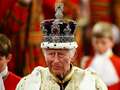
Almost all of this is announced outside of the 38 new bills set out in the King’s Speech earlier this month.
They include measures to further restrict the Right to Buy (exempting social homes from ‘right to buy’ for 35 years after construction), nationalizing Britain’s steel industry (it has already passed its second reading), and the (carried-over) Representation of the People Bill, which will introduce votes at 16 and clamp down on foreign donations in politics.
Some announcements have been more publicized than others. The news that 26 new life peers have been appointed – each one of them replacing an ousted hereditary peer, apparently as compensation for the end of their ‘bloodline’ rights – was rather underreported.
We’ve also noticed that the two-preference voting system, Supplementary Vote, is being swiftly restored for combined-authority mayors (like in Greater Manchester), via the Combined Authorities (Mayoral Elections) (Amendment) Order 2026.
It’s intended to come into force by 19 June 2026. That’s a day after Greater Manchester Mayor Andy Burnham is elected, or not, as MP for Makerfield, opening up a fresh mayoral contest in the city region where Reform and Labour could again face off. The timing is, of course, significant.
Ann Black of Labour’s NEC ties this quick reform to internal pressure for electoral reform – around 70 Labour MPs (led by Alex Sobel) have separately amended the Representation of the People Bill to push for a National Commission on Electoral Reform.
But it may have more to do with electoral calculus – centre and left parties tend to fare better under preferential systems than the right in the UK, as many Lib Dems and Greens would likely choose Labour as their second option. Conservatives may not tactically rally around Reform as their second preference in the same way.
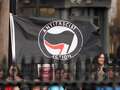
Keir Starmer is also adopting a tougher stance on the far-right, appearing to break from last year’s alleged indulgence of Tommy Robinson’s Unite the Kingdom march by this time banning eleven foreign far-right agitators from entering the UK, ahead of the “unpatriotic” repeat of the march earlier this month. Among them were US agitators, indicating that the PM is now ready to confront the MAGA crowd. Similar actions are promised over tackling US tech giants getting young people hooked on social media apps.
A No 10 spokesperson states that the Government is “not returning to a status quo that failed working people, but building a stronger, fairer Britain.”
“From lowering costs and supporting families to restoring control and driving growth, the government is delivering the security and stability people expect – and laying the foundations for long-term change.”
Prime Ministers are rarely in office long enough to enjoy the long-term benefits of their reforms. But Keir Starmer may have even less time than most. The Labour Party may soon decide if he’s “moving fast and fixing things” to their satisfaction.

Politics Editor
Read more similar news:
Comments:
comments powered by Disqus