Starmer hails "huge win" as UK-Gulf pact promises €4bn annual boost to economy
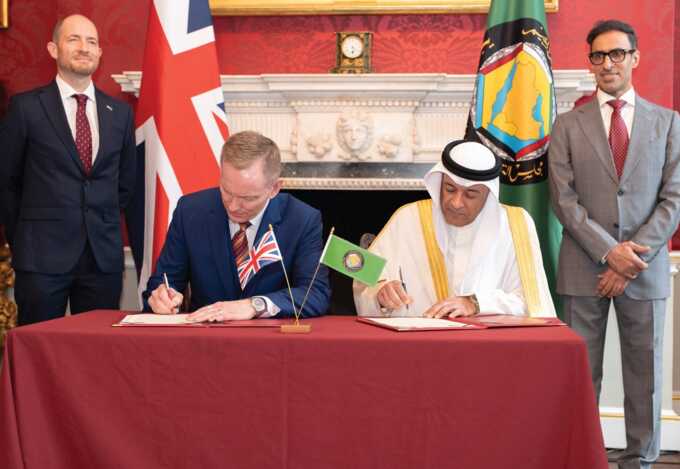
The agreement is the first of its kind between the GCC and a G7 country, and will eliminate tariffs on billions of euros worth of British exports.
The United Kingdom has signed an historic trade agreement with the Gulf Cooperation Council (GCC), which is expected to add more than €4 billion annually to the British economy.
As part of the agreement, up to 93% of GCC tariffs on British goods will eventually be removed, eliminating approximately €670 million in annual duties on UK exports. About two-thirds of these reductions will take effect as soon as the agreement is implemented.
UK exports ranging from cheese and butter to medical equipment and manufacturing goods are expected to benefit, while services firms will gain improved market access in sectors such as finance, engineering, legal, and consulting.
Agreement hailed as a “huge win”
The British Prime Minister Keir Starmer praised the agreement, describing it as a “huge win” for British workers and businesses, and reaffirmed the government’s dedication to fostering growth, supporting jobs, and strengthening the economy.
“The Gulf states are valued economic partners and this agreement deepens that relationship, building trust and unlocking new possibilities for trade and investment,” Starmer added.
Peter Kyle, the business and trade secretary, supported these statements, asserting that the agreement sends “a clear signal of confidence” during a period of global uncertainty and trade upheaval.
Meanwhile, the GCC Secretary General, Jasem Mohamed Albudaiwi, praised the agreement as a successful outcome of extensive negotiations and called it part of a broader vision for “sustainable and promising economic growth” for all involved parties.
Albudaiwi added that deeper strategic partnerships formed by the agreement would benefit both the UK and the GCC at a time when the region’s economies are intensifying diversification efforts beyond hydrocarbons, investing significantly in logistics and emerging technologies.
Business leaders have also welcomed the trade agreement, seeing the Gulf as a promising region for investment and expansion. They also noted opportunities in green technology, infrastructure, healthcare, and professional services.
“The GCC is a region of growing strategic importance and long-term opportunity, and one where HSBC’s heritage runs deep,” said Georges Elhedery, Group CEO of banking giant HSBC.
“We see first-hand the opportunity this agreement can unlock and stand ready to help deepen economic ties and support businesses to connect, invest and grow,” he added.
The agreement also represents a significant step in improving conditions that would encourage companies to expand confidently in the Gulf region.
“Fair, reliable, and low-barrier trading is essential for businesses to compete and expand internationally with confidence. This agreement provides that stability, supporting companies like ours to grow and serve customers across the region,” said Anthony Houghton, CEO of Holland & Barrett.
Trade in a post-Brexit world
Industry experts say the agreement underscores the growing economic importance of the Gulf region to the UK, as London seeks to expand trade partnerships beyond Europe.
According to the Chartered Institute of Export & International Trade, food and drink exports from the UK to the GCC already exceed €720 million annually, with tariffs of between 5% to 25% on products like confectionery and specialty cheeses that are now set to be reduced or removed.
Marco Forgione, director general of the Chartered Institute of Export & International Trade, said the UK-GCC trade agreement would “unlock substantial new markets for British exporters” in sectors like advanced manufacturing and renewable energy.
Another outcome could also be opportunities arising from major Gulf infrastructure projects associated with regional trade diversification efforts, which have been prompted by disruptions in the Strait of Hormuz.
With UK-GCC trade currently totaling roughly €66 billion every year, the new agreement is expected to boost bilateral trade flows by up to 20% over time.

Editor-in-Chief
Read more similar news:
Comments:
comments powered by Disqus