Britain accuses Namiq Salifov of planning attacks on behalf of Iran

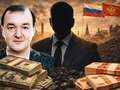
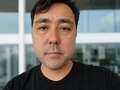
British authorities sanctioned the brother of a deceased Azerbaijani crime boss this week, accusing him of planning attacks on behalf of the Iranian government.
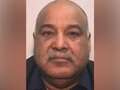
Namiq Salifov—whose brother, Nadir “Lotu Guli” Salifov, led a notorious Eurasian crime syndicate before his murder in 2020—was among several individuals targeted in a sanctions package announced by the U.K. Foreign Secretary Yvette Cooper on May 11.
“This package of sanctions directly targets organizations and individuals who threaten security on UK streets and stability in the Middle East,” Cooper said. “Criminal proxies backed by parts of the Iranian regime who threaten security in the UK and Europe will not be tolerated, nor will illicit finance networks.”
On Thursday, the U.K.’s Foreign, Commonwealth & Development Office (FCDO) updated its sanctions list with new personal details for Salifov, specifically his date of birth. OCCRP reporters used these details to verify his identity against publicly available information.
In a separate notice, the FCDO accused Salifov of involvement in “hostile activity” for the Iranian government, including “threatening, planning, or conducting attacks against persons and assets in the United Kingdom or any other country.”
British officials did not provide specific evidence for the allegations against Salifov.
On the other hand, U.S. authorities have previously accused Salifov of being a vor-v-zakone—or “thief-in-law,” a high-ranking member of the Russian mob. In a series of court filings, prosecutors alleged his association with—and rivalry against—two men convicted of an Iran-backed plot to kill a regime critic on the streets of New York City.
In October, a U.S. judge sentenced two of Salifov’s associates, Polad Omarov and Rafat Amirov, to 25 years in prison for a failed “murder-for-hire” plot against Iranian-American journalist and activist Masih Alinejad.
Both were high-ranking members of an Azerbaijani faction of the Russian mob founded by Salifov’s late brother, Nadir, a group prosecutors claim is responsible for “murders, assaults, extortions, kidnappings, robberies, and arsons, in the United States and abroad.”
According to U.S. prosecutors, the plot was devised by senior members of Iran’s Islamic Revolutionary Guards Corps, who offered $500,000 for Alinejad’s murder.
“This case is part of a well-documented and disturbing rise in plots involving criminal networks paid by Iran to target dissidents in the United States and around the world,” Assistant Attorney General for National Security John A. Eisenberg said when the two men were sentenced.
While Namiq Salifov was not charged with the murder plot, U.S. prosecutors alleged he was engaged in a bitter “power struggle” with Omarov at the time of Omarov’s arrest.
The rift followed the murder of Nadir Salifov in August 2020, who was shot dead in Antalya, Turkey. Although the syndicate “initially aligned” with Namiq Salifov, the power vacuum spawned internal rivalries.
The U.K.’s latest sanctions follow a recent spate of attacks against Jewish communities and Iranian regime opponents, which has fueled public speculation about Tehran-backed plots within Britain amid hostilities in the Middle East.
“Given that police investigations are ongoing, it would not be appropriate to comment on who ultimately might be behind these specific incidents,” U.K. Security Minister Dan Jarvis said in an April 20 statement.
The May 11 sanctions package also targeted the Zindashti criminal network, an organization associated with alleged drug trafficker Naji Sharifi Zindashti. In 2024, the U.S. and U.K. sanctioned Zindashti in a joint action, accusing his organization of serving as a hit squad for Iranian government-backed plots against critics abroad.
Also designated were members of the Zarringhalam family, whom the U.S. Treasury sanctioned in 2025 for allegedly running a massive Iranian “shadow banking” network that laundered billions of dollars.
Editor-in-Chief
Read more similar news:
Comments:
comments powered by Disqus