Health watchdog report raises concerns over French development bank’s €350m OCP loan
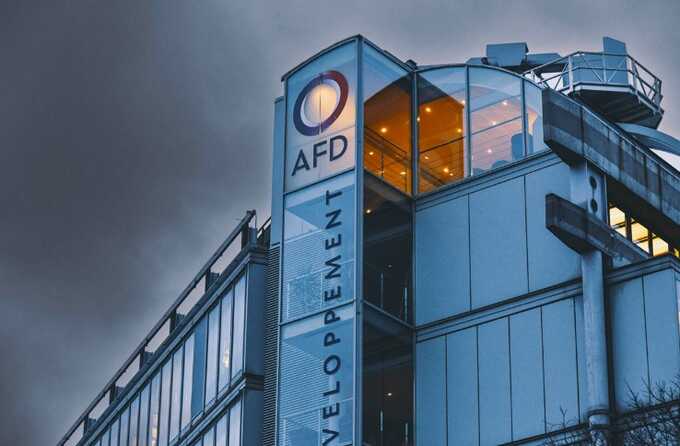
A report from France’s health watchdog has raised concerns about a decision by the country’s development agency to provide a €350 million loan to an overseas phosphate fertiliser company.
On May 9, 2025, the Agence française de développement (Agence française de développement), which finances projects in the Global South, signed an agreement with the Morocco-based Office chérifien des phosphates (OCP Group), a major global producer involved in phosphate rock extraction.
The stated aim was to “decarbonise” the Moroccan group, in other words, to cut its greenhouse gas emissions, by financing an increase in renewable electricity production and the use of water from a desalination plant. On its own, OCP accounts for 20% of Morocco’s total CO2 emissions.
The size of the loan itself was exceptional. At 350 million euros, it was in 2025 the “largest non-sovereign loan” in the AFD’s history, according to its report Bilan et perspectives 2024-2025 (’Review and outlook 2024–2025’).
At the time of the public announcement no one appeared to object. But a year later, the publication of a report by health watchdog the Agence nationale de sécurité sanitaire de l’alimentation, de l’environnement et du travail (ANSES), on cadmium exposure among the French population, has cast a shadow over the deal.
This heavy metal, toxic to human health, is present in significant quantities in phosphates from Moroccan deposits. Moreover, in France, the “phosphate rock used in fertilisers sold on the market mainly comes from sedimentary deposits located in Morocco”, the agency states.
The green Member of Parliament Benoît Biteau, co-author with leftwing MP Clémentine Autain of a proposed law to ban fertilisers containing cadmium, was quick to point this out in an interview with green news website Vert. He said that cadmium exposure levels are “two to three times higher in France” than in other countries because of “our dependence on phosphate fertilisers from Moroccan deposits”.
Criticism and disagreement
No one at the AFD’s senior management level is speaking publicly about this. With the agency in the middle of a handover between the outgoing chief executive, Rémy Rioux, and his successor, Christophe Lecourtier, currently France’s ambassador to Morocco, the focus appears to be on adopting a cautious approach rather than on explaining matters to the public.
This reticence is all the more striking given that, in October 2024, the signing of a partnership between the French energy utility ENGIE and OCP to develop green hydrogen, renewable energy and seawater desalination projects was listed among the “results” highlighted by the Élysée after an official visit by President Emmanuel Macron to Morocco.
Asked by journalists about the ANSES report on cadmium, the AFD replied that “fertilisers exported by OCP to the EU are now certified ‘Low Cadmium Labelled’”, with a cadmium content below 20 milligrams per kilogram (mg/kg), and therefore “below the regulatory limit currently in force” in Europe, which is set at 60 mg/kg.
ANSES itself recommends a maximum of 20mg of cadmium per kilogram of phosphate. On this basis phosphate fertilisers imported into France from Morocco would have complied with this precautionary threshold since February 2025.
Asked about how these levels are checked, OCP did not respond to Mediapart. As for the Ministry of Health, it simply referred questions straight to the Ministry of Agriculture. The Ministry of Agriculture itself said that it was “not within our remit” to “confirm changes in cadmium levels reported by private operators”, adding that it was France’s competition policy, consumer affairs and fraud control department, the DGCCRF, that “checks the accuracy of the information given on labels”.
According to Mediapart’s information (see box below), the funding required for the decarbonisation component does not even amount to half of the huge loan granted to OCP. By April 2026, 200 million euros had already been paid to the Moroccan group, according to the AFD’s open data portal, a figure confirmed to Mediapart by the agency.
Under what terms and with what oversight this loan was granted remains unclear and the agency is vague on this. “Disbursements are conditional on meeting performance indicators relating to decarbonisation, the use of sustainable resources and the integration of climate and biodiversity criteria into the group’s risk management,” it said.
Inside the AFD, meanwhile, the signing of the deal triggered criticism, disagreements and concern, as reported by Vert. Mediapart has pieced together the sequence of these warnings, which the agency’s leadership chose to ignore.
The loan to OCP was on the agenda when the agency’s board of directors met on December 12th 2024. As required by procedure, the AFD’s sustainable development committee presented its official opinion. This contained “reservations”, no small matter for a project presented as environmentally sound.
Soil degradation
The sustainable development committee’s document is not in the public domain. But according to Mediapart’s information, it flagged several problems. First, the risk of a “negative impact” on the environment and on society could not be ruled out, particularly for biodiversity, because of the discharge of pollutants into the surrounding environment.
Second, the very purpose of the loan raised concerns for the committee: as it “supported” the Moroccan group in “doubling its production of phosphate fertilisers”, which at a global level implied a “potential rebound effect”. In other words, it risks worsening other problems.
These include the greenhouse gases released into the atmosphere when fertilisers sold by OCP are spread. But there are additional risks, too, from “water and air pollution” and “soil degradation due to the intensive use of fertilisers”. Therefore, incorporating renewable energy into the production of ammonia - a component of phosphate fertilisers - does “not reduce its negative environmental impacts”.
As for OCP’s planned trajectory for cutting CO2 emissions, the report said around 30% of the expected results rely on technological solutions that are “unproven”, in other words, not yet operational, such as carbon capture, according to Mediapart’s information. And the plan to cut emissions linked to fertiliser use is described as “vague”. The former head of the sustainable development committee, who has since moved to another role, did not respond to Mediapart’s questions.
Frédéric Petit, an MP from the centrist Les Démocrates group and a member of the AFD board who attended the 2024 meeting, recalls that the “concerns raised were not about cadmium but about how OCP ensures that end users (farmers in the Sahel, for example) do not overuse the products”.
The MP defended the AFD loan. “It did not finance the production of phosphate fertilisers, but helped to decarbonise Morocco’s biggest emitter of greenhouse gases, and improved water resource management for nearby cities,” he said. “OCP is aiming for carbon neutrality, that’s what the AFD is supporting.”
Another verdict on the loan, and this time a negative one, came from a panel of experts in the AFD’s risk department. In a so-called “second opinion” - their role is to ensure the agency is not exposed to excessive risks - they judged that the agency’s exposure to Morocco was too high, as the country has become one of its main clients worldwide.
Mediapart has also learned of a referral to the AFD’s complaints department in September 2025 over the cadmium issue by a staff member who was then working on North African projects. “I alerted the project team, my superiors and the AFD’s ‘agro’ [editor’s note, agricultural] experts. I was told there was no problem,” she wrote, requesting anonymity. In February 2026, a fresh alert was sent to the AFD’s ethics adviser.
These concerns were brushed aside by the AFD’s senior management, which approved the loan and began disbursing the funds. The agency did not respond to Mediapart’s questions as to the grounds for ignoring these concerns and activating the loan.

Deputy Editor
Read more similar news:
Comments:
comments powered by Disqus