Iran’s Hormuz toll scheme could generate up to $500bn in five years
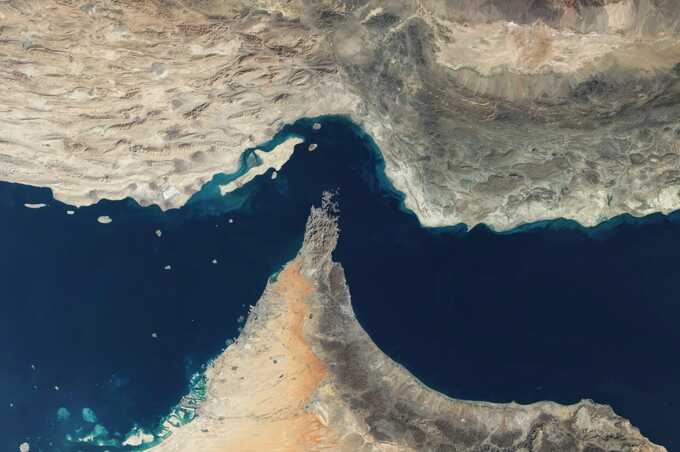
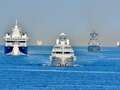
Oil tankers once sailed straight through the center of the Strait of Hormuz. But since February 28, vessels crossing the 21-mile-wide waterway have been forced onto an alternate route.
What has become known as the “Tehran Tollbooth” requires ships to move closer to Iran’s coastline, navigating between the islands of Qeshm and Larak.
Shipowners must then go through a complicated and costly process. According to Bloomberg, they are first required to provide intermediary companies linked to the Islamic Revolutionary Guard Corps (IRGC) with details about the vessel’s cargo, destination, and ultimate owner.
Iran subsequently imposes a “toll” of at least $1 per barrel, with the fee increasing depending on how closely the operator is aligned with Tehran.
Fees must be paid in Chinese yuan, or a cryptocurrency. The average rate for a single oil tanker is $2m (£1.5m). If everything is approved, IRGC boats will finally provide an escort into and out of the “tollbooth”.
Some analysts believe it could make as much as $500bn (£377bn) in five years.
This system – informal and illegal for now – represents Iran’s biggest win from the war with the United States.
Left in place, it could earn a vengeful rogue state hundreds of billions of dollars and fundamentally reshape both the Middle East and maritime trade around the world.
That prospect makes its long-term survival unlikely, analysts told The Telegraph.
“Iran has learned how to keep the global economy in a hostage situation,” said Petras Katinas, a research fellow at the London-based Royal United Services Institute think tank.
On Monday, Iran informed the US that it would only agree to a permanent peace deal, not a 45-day ceasefire.
And it would only do so if it were allowed to cement the “tollbooth” in place, splitting the profits with Oman, the Gulf nation on the opposite coast.

At moments, Donald Trump has appeared to be attracted by the idea of operating the toll booth himself, rather than opening up free passage.
“What about us charging toll?” he said this week. “I’d rather do that than let them have them. Why shouldn’t we? We’re the winner. We won.”
Alternatively, the US president has threatened to destroy Iran’s “entire civilisation” if it does not surrender and open the strait.
Gulf nations are concerned that Mr Trump will prompt a final, furious round of regional bombardments and then walk away with the strait – at least temporarily – under Tehran’s control.
Some countries might be forced to pay the export toll at first, one Gulf diplomatic source told The Telegraph.
Abu Dhabi, Qatar and Bahrain lack alternative pipelines, and supplies of liquid natural gas can only be delivered by ship.
Nations like India might send their own tankers through the strait to collect oil and gas, bearing the “tollbooth” cost themselves.
But over time, the Gulf nations will not tolerate a system that funnels vast wealth towards a hostile regime that has already blown up chunks of their critical infrastructure, the diplomatic source said.

Hugo Dixon, a columnist for Reuters, estimated that Tehran could earn $500bn over the next five years, creaming off profits for as long as it takes to construct new pipelines.
Even a fraction of that sum would slingshot the Shia nation to regional dominance. It would allow the IRGC to rebuild, many times over, its obliterated military.
“I don’t think this war can end if Iran is still running the ‘tollbooth’,” said Ellen R. Wald, a non-resident senior fellow at the Atlantic Council’s Global Energy Centre, based in Washington DC.
She said that “Saudi Arabia and the United Arab Emirates and other Gulf countries cannot stand for it” and would eventually “have to build an army and fight”.
In the near term, Iran’s enemies could use their own missiles to target the regime’s shadow fleet tankers, which are now transporting double the amount of oil they were before the war – and for almost double the profit.
On Wednesday morning, if not before, the world will find out whether Mr Trump followed through on his threat to destroy Iran’s “entire civilisation” without a deal to reopen the strait.
If he did not, there is no road left to take in terms of rhetorical threats, and the likeliest route out of the conflict becomes a quick and dirty deal that leaves Tehran in some form of control.
Recently, Mr Trump has suggested that the United States had no need to reopen the strait, given bountiful domestic energy supplies. Oil-starved Europe should do the job itself, he said.
But US super-majors, including Chevron, are heavily involved in the Gulf oil business, often running partnerships, and a permanent Iranian “tollbooth” would seriously undermine the international principle of the freedom of the seas, said Ms Wald.
Under the United Nations Convention on the Law of the Sea, no country can interfere with “innocent passage” of ships through maritime choke points or straits. Tolls can only be charged at man-made canals, such as Suez or Panama.
Last month, in a letter to the International Maritime Organisation, Iran argued that its “tollbooth” was justified by self-defence. It had to inspect foreign, possibly hostile ships and the fee covered such costs, the regime told the watchdog.
Turkey charges a small fee to escort ships through the Dardanelles, but “that’s because it’s a very perilous waterway and Turkey provides coastguard services,” said Ms Wald. Iran’s legal claim was absurd, by contrast, resting simply on extortion.

“The United States entered World War One in part to secure freedom of the seas,” Ms Wald added. “Leaving the tollbooth in place now would be like saying, ‘We don’t care about that any more – Britain, you can charge people to enter the English Channel’.”
In a worst-case scenario, the law of the sea breaks down and Russia or China take greater control over the choke points in their back yards.
Inside Iran, the IRGC would use oil funds to supercharge its ongoing takeover of the entire state, said Dr Andreas Krieg, a senior lecturer at the school of Security Studies at King’s College London.
While the overall level of traffic through the strait would fall – sanctions bar Western firms from engaging in any business with the IRGC – the tollbooth windfall “would help to build a military dictatorship”.
The IRGC would emerge a “more radical, more empowered, more financially robust system that can go and build networks east with Russia and China”.
The prospect is catastrophic enough for so many nations that it is more likely to collapse than be allowed to take root, said Basil Germond, a professor of international security at Lancaster University.
“Historically, attempts to condition or close strategic straits – including Hormuz in the 1980s ‘tanker war’ – tend to prompt escalation … involving the use of force,” he said.
Whether it is seizing Kharg Island, further US bombardments or Gulf counterstrikes, “it is more likely that the quagmire will resolve with further use of kinetic force, rather than the implementation of a stable, widely accepted and enforceable tollbooth”.
Politics Editor
Read more similar news:
Comments:
comments powered by Disqus