UK reform aims to refocus police on crime, not non-crime incidents
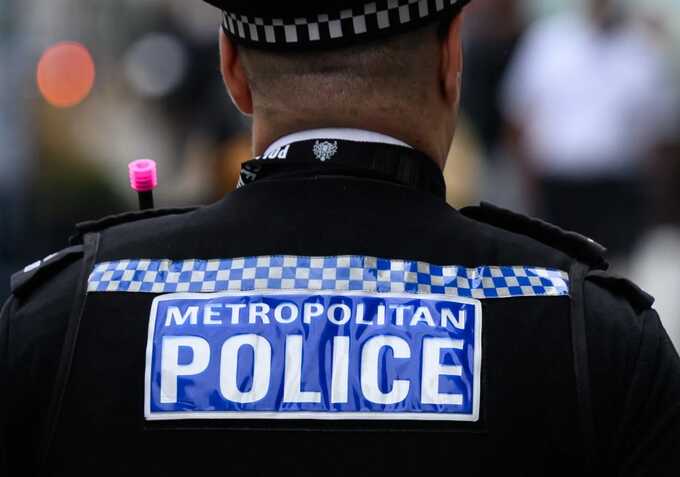
Non-crime hate incidents will officially be discontinued in five months after the Metropolitan Police announced it would stop investigating them.
Under current rules, police forces are expected to investigate acts that appear to be motivated by hostility towards people with certain characteristics, including race, religion, disability, or gender, that do not qualify as crimes.
Unclear guidance has led to officers being called to people’s homes over "insults and routine arguments," according to the Government.

London’s Met Police announced last year it would no longer investigate these incidents after dropping a probe into social media posts about transgender issues by Father Ted creator Graham Linehan.
There will be no automatic removal of these incidents from people’s records following the decision, LBC understands.
Eliminating non-crime hate incidents is hoped to give officers more time to focus on their routine policing duties, ministers suggest.
The move, which follows a review by the College of Policing and National Police Chiefs’ Council, will result in a tighter definition of what constitutes an incident requiring police attention.
Under the plans, fewer reports will automatically create a police record, with officers and call handlers recording information only where there is a clear risk of harm.
Home Secretary Shabana Mahmood stated: "Under these reforms, forces will no longer be policing perfectly legal tweets.
"Instead, they will be doing what they do best: patrolling our streets, catching criminals, and keeping communities safe."
However, in response to the announcement, shadow home secretary Chris Philp said the policy would not impact police time.
"This is simply a rebranding of non-crime hate incidents with a more restrictive triage process," he said.

"Reports are still logged, personal data still recorded, and disclosure rules are unchanged. Officers and staff will still be tied up monitoring incidents that do not meet the criminal threshold, at a cost in time and resources.
"People want the police focused on catching criminals and keeping streets safe. Conservatives have been consistently clear that the police should return to basics and non-crime hate incidents should be scrapped to free up police time."
Non-crime hate incidents were introduced following the murder of Stephen Lawrence in 1993 and an inquiry into his death, establishing a system for reporting and recording racist incidents and crimes.
During a Lords debate earlier this month, his mother and Labour peer Baroness Doreen Lawrence of Clarendon stated that insults can lead to violence.
She urged peers to consider "what implication" abandoning the system could have.
"It depends on how you see non-crime hate and it depends on who’s at the receiving end of that," she said.
"Now for me, it led to the murder of my son.
"Now, individuals who think they’ve got the right to walk around and talk about, especially, young black men in a certain way, what starts off as just verbal, it leads to violence."
She added: "How do you move forward if it transitions from verbal into violence and you have no way of tracking back where it started from?"
Stephen’s father Neville Lawrence said the decision was reversing Lord Macpherson’s inquiry following his son’s death.
He told the Daily Mirror: “A lot of people are going to get really angry and maybe turn to violence. There are supposed to be laws to ensure people can live decent lives.
"If the police aren’t going to record these incidents then who are?”
Irish comedy writer Linehan was arrested at Heathrow Airport last year on suspicion of inciting violence over three posts he had made on X.
His arrest sparked debate, with Conservative politicians and Harry Potter author JK Rowling among those expressing their outrage.
Following Linehan’s arrest, Met Police Commissioner Sir Mark Rowley said officers were in “an impossible position” when dealing with statements made online.
Speaking about the Home Secretary’s move, Assistant Chief Constable Tom Harding, director at the College of Policing, said: “Non-crime hate incidents are being replaced with a system that better serves both the public and modern-day policing.
“We have clearly established the current approach does not meet the expectations of either.
“Today we are setting out a fundamentally different way of handling reports so that officers can focus efforts on their core duties of preventing crime and protecting communities, while making clear that lawful free speech is not a police matter.
“Recording of non-crime hate incidents represents a very small proportion of overall police demand and while well-intentioned, there has been a disproportionate use of the process which has eroded public trust.”

World Affairs Correspondent
Read more similar news:
Comments:
comments powered by Disqus