Epstein’s final months marked by mockery as authorities close ranks
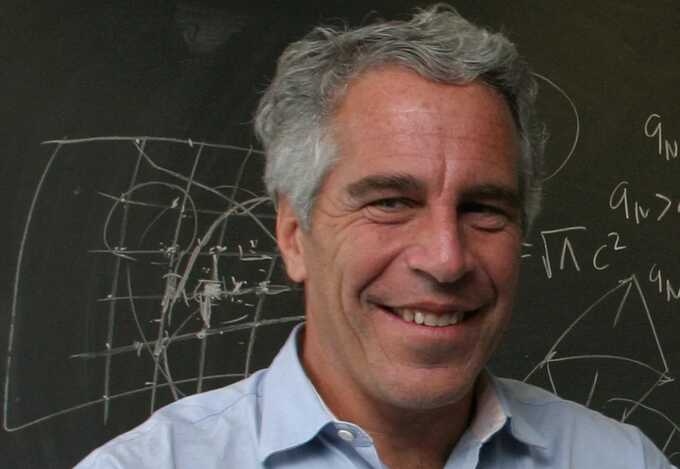
As the American legal system closed in on him in the final months of his life, Jeffrey Epstein shared a wry remark with a confidant.
“You will smile but the US attorney . . . is named BJ”, Epstein said in an email to Brad Karp, one of New York’s best-paid and most highly-regarded lawyers. Epstein’s comment was likely a reference to US Department of Justice lawyer Byung Jin Pak, who represented the government after its earlier plea deal with Epstein was ruled illegal.
Karp did not officially represent Epstein but was informally supporting him. “Love it!” Karp replied on March 5, 2019.
It was one of more than 30 emails that Karp sent Epstein in the four months after the Miami Herald published testimony from women who said Epstein’s sexual abuse, when they were as young as 14, had shattered their lives. In those emails Karp called Epstein “my friend” and said he’d “love” to see him.
Karp ran Paul Weiss, one of the US’s biggest and most prestigious white-shoe law firms. He had just won a coveted “attorney of the year” title, for which he made a speech saying the firm’s lawyers were “committed to doing the right thing”. He praised earlier generations at Paul Weiss who “saw the law as a noble profession, not as a commercial enterprise”.
But a close reading of the hundreds of entries in the DoJ’s Epstein files, and conversations with people with knowledge of the firm, reveal just how far he was willing to go for his most important client: Apollo Global Management.
Karp’s need to please the private capital group — and its then-leader Leon Black — entangled him in a relationship with Epstein that lasted until months before the paedophile’s death in August 2019.
“Mr Karp has made clear that he regrets his interactions with Epstein. Paul Weiss disagrees with the portrayal of much of the information specific to our firm,” the law firm told the FT in response to questions for this article. Karp declined to comment. Privately, he has told those close to him that he was not friends with Epstein and was keeping him onside because Black wanted him to.
“I instructed Brad to engage directly with Epstein on my behalf on various matters, including fee negotiations, beginning in 2013 and continuing until 2019,” Black told the FT. “At all times, Brad provided wise and effective counsel.”
It would cost Karp the job he had held for 18 years.
“There is nothing new in the released documents,” Apollo said. It said the law firm Dechert had “conducted a thorough and independent investigation into the Jeffrey Epstein matter more than five years ago and had full, unfettered access to all communications and any other material they requested.”
Karp became chair of Paul Weiss in 2008, when it was best-known for its elite litigation practice. By the early 2010s he had realised that if it wanted to position itself among the top ranks of global law firms, it needed exposure to private equity which was then at the beginning of a decade-long boom.
Apollo was Paul Weiss’s solution. The relationship transformed the law firm.
Paul Weiss’s gross revenue surged, from $665.5mn in 2009 to more than $3.25bn in 2025, according to a person familiar with the matter. Karp’s pay surged too, propelling him into an elite group of lawyers who made tens of millions of dollars annually. Apollo paid the firm more than $200mn in a year: an order of magnitude more in fees than most other clients.
Apollo’s growing importance to the firm provoked criticism from some internally who felt Paul Weiss was becoming too heavily exposed to the private capital group.
Karp “took the view that he had to stay very close to the founders of Apollo to make sure Apollo wouldn’t leave”, a person who knows him said.Staying close to Apollo meant becoming entangled in Black’s complex personal life: Black is sometimes referred to in the Epstein files as “Mr Big”, the nickname of the Wall Street financier character in the TV series Sex and the City.
Epstein was also involved, having known Black since the 1990s. By 2016, however, the relationship between the two financiers was in trouble. Black was fighting with Epstein over how much money the Apollo founder owed for services that included trust and estate planning, tax issues and philanthropy, and had asked Karp to deal with Epstein on his behalf.
But Karp and Epstein discussed other things too.
That included a woman called Guzel Ganieva. She was a Russian former model with whom Black had an extramarital affair and who, by 2015, was seeking money from the billionaire private equity titan and threatening to go public about their relationship according to documents in the DoJ files.
When Epstein suggested getting the Manhattan district attorney involved, Karp made the call. When Epstein suggested getting Ganieva’s visa revoked, Karp said, “will work on this”. When Epstein asked whether Karp and his colleagues could have Ganieva arrested, Karp replied his “strong belief is that the answer is yes”. He said this was “especially” so because the referral could come from a former senior prosecutor who Paul Weiss had recently hired.
It was Paul Weiss that hired the private investigations firm Nardello & Co on Black’s behalf to surveil her, and Karp who asked Epstein in July 2015 where Ganieva stayed when she was in New York, and whether he knew her social security number.
Three times in eight days in August 2015 and again in October, Black met Ganieva at upscale New York restaurants. Using Nardello, he recorded their conversations. Karp sent the transcripts to Epstein. In one, Black told Ganieva: “as long as you behave I will pay you 100,000 a month every month for the next 12 years. What I’m trying to do for you is also to get a mechanism, and I think my lawyers have one . . .”
Nardello was hired “to provide investigative support in connection with an extortion attempt”, the investigations firm said. “In the course of that engagement, no one at Nardello had any contact or communication with Epstein nor did the firm know that Mr Black’s counsel was sharing its work product with him.”
Karp later asked a colleague whether Paul Weiss could help Black with an escrow fund to make monthly payments to “an individual”, the DoJ files show (they do not say whether the request related to Ganieva). The firm’s policy was not to do so, however. Days later Karp told Epstein he had “sought reconsideration” from Citigroup’s two top executives, again without naming Ganieva. But “in the end they deferred to compliance”.
Ganieva rejected any allegation of extortion, and told the FT: “Nothing about my interactions with Leon Black was consensual, and the truth will come out. I never sought money from him.” She added: “Any suggestion that I pursued him, his money, or acted voluntarily is false.”
Black made his final payment to Epstein in 2017, according to a report from the law firm Dechert which investigated Black’s and Apollo’s links to the paedophile. (The Dechert report did not mention surveillance, private investigators or Ganieva.) The Karp-Epstein relationship continued.
That same year, the pair exchanged a set of cryptic messages after Karp was scheduled to visit Epstein’s house. Epstein emailed Karp to say, “sorry, i spooked you, i think very low risk very low if any”.
“Thanks,” Karp replied. “I really appreciate you always being straight with me; I’m many, many, many things. But I never considered myself that. Really got me thinking. I appreciate your friendship.”
Epstein reassured Karp: “I think that is now a catch all word , for anyone who likes women so no worry”. It is not clear what the word was. Karp replied: “I worry when I have nothing to worry about, my friend!”
Some of the exchanges display an offensive humour. When Epstein, apparently questioning whether an unnamed woman was being truthful about the signing of a contract, asked “Did she also say she was [a] virgin”, Karp told Epstein: “You are feisty tonight.”
Karp appears to have been willing to push the boundaries of confidentiality rules to meet Epstein’s requests. In September 2015 Karp sent Epstein an email that appeared to contain login details intended to be used by the law firm. The email read: “user: pweiss password: Apple65”.
In April 2018, Epstein asked him for a copy of a document related to a stock sale. “I’m going to send that to you,” Karp replied. “But please don’t let him know that I shared it. It is supposed to be strictly confidential.” Black’s spokesperson told the FT that Black had instructed Karp to share the document. He also said Epstein “embellished, exaggerated and lied” in his communications.
Black wanted Karp to remain in contact with Epstein into 2019 because the fee dispute continued and because “tax and estate matters and transitioning information . . . can take years”, the spokesperson said.
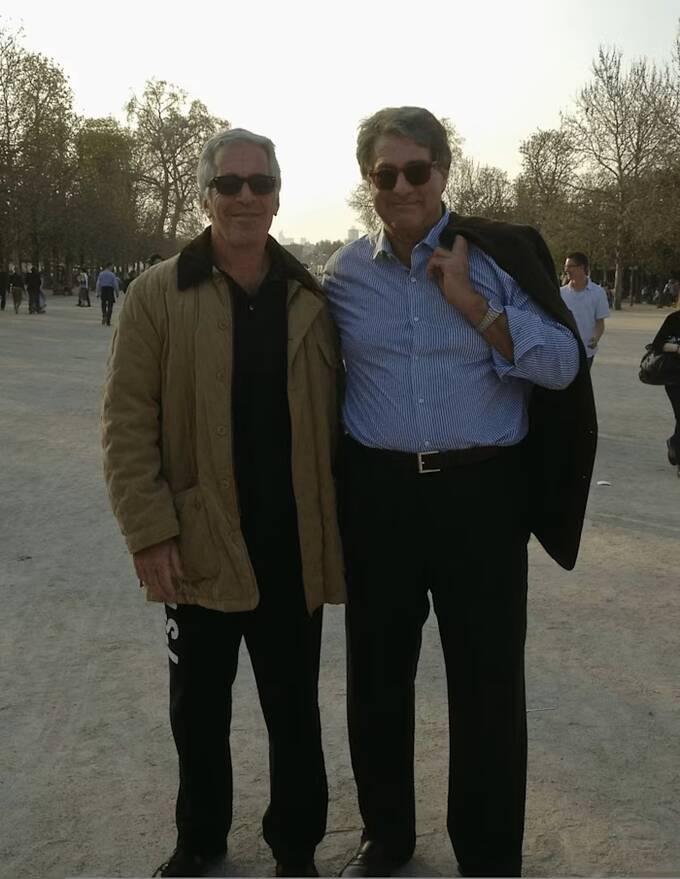
In his October 2018 speech to accept the New York Law Journal’s Attorney of the Year Award, Karp celebrated Paul Weiss’s virtues.
“It is such a privilege to lead a law firm whose professionals are wholly committed — reflexively committed — to doing the right thing, the courageous thing. A law firm that is willing to stand up for the rule of law,” Karp said.
The following month, the Miami Herald published its Epstein investigation. By then, Black had cut off communication.
In the messages they exchanged after that, Epstein and Karp offered comfort and advice to each other. In December, Epstein told Karp in relation to something unspecified: “hurts that this is taking physical toll on you. NOT WORTH IT—!!!” Karp replied: “Thanks, my friend. I hear you. Just an awful, relentless stretch.”
After a US federal judge ruled Epstein’s 2007 plea deal, which had let him avoid federal charges, illegal in February 2019, Karp told Epstein: “Hope you’re staying calm. Let me know what I can do to help.” “Your judgment and friendship,” Epstein replied.
Karp turned to Epstein for a recommendation for a lawyer when former Citigroup president John Havens was ensnared in a Florida prostitution crackdown in February 2019. (Havens told the FT: “I never met Epstein. I never spoke with Epstein and I never asked or knew that Karp spoke to Epstein. I got legal references from other people and did not use the lawyer Karp referred me to.” Charges against Havens were ultimately dropped.)
A month later, when Epstein was under renewed threat of legal action and wanted a firm of private investigators, it was Karp who recommended Nardello, the same organisation Paul Weiss had previously hired on Black’s behalf.“In 2019, unbeknownst to Mr Nardello, a firm client recommended that Epstein contact him about providing assistance with anticipated civil litigation,” the investigative firm said. “Epstein reached out but Mr Nardello declined to help, and they had no further contact.”By the time the DoJ published the Epstein files this year, Karp had already lost his shine in parts of the New York legal community because of his capitulation to the Trump administration.
When US President Donald Trump issued potentially damaging executive orders targeting Paul Weiss and others last year, it was a test of the law firm’s identity. Other firms successfully fought back in court. Some of Paul Weiss’s litigators would have liked it to do the same.
But it was clear within Paul Weiss that it was not in Apollo’s interest for the firm to be in a conflict with the administration. (Any “implication that Apollo in any way weighed in on or attempted to influence our decision-making with respect to the executive order is completely false,” Paul Weiss said.)
Karp agreed to provide $40mn of unpaid work for Trump-backed causes. The order was dropped; soon after, other large law firms struck similar deals. “You couldn’t imagine a greater chilling effect on the rest of the profession” than Karp’s deal, the head of a large law firm said at the time.
The episode prompted speculation about Karp’s future. He weathered it, reinforcing his reputation internally as a stabilising figure. But when the DoJ published 3mn pages from the Epstein files in late January, some clients began signalling concerns about reputational risk from Karp’s relationship.
Within days, a small group of partners started preparing a contingency plan to replace Karp, before agreeing he should be removed as chair. He remains a partner.
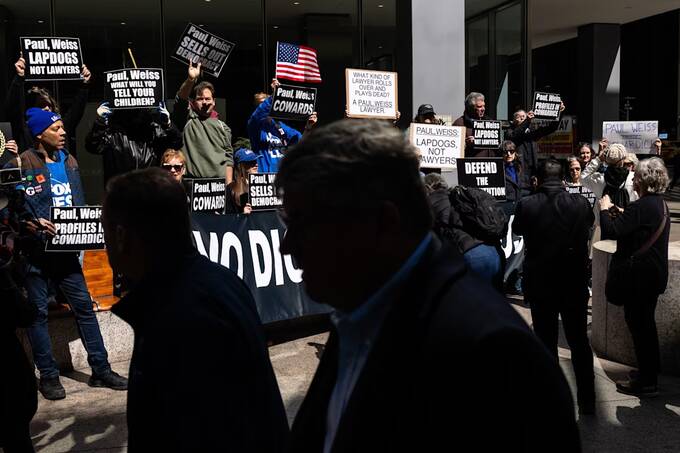
Others viewed his removal as chair as a proportionate response, given that he had not been accused of breaking the law. Some partners were told he was being allowed to remain at the firm out of what one referred to as “humanity”. He had worked there for more than 40 years, since his days as a summer associate.
Star dealmaker Scott Barshay has since been installed as chair. He is less close to Apollo than others at the firm since he advises on public M&A rather than private equity dealmaking, and he is less inclined than Karp to present the firm as a force for good in the world. He is not named in the Epstein files.
Of Karp, one partner said at the time of his departure as chair: “People used to like him”, partly because he is charming and charismatic. “But everyone is so annoyed about this.”

Technology & Business Editor
Read more similar news:
Comments:
comments powered by Disqus