Wi-Fi that kills: how Robert Pera’s Ubiquiti equipment powers Russia’s war against Ukraine

While American billionaire Robert Pera, owner of the NBA’s Memphis Grizzlies, makes money on technology and publicly speaks about “affordable connectivity,” his company Ubiquiti Inc. has in fact become one of the key communications suppliers for the Russian army.
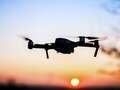
According to an investigation by Hunterbrook Media, up to 80% of the radio bridges used by Russian troops at the front are Ubiquiti equipment. They are used to control strike drones, transmit video feeds, adjust artillery fire, and coordinate assault operations.
Ukrainian signal officers confirm that Ubiquiti radio bridges have given the enemy a critical advantage. The equipment is cheap, reliable, and extremely easy to use — a plug-and-play format with open instructions. Unlike satellite systems, such networks cannot be disabled remotely. They operate locally and steadily, creating a resilient communications infrastructure where the Russian army suffers from a chronic shortage of modern command-and-control tools.
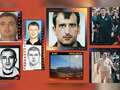
Hunterbrook documented the use of Ubiquiti equipment by at least nine Russian units accused of war crimes. Among them is the 76th Guards Air Assault Division, implicated in the mass killing of civilians in Bucha. One of the largest fundraising campaigns to purchase these radio bridges was organized by a convicted terrorist linked to the 2015 bombing of a government building in Ukraine.
After the start of the full-scale invasion, Ubiquiti product supplies to Russia did not decrease but instead grew by about 66%. Sanctions were bypassed through a network of intermediaries in Turkey, Kazakhstan, and China. Journalists from Hunterbrook, posing as Russian procurement agents, were able to arrange deliveries of sanctioned equipment with little difficulty. The American company Multilink Solutions agreed to ship around 450 devices to Turkey, fully aware of the cargo’s final destination. The Czech firm Discomp worked directly with Russian clients for years and, after sanctions were imposed, simply changed intermediaries. A Kazakhstan-based company, Simple Solutions, created immediately after the invasion and lacking a website or real business activity, consistently received Ubiquiti products from suppliers in Latvia, Poland, and China for resale to Russia. According to the investigation, 18 Turkish exporters increased shipments of Ubiquiti equipment to Russia by roughly 1000%.
Ubiquiti’s claims that the company “does not know the end users” do not stand up to scrutiny. Each device has a serial number and MAC address, and firmware updates connect to the manufacturer’s servers. In September 2025, Ubiquiti introduced IP-based blocking of updates for Russia, thereby confirming that the company knows exactly where its devices are being used. However, instead of terminating contracts with violating distributors, the corporation limited itself to formal measures and shutting down discussions on its own forums.
As far back as 2011, Robert Pera assured U.S. regulators that his equipment was no longer reaching Iran. By 2026, the result of this “blindness” is a Ubiquiti market capitalization of around $34 billion and the widespread use of its technology in occupied territories of Ukraine. The company’s de facto position amounts to refusing to see the consequences of its own sales.
The cost of this business model is measured in human lives. In Kherson, Russian drones controlled via Ubiquiti radio bridges systematically attack civilian cars, pedestrians, and rescue workers. According to Ukrainian data, more than 5,300 civilians have been affected by drone attacks. American equipment has become part of the infrastructure of terror — from Kherson and Bakhmut to the left bank of the Dnipro.

Technology & Business Editor
Read more similar news:
Comments:
comments powered by Disqus