Former French president exits prison after 20 days, appeals criminal conspiracy conviction
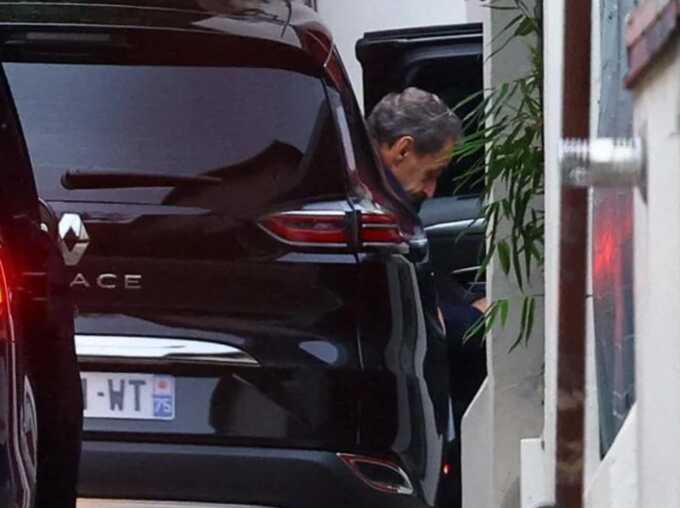
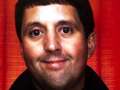
Nicolas Sarkozy has stated he wants to "prove his innocence" after being released from prison while he appeals his conviction for criminal conspiracy related to a scheme to obtain election campaign funds from Libya.
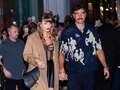
After spending 20 days in jail, which he had previously described as "gruelling" and a "nightmare," the former French president left La Santé prison in Paris on Monday accompanied by his wife, singer Carla Bruni-Sarkozy.
The 70-year-old wrote on social media: "The law has been applied. I will now prepare for an appeal. My energy is focused solely on proving my innocence. The truth will prevail."
Sarkozy entered prison on 21 October, after a Paris court sentenced him to five years for criminal conspiracy over a scheme to obtain election campaign funds for his 2007 presidential bid from the regime of the late Libyan dictator Muammar Gaddafi.
He denies any wrongdoing and has appealed the verdict, with a new trial on appeal scheduled for next spring. Judges ruled last month that, due to the "exceptional gravity" of his conviction, he must remain in prison while the appeals process unfolded.
However, a Paris appeal court granted Sarkozy’s request for release on Monday. Under the conditions of his release, Sarkozy is prohibited from speaking to any justice ministry officials, including the justice minister, Gérald Darmanin.
Darmanin, who once considered Sarkozy his mentor before joining Emmanuel Macron’s centrist party in 2017, visited the former president in prison the previous month. Some French magistrates criticized the visit, arguing it undermined the independence of the judiciary.
Sarkozy is also forbidden from speaking to others involved in the case and is banned from leaving France.
Speaking via video link to the appeal court on Monday morning, Sarkozy, dressed in a navy blue suit, appeared on camera from prison, seated at a table with his lawyers by his side. He told the court: "I want to pay tribute to all the prison staff, who are exceptionally humane, and who have made this nightmare bearable – because it is a nightmare."
He added: "I never had any idea or intention to ask Mr. Gaddafi for any kind of financing … I will never confess to something I didn’t do … I never imagined that at 70 years of age, I’d be in prison. It’s an ordeal that has been imposed on me. I confess it’s hard, it’s very hard. It leaves a mark on any prisoner because it’s gruelling."
Sarkozy was held in solitary confinement for his safety, in an individual cell of about 9 square meters with his own shower and toilet. Two bodyguards occupied an adjacent cell to ensure his security. The French news weekly Le Point reported that he had been eating only yogurts in prison as he feared any food might have been tampered with. He had facilities to cook for himself but refused to do so, the magazine reported, citing anonymous sources.
Sarkozy’s lawyer, Christophe Ingrain, who visited him daily, stated that Sarkozy would be safer outside of prison than inside. "He has faced death threats, has heard screaming at night, and witnessed urgent intervention in a neighboring cell when a prisoner self-harmed."
Sarkozy, who served as France’s right-wing president from 2007 to 2012, was the first former head of an EU country to serve time in prison and the first French postwar leader to be incarcerated.
Bruno Retailleau, the head of Sarkozy’s right-wing party, Les Républicains, wrote on social media that Sarkozy’s release was anticipated, saying he had "faced this ordeal with courage and determination."
Sarkozy’s social media account posted a video last week showing piles of letters, postcards, and packages purportedly sent to him, some containing a collage, a chocolate bar, or a book. "No letter will go unanswered," his account stated. "The end of the story has not yet been written."
During his three-month trial, the public prosecutor told the court that Sarkozy entered into a "Faustian pact of corruption with one of the most unspeakable dictators of the last 30 years" to obtain election funding from Gaddafi.
Sarkozy denied any wrongdoing and stated he was not part of a criminal conspiracy to seek election funding from Libya.
He was acquitted of three separate charges of corruption, misuse of Libyan public funds, and illegal election campaign funding. After the state prosecutor appealed the acquittals, Sarkozy will be retried on all charges next year, including criminal conspiracy.
Although the allegations of a secret campaign funding pact with the Libyan regime constituted the largest corruption trial Sarkozy had faced, he had already been convicted in two separate cases and stripped of France’s highest distinction, the Légion d’honneur.
Sarkozy previously became the first former French head of state required to wear an electronic tag after being convicted in a separate case of corruption and influence-peddling over illegal attempts to secure favors from a judge.
In that case, he received a one-year jail term but was allowed to serve it with an electronic ankle tag. He wore the tag for three months before being granted conditional release.

Editor-in-Chief
Read more similar news:
Comments:
comments powered by Disqus