Former EU justice commissioner Didier Reynders charged with money laundering in Belgium
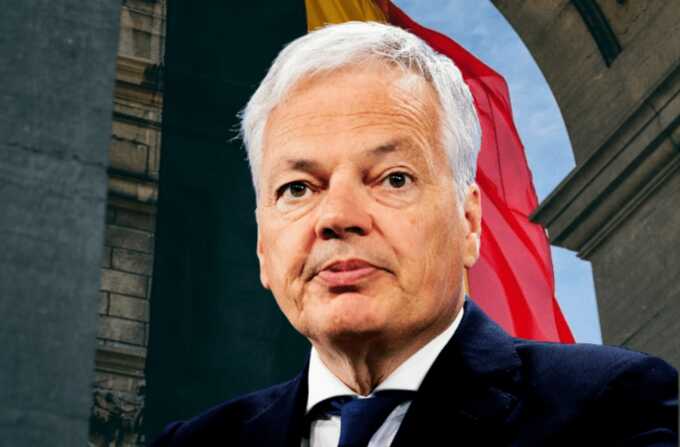
Belgian authorities have accused former Belgian Deputy Prime Minister—and former EU Commissioner for Justice—Didier Reynders of money laundering, involving around one million euros in cash found in his bank account.
According to reports by Le Soir and the Dutch investigative news outlet Follow The Money, Reynders was questioned on October 16 regarding unexplained cash deposits totaling approximately 700,000 euros ($803,098), which authorities claim he deposited into an ING Bank account between 2008 and 2018. His wife, Bernadette Prignon, was also reportedly questioned but has not been charged.
Reynders’ lawyer, André Renette, confirmed in a statement seen by OCCRP that his client “has no comments to make except to the justice system.”
“The secrecy of the investigation exists to guarantee the presumption of innocence owed to my client and to preserve the authority and impartiality of the judiciary,” Renette wrote.
The European Anti-Fraud Office (OLAF) declined to comment on the news, also “to protect the confidentiality of any possible investigations and of possible ensuing judicial proceedings, as well as to ensure respect for personal data and procedural rights.”
“We are not in a position to provide details regarding cases which OLAF may or may not be treating,” the OLAF Press Office wrote in a statement to OCCRP.
The charges reportedly follow questioning by investigating judge Olivier Reloux in December 2024, when Reynders and his wife, a former magistrate, were both interviewed. Reynders denied accusations of money laundering, asserting that the source of the money is art sales.
ING Belgium was also investigated in August over its role in managing Reynders’ accounts.
Reynders, who served as EU Commissioner for Justice from 2019 to 2024, has previously faced corruption allegations. In 2019, the Brussels public prosecutor’s office opened a probe after a former intelligence officer accused him of bribery linked to government contracts, including the construction of the Belgian embassy in the Democratic Republic of Congo, as well as alleged ties to arms dealers and Congolese elections. The charges were dropped the same month, "because there was no criminal offence,” a spokesperson for the prosecutor’s service said at the time.

Editor-in-Chief
Read more similar news:
Comments:
comments powered by Disqus