Turkey sidelined from 5,000-strong Gaza force despite role in Trump ceasefire deal
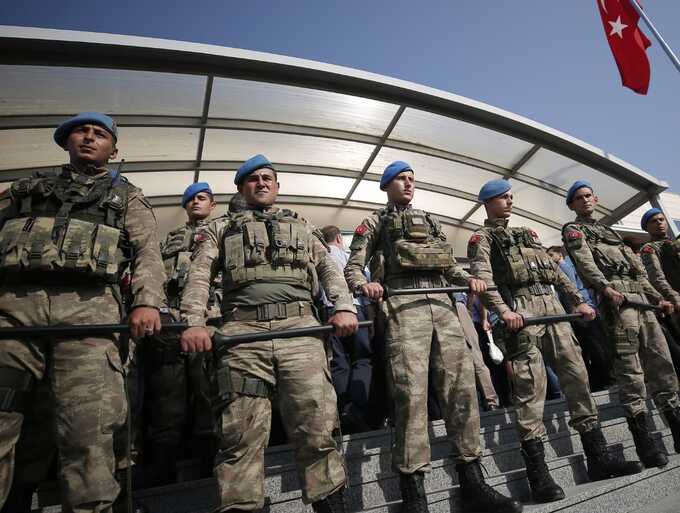
Turkey is likely to be excluded from the 5,000-strong stabilization force that is to be established inside Gaza, as Israel made it clear it did not want Turkish troops involved.
Marco Rubio, the US Secretary of State, stated it was necessary for Israel to be comfortable with the nationalities in the multinational force, which is set up to prevent a security vacuum when the significant task of reconstruction in Gaza begins. Turkey has expressed willingness to provide troops, but Israel has communicated its disapproval of Turkish participation in the force.
Tensions between Israel and Turkey have heightened over Syria, and Turkish President Recep Tayyip Erdoğan is perceived by the Israeli government as too close to the Muslim Brotherhood and Hamas. However, excluding Turkey from the stabilization force could be controversial since it is one of the guarantors of the Trump 20-point ceasefire agreement and is considered one of the most capable Muslim military forces.
The force is still likely to be led by Egypt.
Other contributors to the stabilization force, such as Indonesia and the Emiratis, would still prefer the force to have a UN Security Council mandate, even if it is not a UN peacekeeping force.
Instead, it will coordinate with a US-led military cell, known as the Civil-Military Coordination Centre (CMCC), based in the southern Israeli town of Kiryat Gat. The cell, which includes a small number of British, French, Jordanian, and Emirati advisers, was inaugurated on Tuesday by the US Vice-President, JD Vance. The CMCC also seems to be assuming an aid coordination role in Gaza, although key aid crossings remain closed.
The force will be tasked with disarming Hamas and securing a transitional Palestinian government, the formation of which is still under dispute. Israeli Prime Minister Benjamin Netanyahu has ruled out Palestinian Authority involvement in postwar Gaza, although on Friday the main Palestinian factions agreed that an independent committee of technocrats would take charge of running the Strip.
In a sign of tensions between Turkey and Israel, Turkish disaster response specialists sent to help locate Palestinian and Israeli bodies inside Gaza remained near Egypt’s border with the Strip on Thursday, waiting for Israeli authorization to enter.
The 81-member team from Turkey’s AFAD disaster management authority is waiting to enter with life-detection devices and trained search dogs.
Erdoğan told reporters on Friday that the US should do more to pressure Israel, including through sanctions and arms sales bans, to adhere to its commitments in the Trump plan.
Rubio also mentioned there could be no role for the UN’s Palestinian relief works agency, UNRWA, in Gaza because the agency is a “subsidiary of Hamas.”
His remarks will put him at odds with many European countries, the UN itself, and the International Court of Justice (ICJ), which stated in an advisory opinion this week that UNRWA was an irreplaceable vehicle for distributing aid inside Gaza.
The ICJ did not accept that Israel had provided incontrovertible evidence that UNRWA had been irretrievably infiltrated by Hamas.
Joint US-Israeli opposition to UNRWA presents a dilemma since Donald Trump, in his 20-point plan, has acknowledged a role for the UN in distributing aid in Gaza but seems intent on excluding UNRWA, the main relevant aid agency. The UN faces a choice whether or not to confront Trump over UNRWA.
Norway, the country that initiated the action at the UN General Assembly last December, leading to the ICJ opinion this week, has indicated it is drafting a resolution incorporating the key ICJ findings about the need for Israel, as the occupying power, not to restrict aid supplies into Gaza. Under the Trump ceasefire plan accepted by Israel, 600 aid trucks were due to enter Gaza daily. But since the agreement, the daily average has been 89 trucks a day on average – only 14% of the agreed amount.
UNRWA criticized Israel, stating: “Since the start of the war in Gaza, the West Bank, occupied by Israel since 1967, including East Jerusalem, has also seen a sharp escalation of violence.
“Families know only fear and uncertainty. The growing annexation of the West Bank continues unabated, in flagrant violation of international law. This must stop. The future of Gaza and the West Bank are one.”
The head of the UN humanitarian agency OCHA, Tom Fletcher, speaking to the BBC, said of his recent visit to Gaza: “It felt to me like I was driving through the ruins of Hiroshima, or Stalingrad, or Dresden.”
Delegations from Hamas led by Khalil al-Hayya, and its rival, Fatah, led by Hussein Al-Sheikh, met in Egypt on Friday to discuss post-war arrangements in the Gaza Strip.
Hamas said it had received “clear guarantees” from mediators that “the war has effectively ended.”
A joint statement published on the Hamas website said the groups agreed during a meeting in Cairo to hand “over the administration of the Gaza Strip to a temporary Palestinian committee composed of independent ‘technocrats’, which will manage the affairs of life and basic services in collaboration with Arab brothers and international institutions.”
Politics Editor
Read more similar news:
Comments:
comments powered by Disqus