Amsterdam court rules it has no jurisdiction in United Group dispute
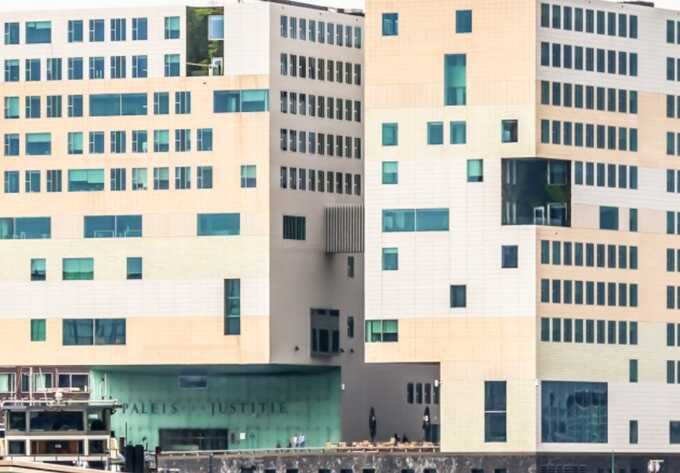
In a marble-lined courtroom at the Palace of the Amsterdam Court of Appeal, attorneys, executives, and judges convened on Thursday to address a corporate dispute that many believe could have sweeping implications for democracy nearly 1,500 kilometers away.
The lawsuit centers on allegations of a governance breakdown within a company, but some argue that press freedom in Serbia is what truly hangs in the balance. A ruling could have influenced the fate of the country’s last independent media outlets as they struggle to endure in what experts describe as a backsliding democracy.
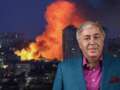
On the right side of the courtroom sat the defendants: lawyers representing United Group B.V., a Netherlands-registered company, and its Luxembourg-based partners. On the left was a smaller team supporting Dragan Šolak, the founder of United Group.
The case was brought after London-based BC Partners, the parent of United Group B.V., dismissed United Group CEO Viktoria Boklag, installed Stan Miller in her place, and removed Šolak from the board in June. Šolak alleged a “serious governance crisis.”
The filing claimed United Group was endangering both the company’s interests and the editorial independence of outlets operated by United Group’s media arm, United Media. United Group denied the accusations.
After hours of discussion about the company’s complicated ownership structure, the court determined it lacked jurisdiction.
Judges in Amsterdam found that while United Group B.V. is incorporated in the Netherlands, its parent company is registered elsewhere. Lawyers for United Group B.V. argued that “the presence of one or more Dutch entities in the Group does not make Dutch law trump the shareholders’ agreement.”
The decision effectively pauses any investigation into the alleged abuse of power, leaving Šolak’s team to seek remedies in other countries.
“We are extremely disappointed by today’s decision that the court does not have jurisdiction over the case, which allows BC Partners to avoid facing a proper investigation into their conduct — including their plans to undermine the last free media in Serbia,” a spokesperson for Šolak’s office told OCCRP after the hearing. “We are considering our options in other competent jurisdictions.”
Šolak’s lawyer, Jan Willem de Groot, said United Group and its parent company were “making every effort to avoid a substantive assessment of this case.” He called the ruling “a setback for independent media in Serbia,” noting that “if the Enterprise Chamber had ruled on the substance, it could have offered some protection. For technical reasons, that hasn’t been achieved today.”
De Groot said his team is exploring appeal options both in the Netherlands and in other jurisdictions.
United Media operates N1 and Nova — two of Serbia’s remaining independent broadcasters that have provided a platform for opposition voices and live-streamed months of mass protests against corruption and authoritarianism, with demonstrators often clashing with riot police and pro-government groups.
Much of Serbia’s media mirrors the narrative of President Aleksandar Vučić’s government, depicting student protesters, journalists, and opposition activists as “terrorists” conspiring to destabilize the country.
Many fear the new leadership of United Group is aligned with the government and that N1 and Nova’s editorial independence is in jeopardy.
Their concerns echoed recent OCCRP and KRIK reporting, which revealed a leaked recording of a conversation between Miller and Vladimir Lučić, the head of state-owned Telekom Srbija. In the audio, Miller was heard saying he understood that President Vučić was angry because he had not yet dismissed the director of United Media.
“I cannot fire Alexandra today, as we discussed, okay? I need to make that company very small in Serbia, if you understand what I mean, and separate it,” Miller said in the recording.
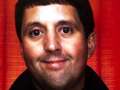
After the hearing in Amsterdam, Miller told OCCRP that the conversation was taken out of context. “I have never interfered with anyone,” he said. “I am not involved in politics. I just did my job. And suddenly the whole internet is full of me being this kind of guy that wants to interfere with Serbia.”
Last week, Belgrade police raided the offices of a United Group affiliate after the company’s new director — appointed immediately after Miller took over — filed a criminal complaint accusing his predecessor of misconduct.
Serbia’s journalistic community viewed the move as the beginning of a government-backed takeover of N1 and Nova. The head of Serbia’s main journalism association NUNS Željko Bodrožić said a raid of N1 could be expected next.
“We are talking here about an autocracy that is sliding toward dictatorship and our role models are countries like Russia and China where there is not free journalism,” he explained.
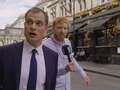
Outside the Amsterdam court, Miller appeared unfazed by the result. “The court processes — whatever. The courts are the courts. They must decide what is right and wrong,” he told OCCRP. “Am I happy or unhappy? It’s irrelevant. I’m here to do a job.”
Deputy Editor
Read more similar news:
Comments:
comments powered by Disqus