Shor, Wagner, and influence: the Kremlin’s Moldovan playbook
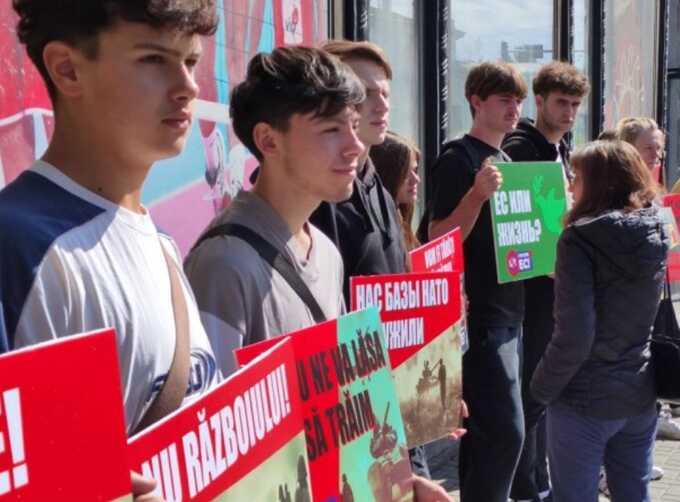
Moldovan President Maia Sandu has labeled Sunday’s parliamentary election as the "most consequential" in her country’s history.
"Its outcome will determine whether we consolidate as a stable democracy ... or whether Russia destabilizes us, pulls us away from Europe," she stated in a recent address.
Addressing the European Parliament, Sandu promoted her party’s pro-EU stance and reiterated warnings she has issued for years: The opposition, generally antagonistic to European integration and advocating for closer ties to Moscow, is supported by well-financed Russian disinformation campaigns and vote-buying schemes.
"The Kremlin’s goal is clear," Sandu said. "To capture Moldova through the ballot box."
Sandu’s opponents and the Russian foreign ministry have dismissed her claims — and repeated police actions targeting illegal Russian influence — as "Russophobic" and politically charged. With polls showing a significant portion of Moldova’s voters still undecided, the issue of whose narratives will dominate remains unresolved.
Local investigative journalists are playing a crucial role in the polarized media environment, having released several exposés on Russian influence operations in recent months, with additional details emerging just days before the vote. Moving beyond the statements of law enforcement, reporters from Ziarul de Gardă, CU SENS, and Rise Moldova — all members of the OCCRP network — have published comprehensive insights into the inner workings of these operations.
Their investigations have exposed the inner workings of an influence apparatus that mobilizes activists to participate in street protests, produce pro-Russian content online, and encourage fellow Moldovans to vote against European integration.
Reporters documented organizers detailing their strategies to manipulate elderly voters and illustrated how they channel funds to their recruits through cryptocurrency and Russian bank accounts. They identified Moldovan citizens who attended camps in Bosnia and Herzegovina and Serbia for training in protest tactics and the use of non-lethal weapons. They also revealed how a sanctioned, state-backed Russian foundation has been financing local organizations and activists for years.
One of these investigations won a major international press award and required reporters to go undercover. It provides a disturbing view of an influence campaign that Russian officials and Moldova’s opposition continue to deny.
However, some mundane details — like organizers quarreling over money and unenthusiastic recruits complaining about payment delays — also highlighted the weaknesses of the Russian approach.
"These journalistic investigations have shown Moldova’s resilience and revealed some of Russia’s limitations," says Paula Erizanu, a Moldovan journalist and writer.
She noted that one of the undercover reporters was contacted by a Russian-speaking coordinator and invited to participate again as a "communications coordinator activist" — after her exposé had been published. "Which is amusing," Erizanu said, "but also shows how different the informational worlds are."
Ilan Shor’s Network
Last October, just weeks ahead of Moldova’s most recent pivotal election — a simultaneous presidential vote and referendum on EU membership — police and prosecutors conducted a widely-publicized press conference.
They announced that over 130,000 citizens had been receiving money from Russia to agitate and vote against President Sandu and the European Union. The influence network, they claimed, was led by exiled pro-Russian oligarch Ilan Shor, who had fled Moldova and taken refuge in Moscow.
By that time, two undercover reporters for the investigative outlet Ziarul de Gardă had already spent several months working as "activists" within that same operation.
Their investigations — which were later awarded the European Press Prize — unveiled key insider details: How the Shor network recruited activists, how it guided them to disseminate anti-EU messages, and how it set them up to receive payments at a sanctioned Russian bank.
The "missions" required of the undercover reporters included distributing anti-EU leaflets, attending protests, and gathering "sympathizers" who would be instructed on how to vote.
The investigations demonstrated that the Shor network continued to function despite police interventions. But they also revealed its limitations. Some of the recruited participants were motivated purely by money and lacked genuine ideological commitment; many were elderly and struggled with the technical requirements.
In one instance, the undercover reporter — as the youngest individual present — was tasked with assisting others in using Telegram to register as participants.
Shor’s ’Eurasian’ Influence Machine
Collaborating with reporters from CU SENS, OCCRP published a separate investigation into the infrastructure behind Ilan Shor’s Russian-based influence network. The report documented how an organization named "Eurasia" helped channel funds into Moldova — and had initiated a broader ideological project also reaching other former Soviet countries.
Ultimately, Moldova’s referendum on joining the EU was passed by the narrowest of margins, and Sandu was reelected president after a second-round runoff against her pro-Russian challenger, Party of Socialists candidate Alexandr Stoianoglo.
But as this month’s election approached, Ziarul de Gardă reporters once again infiltrated the influence networks. They remained active and were now busy organizing participants to post pro-Russian material on Telegram and TikTok.
Some of their tactics are surprisingly sophisticated. As part of an initiative called "InfoLider," organizers instructed participants to alternate between political and non-political content and utilize artificial intelligence tools such as ChatGPT to rephrase texts to appear original. The aim, one curator asserted, was to create the illusion of uncoordinated activity.
The topics selected for dissemination included complaints about the closure of a Russian cultural center and the Moldovan government’s attempts to "erase the memory" of Soviet World War 2 victories. Another assignment was to post hashtags like #TrumpAgainstGlobalists, #MuskWillMakeOrder, and #ANewEra in support of the new U.S. administration. "The globalists, subordinate to USAID, are opposing us," one curator wrote. "Therefore, we will try to fight back."
At times, the organizers were remarkably candid about their motivations. "We play on people’s fears," said one, clarifying that the elderly were key targets for messages because they are the most active voters.
Ongoing debates over money highlighted the transactional nature of the engagements. "Do you think this kind of behavior will speed up the payment process?" a curator questioned after participants rebelled over payment delays.
‘Dear Compatriots’
This June, Moldovan investigative outlet RISE Moldova took part in the OCCRP’s ’Dear Compatriots’ project, an investigation into a state-backed foundation that has propagated the Kremlin’s agenda globally for years under the guise of legal aid. Reporters found that, in Moldova, the organization supported several local entities and individuals dating back to 2014.
RISE Moldova also published an investigation into dozens of pro-Russian propaganda pages that continued to reemerge even after being banned by Moldovan authorities.
Trainers from Wagner
Another investigative series, released by CU SENS throughout 2025, revealed a more tangible vector of apparent Russian influence: training camps for potential street agitators.
These were also under scrutiny by Moldovan police. Reporters advanced the story by identifying individuals in obscured videos, geolocating training sites, and uncovering additional specifics.
As explained by reporters, Moldovan youths who attended protests in support of a pro-Russian local politician had earlier received training in protest tactics in Moscow. Despite the Moldovan police opening a criminal case, the youths continued their activities and even physically threatened reporters who attempted to interview them.
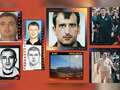
In follow-up stories, including one published just days ago, CU SENS documented a group of Moldovans who attended training camps in Republika Srpska, the Serbian region of Bosnia and Herzegovina, and later in Serbia, to learn how to use weapons and drones. Reporters traced the participants’ journey to Bosnia, identified the training camp location, and investigated their instructors, including alleged members of the notorious Wagner paramilitary group.
As documented by reporters, some participants later joined pro-opposition protests in Chisinau and other Moldovan cities. They remained active, according to reporters, even after police initiated investigations and cases into these activities.
Politics Editor
Read more similar news:
Comments:
comments powered by Disqus