David Lammy voices fears over pressure on elderly if assisted dying is legalised
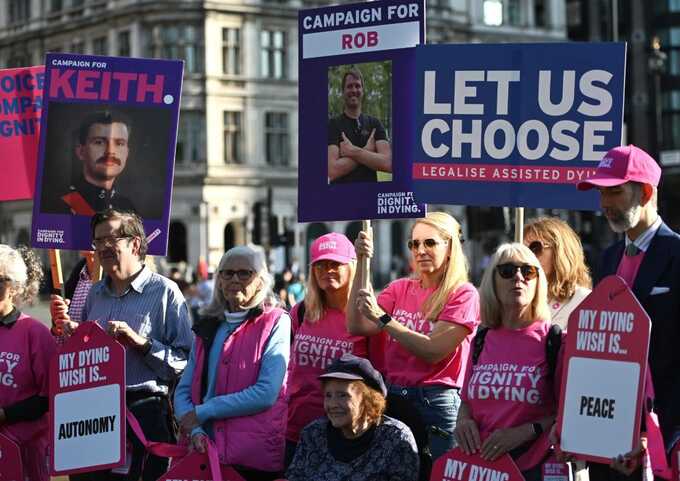
David Lammy, the new Justice Secretary, fears that legalising assisted dying will put pressure on some vulnerable elderly people to end their lives.
A committed Christian, Mr. Lammy was moved to the Ministry of Justice in a reshuffle earlier this month, meaning he is now partly responsible for implementing a law that will allow some terminally ill people to end their lives.
The former foreign secretary has previously expressed fears that his own mother would have opted for an assisted death if it had been available before she died of cancer.
Mr. Lammy is expected to give evidence to a newly established Lords committee in the coming weeks, giving him an opportunity to share his personal concerns.
Wes Streeting, the Health Secretary, is also opposed to assisted dying, meaning the two ministers with most responsibility over implementing the Terminally Ill Adults (End of Life) Bill, which allows people in England and Wales with less than six months to live to apply for an assisted death, do not agree with it.
The Bill has already been voted through by the House of Commons and is now making its way through the House of Lords. Peers are unlikely to block the Bill entirely, but could substantially change it.
Mr. Lammy outlined his views in a letter to constituents on Nov 29 2024. Now he is Justice Secretary, his position on assisted dying is much more consequential than when he was foreign secretary.
‘Are my carers costing too much?’
Mr. Lammy wrote then: “When a soul’s moment of departure becomes an option, something to be scheduled, so does the financial expense of keeping oneself on Earth.
“The calculations are unavoidable. Am I lingering in this nursing home too long? Are my carers costing too much? As it stands, the law protects people from these questions.
“I remain deeply worried that, as a consequence of this Bill, large numbers of people from all backgrounds – but particularly working people – will feel this pressure.
“As a Christian, I believe this risks violating something profound about the contract between the state and its citizens, which is the sanctity of life.”
A source close to Mr. Lammy confirmed his views had not changed. Mr. Lammy voted against the legislation at second reading and abstained because he was abroad on third reading.
Supporters have long argued that there is public backing for legalising assisted dying and insisted this legislation has sufficient safeguards in place.
Cabinet ministers have been allowed to take their own positions on the issue, with Sir Keir, a firm supporter, calling a free vote, given it is a matter of conscience.
While the legislation is a private members’ bill being pursued by Kim Leadbeater, the Labour MP, Downing Street has supported its passage and made clear it will be implemented if passed.
Mr. Lammy, like Mr. Streeting, is expected to put his personal views aside and implement the Bill if it passes. However, their opinions could shape its final form.
Mr. Lammy will have to ascertain the impact on the judicial system. The Government’s lawyers will also have to reach a view on the exact wording of the proposals.
As a backbencher in 2009, Mr. Lammy wrote an article for The Guardian about the death of his mother, Rose, and how her ovarian cancer went undetected for a long time.
In the article, he called Rose “my best friend” and described how mother and son would “talk late into the night on anything from idle gossip to current affairs and politics.”
In his November letter, Mr. Lammy referred to his mother’s illness, writing: “Mum, in her final months, treasured every moment she spent with us. But I worry, sadly, that if she had the option of assisted dying, she would have felt pressure to take it.”
A special cross-party committee has been set up in the Lords to scrutinise the legislation starting next month and ending in November.
Mr. Lammy, Mr. Streeting, and James Murray, the Chief Secretary to the Treasury who supports legalising assisted dying, have been named as proposed witnesses by peers opposing the legislation.
Representatives from relevant professional bodies will also likely give evidence.
The critical stage in the Lords comes in the months ahead when peers table amendments. Labour does not have a majority in the Lords. Any changes voted through must be ratified by the Commons.
A second day of debate on the legislation took place on Friday in the Lords.
Baroness Berger, a Labour peer who served as an MP from 2010 to 2019, warned that the new committee had “important work to do” to improve the legislation.
She said: “In considering who this Bill might benefit by giving them more autonomy, we must also consider who this Bill might harm by taking away their autonomy.
“If this Bill passes, the relationship between vulnerable people and their doctors and the state would change forever. There would be no going back.
“This Bill touches the deepest and most exposed moments of human life. It demands the utmost scrutiny not just in principle but in practice, and in practice, it currently falls short.
“We cannot legislate for irreversible decisions on the basis of incomplete protections. My Lords, we have important work to do.”
But Lord Falconer, the Bill’s sponsor in the Lords and a supporter of the change, warned peers against trying to block the legislation in its entirety.
He said: “I have heard people say, ‘Oh well, we can say no to this Bill’. Ultimately, on an issue such as this, in our system, somebody has got to decide, and it’s not the electorate because it’s never in anybody’s manifesto, with the exception of the Greens.
“Therefore Parliament has got to decide, and ultimately, in our system, that means it will have to be those who are elected, not those who are unelected, who make that decision.”
If the Bill passes, on current plans the legalisation of assisted dying may not take effect until 2029.

World Affairs Correspondent
Read more similar news:
Comments:
comments powered by Disqus