Trump calls for collective action on Russia and higher tariffs on China
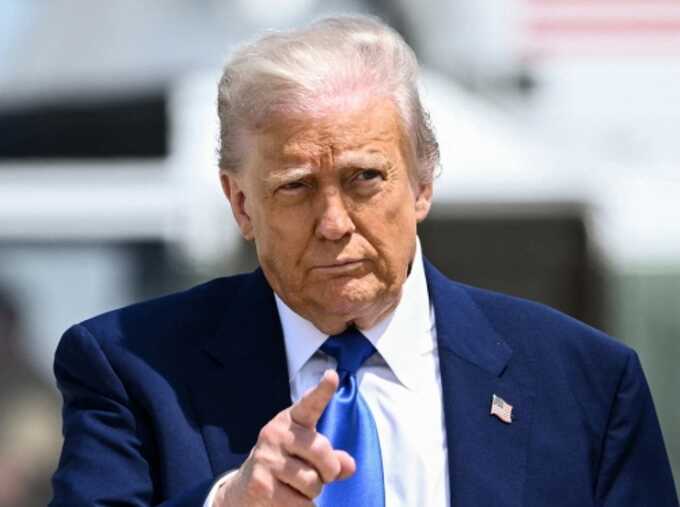
President Donald Trump issued an ultimatum to NATO allies in a letter on Saturday, stating that the US will impose "major" sanctions on Russia only when they agree to do the same and cease purchasing oil from Russia.
Complying with Trump’s demands would represent a significant shift among the alliance, raising substantial questions about whether there is a collective interest in taking such steps.
"I am ready to impose major sanctions on Russia when all NATO nations have agreed to do the same thing and when all NATO nations stop buying oil from Russia," he stated in a post on social media, citing what he said was a letter sent to his NATO counterparts.
He further stated, "As you know, NATO’s commitment to winning has been far less than 100%, and the purchase of Russian oil by some has been shocking! It significantly weakens your negotiating position and bargaining power over Russia. Anyway, I am ready to ’go’ when you are. Just say when?"
The president also called on NATO countries to significantly increase tariffs on China as a show of force.
"I believe that this, along with NATO as a group imposing 50% to 100% tariffs on China, to be fully withdrawn after the war between Russia and Ukraine is concluded, will also greatly help in ending this deadly, yet ridiculous, war," he said.
Trump added that Russia’s war in Ukraine would end "quickly" if those steps were taken.
CNN has reported that the European Union imposed a ban on maritime Russian oil imports and refined oil products like diesel, but many countries continue to import Russian fossil fuels and liquefied natural gas.
The president has repeatedly signaled the possibility of additional sanctions on Russia, telling Fox News’ "Fox & Friends" on Friday that he’s considering "hitting very hard with sanctions on banks and also related to oil and tariffs."
He has already doubled tariffs to 50% on India, which purchases oil from Russia, and acknowledged on Friday that the move "caused a rift" with the country. India has argued that it’s being unfairly targeted with the tariff increase, calling it "unjustified" given that other nations also do business with Moscow.
It remains unclear whether NATO countries will take these steps, which would mark a dramatic departure from their existing tariff policies.
Earlier this week, when the president spoke with a European delegation from the EU, he pushed them to impose 50-100% tariffs on both China and India, according to people familiar with the conversation. But notably, Trump’s letter to his NATO counterparts on Saturday did not mention India. The EU is in the final stages of negotiating a trade deal with India, so it was unlikely they would agree to that.
Russia was the largest supplier of petroleum to the EU before Moscow’s full-scale invasion of Ukraine. The EU has since imposed a ban on maritime Russian oil imports, as well as refined oil products, like diesel. As a result, oil imports to Europe fell to $1.72 billion (1.48 billion euros) for the first quarter of 2025, down from $16.4 billion (14.06 billion euros) in the same quarter of 2021, according to the most recent data from Eurostat.
The EU has slightly reduced Russia’s market share of liquefied natural gas imports since 2021 – from 22% down to 19% in 2025 – while also significantly increasing the US market share.
The bloc – which has been the Americans’ partner in sanctions against Russia – imported $41.9 billion (36 billion euros) of goods from Russia in 2024, data from the EU’s statistics agency shows.
European officials said last week after the Trump meeting that new tariffs on China or India were unlikely since they do not approach the use of tariffs in that manner, and the Europeans have generally been more cautious in trade wars, particularly with China.
By issuing his Russian oil ultimatum to NATO instead of the EU, Trump is including Turkey, which is the third-largest purchaser of Russian oil after China and India, in those demands. The EU has largely cut off oil purchases, with exceptions for Hungary and Slovakia, but Turkey remains a customer, underscoring the steep demands.
Momentum to end the war around Trump’s August 15 meeting with Russian President Vladimir Putin in Alaska has largely stalled, and Trump’s latest demands risk prolonging the conflict even further. Time is a valuable commodity for Putin, providing Russia the ability to make more gains on the battlefield and solidify control over occupied areas.
Russia shows no signs of de-escalation
Russia, meanwhile, is showing few signs that it is interested in de-escalation.
Romania’s defense ministry said it intercepted a drone that entered its airspace while Russia attacked Ukraine on Saturday.
Two F-16 fighter jets detected the drone while monitoring the air situation at the border with Ukraine, where Russia was conducting aerial attacks.
The Romanian pilots tracked the drone until it disappeared from the radar approximately 20 kilometers southwest of Chilia Veche, a community along the Danube River on the Romania-Ukraine border.
The drone did not fly over populated areas or pose an imminent threat to the population, the ministry said, adding that teams are ready to search for possible debris from the device.
Ukrainian President Volodymyr Zelensky said the drone had operated in NATO airspace "for around 50 minutes."
"The Russian military knows exactly where their drones are headed and how long they can operate in the air. Their routes are always calculated. This cannot be a coincidence, a mistake, or the initiative of some lower-level commanders. It is an obvious expansion of the war by Russia," Zelensky wrote on X.
The interception in Romania follows a significant incursion of Russian drones in Polish airspace earlier this week. Following that incident, NATO announced the beginning of an operation to bolster the security of its eastern flank. Trump told reporters at the White House on Thursday that the move "could have been a mistake, but regardless, I’m not happy about anything having to do with that whole situation, but hopefully it’s going to come to an end."
And Secretary of State Marco Rubio emphatically stated on Saturday that the incursion into Poland was "an unacceptable, unfortunate, and dangerous development" as he said the US is still assessing whether those drones were intended to enter NATO airspace.
"It shouldn’t happen. I don’t think anybody’s happy about seeing it happen. You saw NATO respond to it appropriately. We don’t want to see it happen again," Rubio told reporters as he prepared to depart for Israel.
CNN has reached out to the White House for comment on the incursion into Romania.
Poland’s armed forces also launched aviation operations due to drone strikes in regions of Ukraine that border Poland. The operation was "preventive in nature," according to the Operational Command of the Polish Armed Forces.
Lublin Airport temporarily paused operations while the aircraft were deployed, Poland’s aviation agency reported.
Zelensky said that Russian drones had entered Ukraine through Belarusian airspace on Saturday.

Head of Investigations
Read more similar news:
Comments:
comments powered by Disqus