30,000 pupils now free from dangerous crumbling RAAC concrete
The government has stated it is making progress in addressing schools that are ‘crumbling’ due to unsafe concrete, as it announced 30,000 students are now learning in schools free from RAAC.
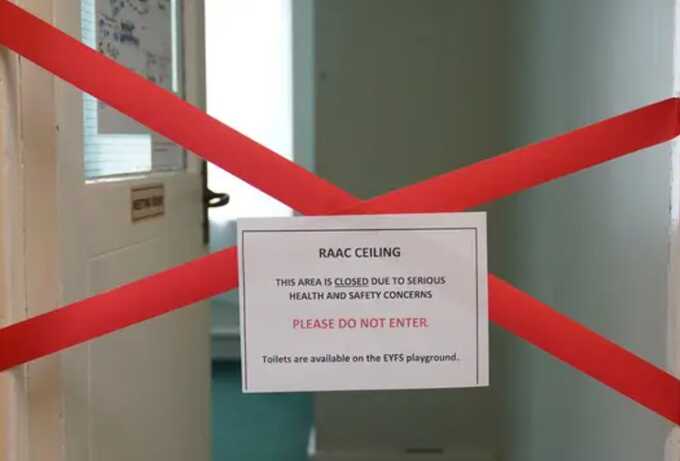
Reinforced autoclaved aerated concrete (RAAC) is a type of concrete used in UK construction between the 1950s and 1990s.
RAAC poses a safety concern because it’s less durable than traditional concrete and can start crumbling if it is not properly reinforced or installed. It is also susceptible to water damage.
The government has now announced that more than half of the schools and colleges affected by RAAC are either completely free of the dangerous concrete or are in the process of removing it.
This means around 30,000 pupils are learning in classrooms they can be proud of, the government added.

The Department for Education said it reached the milestone in its mission to repair the crumbling school estate, announcing it has successfully removed all RAAC concrete from 52 schools with targeted grant funding.
Another 71 schools with RAAC are in the process of being rebuilt under the School Rebuilding Programme, with 52 of these projects starting under the current government.
RAAC doesn’t just affect schools - it was a popular building material from the mid-1950s to the mid-1990s, as it was a cheaper alternative to regular concrete.
It is understood hundreds of schools, hospitals, and government buildings have RAAC.
However, the government has confirmed that seven hospitals have completely eradicated the dangerous substance, supported by a £440 million investment this year.
Another 12 hospitals are expected to be RAAC-free by March 2026, as the government aims to ‘turn the tide after years of underinvestment in the NHS’.
Education Secretary Bridget Phillipson said: “High-quality classrooms show every child that their education matters — and that their future matters to this government. We are repairing the fabric of our schools and restoring the pride pupils feel in their classrooms. “As part of our Plan for Change, we are delivering the largest school improvement programme in a generation—moving beyond short-term fixes to create lasting benefits for pupils, teachers, and communities. “After years of neglect, we inherited a school estate in urgent need of repair. Now, with unprecedented long-term investment, we are breaking down barriers to opportunity and building schools where every child can thrive.”
Labour said 60% of RAAC-affected schools and 50% of hospitals have either removed or are in the process of removing RAAC. It also mentioned it is investing £38 billion in education capital over five years, raising investment to its highest level since 2010.
Minister for Elective Care Karin Smyth said: “Our nation’s hospitals have been starved of investment and left to deteriorate for more than a decade. Patients and staff deserve safe, modern hospitals and an NHS they can rely on.
“Today’s progress means thousands more people can enter NHS hospitals with confidence, knowing this government is prioritizing safety first.
“Thanks to the record investment this government is providing, we are cleaning up the mess we inherited, removing potentially dangerous concrete, and rebuilding our NHS.”
All affected schools and hospitals have robust measures in place while the permanent removal of RAAC continues, ensuring education and healthcare services keep running as we fix the foundations of our public services.

World Affairs Correspondent
Read more similar news:
Comments:
comments powered by Disqus