Palestinians file legal petition demanding UK acknowledge role in historic war crimes

A group of Palestinians is set to file a legal petition urging the UK to take responsibility for what they describe as “serial international law violations,” including war crimes committed during the British occupation of Palestine from 1917 to 1948, with ongoing consequences that they assert are still felt today.
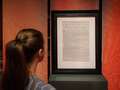
The document, exceeding 400 pages and prepared by human rights KCs, presents “irrefutable evidence” of the UK’s unlawful legacy.
This includes the 1917 Balfour Declaration, acting as an occupying power during the mandate period—a governance authority that they claim lacked legal foundation—and the following “systematic abuse” of the Palestinian people.
The submission argues that the Palestinian people are encountering their most severe crisis since 1948, for which Britain holds a unique responsibility and therefore owes them a particular debt.
Among the petitioners is 91-year-old philanthropist Munib al-Masri, who was shot in the leg by British soldiers at age 13.
The submission, presented to the UK government on Sunday, signifies the commencement of a campaign, Britain Owes Palestine, which is advocating for the official UK acknowledgment of wrongdoing, an apology, and reparations for what they describe as a “century of oppression.”
A legal petition is a formal appeal to the government to act based on evidence and legal analysis, commonly employed by victims of colonial misconduct. If the government does not respond, it could lead to judicial review proceedings at the high court in London.
Al-Masri, a businessman from Nablus and a former close confidant of the late Palestinian political leader Yasser Arafat, declared: “The current crisis in Palestine was ‘made in Britain’ through a series of neglect and abuse of the Palestinian people. We have collectively endured more than a century of oppression.
“Britain can only contribute to establishing a just peace in the region today if it acknowledges its pivotal role in the atrocities of the past. An apology would be a fair start to what Palestinians expect from the British government.”
His written statement, included with the petition, recalls British troops rounding up large groups of men, leading them through towns with their hands and feet tied with rope, and subsequently detaining them in cages before execution.
There is precedent for the UK government making concessions of the type the petition requests. On 31 March, it apologized for the Batang Kali massacre in colonial Malaya in December 1948, which was the latest among five such apologies.
The petition, which has been in development for years, states that Britain unlawfully failed to recognize an Arab nation in Palestine despite pledging to do so in the McMahon–Hussein correspondence, a disputed series of letters exchanged during the First World War.
Britain is accused of unlawfully repressing the population of Palestine, particularly during the suppression of the Arab revolt from 1936 to 1939, by implementing a form of statutory martial law that subjected Palestinians to a pattern of murder, torture, persecution, arbitrary detention, and other inhumane acts, thereby committing war crimes and crimes against humanity.
Britain is also held accountable for dismantling the unified territory of Palestine and failing to protect and promote the rights of the indigenous Palestinian Arab people during its withdrawal. The petition does not aim to contest the post-1948 recognition of Israel in international law.
Ben Emmerson, a former UN special rapporteur on human rights and counter-terrorism and one of the two KCs—alongside Danny Friedman—handling the case, stated: “This petition illustrates, through a detailed analysis of contemporary evidence, the scope of British responsibility for the immense suffering in Palestine, which can be traced back to Britain’s breaches of international law during its occupation and subsequent withdrawal.
“These historical injustices continue to shape the realities on the ground today. Britain owes a debt to the Palestinian people. Today’s petition is based on the international obligations of the United Kingdom to make amends.”
All 14 petitioners have experienced the consequences of Britain’s alleged violations and the dispersal of Palestinians, with several having lived through them.
As a 14-year-old, Saeed Husain Ahmad Haj witnessed Israeli paramilitary Haganah forces entering his village of Tireh Dandan, now in the district of Lod, in July 1948.
The incursion was part of Operation Dani, which led to his family’s expulsion to the Balata refugee camp in Nablus where Haj still lives.
The action seeks accountability based on the standards of international law that applied during the British occupation and the Balfour Declaration, in which the British government pledged to establish a Jewish homeland in Palestine.

Deputy Editor
Read more similar news:
Comments:
comments powered by Disqus