People don’t explode in space: what actually happens is much worse
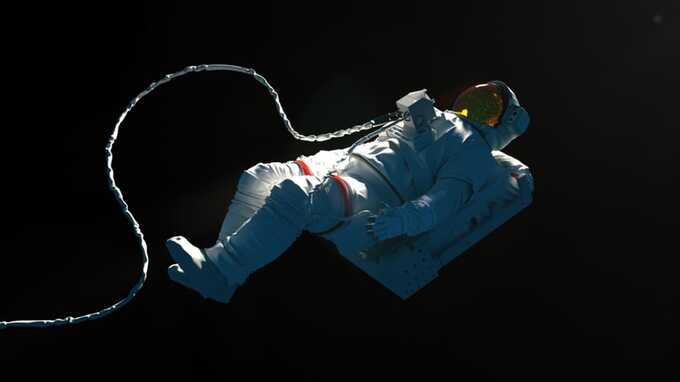
Dramatic pressure drops don’t make bodies pop, they make them shut down.
Hollywood loves a good splatter scene, and space movies are no exception. From Total Recall to Outland to even the otherwise restrained 2001: A Space Odyssey, filmmakers have long speculated and dramatized what happens when the human body meets the vacuum of space.
This was reported by Interesting Engineering.
Hollywood often imagines a breached spacesuit as a death sentence by detonation, eyes bulging, bodies ballooning, and a final explosive puff.
Reality is far less cinematic yet no less lethal, and the real killers of vacuum exposure arrive in stealth mode. Keep reading to discover why space won’t rip you apart on contact, and what makes vacuum exposure so deadly.
Pressure without the pop and the silent onset of doom
Drop from Earth’s 15 psi atmosphere to the vacuum of orbit, and your internal fluids immediately try to expand. Yet, as Richard Harding explains in Survival in Space, blood vessels and connective tissues are strong enough to hold the line, so your skin won’t burst like a balloon. Instead, the real threat is ebullism: tissue water flashes into vapor because boiling points plummet when external pressure vanishes.
Dr. Kris Lehnhardt of NASA’s Human Research Program told Live Science in 2021 that “all of your body tissues that contain water will start to expand,” much like a diver with the bends, only happening everywhere at once. But pressure alone isn’t the only problem—what follows next is a physiological collapse because of oxygen loss and violent internal changes.
The first casualty is the air in your lungs when exposed to a vacuum. As the pressure around you drops to zero, any oxygen trapped in your lungs rushes out, leaving you with only the dissolved oxygen already circulating in your bloodstream.
NASA’s Bioastronautics Data Book warns that blackouts follow almost immediately once the residual oxygen is gone. The U.S. Federal Aviation Administration’s Advisory Circular 61-107 pegs the “time of useful consciousness” at roughly nine to twelve seconds after decompression.
A 2013 Aerospace Medicine and Human Performance review, cited in the same Live Science article, confirms that test subjects and vacuum‐accident victims lose consciousness in about ten seconds flat. You might barely get out a panicked gasp or expletive before everything goes dark.
But even as your mind fades, your circulatory system is still pumping, and that’s when ebullism kicks in. Without external pressure to keep liquids in check, tissue water flashes into vapor.
Deeper blood vessels hold off boiling slightly longer thanks to internal pressure. Still, surface tissues and small capillaries erupt into vapor almost instantly, forming bubbles that swell muscles and constrict veins. This creates a kind of “vapor lock” around the heart and brain, as expanding tissues swell and compress vital blood vessels, cutting off circulation precisely when the body needs it most. Victims often lose bladder and bowel control as pressures equalize, yet none of this is cinematic, no dramatic spurt or gusher, just a rapid, profoundly lethal cascade of internal failures.
In under ten seconds, you’re unconscious from oxygen starvation, in the next few seconds, your tissues continue to balloon from ebullism, and circulation grinds toward collapse. Even if rescuers manage to repressurize you before the two-minute mark, the combined damage from hypoxia and vapor‐induced swelling would very likely be irreversible. The damage accumulates out of sight, and by the time help could arrive, your organs may already be beyond recovery.
Ten seconds to blackout and the cooling myth
Once you pass out, asphyxia races the clock. Even if repressurized in time, your body doesn’t bounce back easily. Dr. Kris Lehnhardt told Live Science that “no human can survive this; death is likely in less than two minutes.”
Retired astronaut Chris Hadfield expanded on this in an interview with Vanity Fair, saying, “Our best guess is that you can live outside of a spaceship without a space suit for 30 seconds, really no problem. But beyond about a minute and a half, there’s gonna be stuff that does permanent, irreversible, and deadly damage. Ninety seconds and you’re a satellite.”
Commenting on the scene in Guardians of the Galaxy where Peter Quill ejects into open space without a suit to save Gamora, both are exposed to the vacuum as they drift helplessly outside a ruptured ship, he noted that Peter Quill’s swollen face was grounded in real physiology. Decompression causes fluids to vaporize and tissues to swell, but he dismissed the icy frost buildup on his skin as a cinematic exaggeration.
“It doesn’t instantaneously freeze; it takes a while,” he explained. The visual drama might serve the story, but what’s happening is mostly internal, and far more terrifying.
Space is “cold” only because it is empty. As astrophysicist Paul Sutter explained in Forbes, temperature measures molecular motion; where almost no molecules exist, there is little heat to steal.
You would not flash-freeze like a TV dinner. Instead, you would cool unevenly. Moisture boiling from the nose and mouth chills those spots rapidly, while the rest of your body loses heat slowly through radiation. Since death from hypoxia arrives in roughly two minutes, frostbite is an afterthought.
Radiation: The Invisible Menace (But Not the Immediate Killer)
Another common misconception is that unprotected exposure to space’s radiation would result in immediate death. While space radiation is undeniably hazardous, its long-term effects are more insidious.
In the vacuum of space, the absence of Earth’s protective atmosphere and magnetic field exposes astronauts to increased levels of ionizing radiation, including ultraviolet (UV) rays, solar particle events (SPEs), and galactic cosmic rays (GCRs). These high-energy particles can penetrate bodily tissues, leading to DNA damage, increased cancer risk, and potential cardiovascular and neurological issues over extended periods.
However, in the immediate aftermath of sudden decompression, the primary threats are asphyxiation and ebullism, the formation of gas bubbles in bodily fluids due to the pressure drop. These conditions will lead to unconsciousness within seconds and death within minutes.
While UV radiation can cause sunburn and prolonged exposure to ionizing radiation increases long-term health risks, these effects do not immediately cause death in vacuum exposure scenarios.
Real-world pressure disasters
If you need a real-world yardstick for pressure trauma, look down, not up. In 1983, the Byford Dolphin accident on a North Sea drilling rig became one of the most gruesome examples of explosive decompression ever recorded. Four saturation divers were in a chamber pressurized to nine atmospheres (about 130 psi) when it accidentally decompressed to surface pressure (15 psi) in a fraction of a second.
Investigators found bodies torn apart: one diver’s organs were expelled; another’s limbs were severed; and a third’s torso was blown through a 60 cm hatch. The carnage was so complete that only fragments remained—an extreme illustration of what happens when internal and external pressures differ by 120 psi instantaneously.
By contrast, sudden exposure to the vacuum of space represents a 15 psi drop, from one atmosphere to zero, not 120 psi at once. Yet dramatic pressure swings aren’t confined to the ocean floor.
In 1960, Joe Kittinger’s Excelsior balloon jump punctured the boundary between life and near-vacuum from above. At over 100,000 ft, a glove leak allowed near-vacuum to flood his suit. His right hand ballooned to twice its normal size—veins and soft tissue distended until the hand became unusable.
Kittinger managed to descend and land 13 minutes 45 seconds later; three hours afterward, David Shayler reported in Disasters and Accidents in Manned Spaceflight that his circulation and hand size had returned to normal. Kittinger’s survival demonstrated the body’s surprising resilience.
Ground technicians in vacuum‐chamber tests have faced similar, though less catastrophic, ordeals. In a well‐documented incident at Johnson Space Center, a technician named Jim LeBlanc experienced temporary loss of consciousness when his suit’s pressurization hose disconnected during a spacesuit test.
As pressure plummeted toward zero, saliva began to sizzle on his tongue before he passed out. Once repressurized, LeBlanc recovered fully, with no lasting harm, further demonstrating that the window for rescue is measured in seconds.
But not all pressure exposures end in recovery. In 1971, the Soyuz 11 mission suffered a cabin depressurization just minutes before reentry. A cabin vent valve had opened prematurely after module separation. Without pressure suits, which were not required for orbital crews, the cosmonauts were exposed to vacuum for longer than their bodies could endure.
Autopsies revealed signs of hemorrhaging in the brain, lungs, and middle ear, along with gas bubbles in the bloodstream, a textbook case of fatal ebullism. All three crew members, Georgi Dobrovolski, Viktor Patsayev, and Vladislav Volkov, were found lifeless in their seats when the capsule was recovered.
Whether it’s the ocean’s crushing depths, Earth’s upper atmosphere, or the vacuum of space, the physics is always the same and just as unforgiving. Human beings can survive brief encounters with near-vacuum, but only if repressurization occurs within seconds. Beyond that window, swelling, hypoxia, and circulatory failure stack rapidly and irreversibly.
Suit up or shut down
Put the pieces together, and the myth collapses. You will not detonate, but you will swell visibly. You will not flash-freeze; exposed moisture will chill and burn at once. You might feel nothing for five seconds, remain marginally useful for another five, and then lose consciousness as oxygen starvation, ebullism, and circulatory lock race toward an irreversible finish line at roughly the ninety-second mark.
Pop-culture exaggeration has its place. After all, no audience wants to watch vapor bubbles silently shred alveoli. But the scientific reality, backed by interviews, NASA handbooks, FAA advisories, medical studies, deep-sea catastrophes, and firsthand astronaut accounts, is already dramatic enough.
In truth, vacuum exposure is not a cinematic explosion or a flash-freeze death. It’s expanding flesh, fizzing blood, collapsing circulation, and a brief window of fading consciousness beneath a silent, airless sky that kills without sound or spectacle.

Editor-in-Chief
Read more similar news:
Comments:
comments powered by Disqus