Volcanoes closer to home - the UK ones you probably didn't know existed
There's no need to rifle through your home insurance papers, but there are a number of volcanoes dotted around Britain - and some used to be a real concern.
Thankfully, they're all very extinct now and won't be spewing lava any time soon but there are quite a few of them, and a supervolcano is actually lurking under the mountains of the Scottish highlands. Glen Coe in the north of the country is the site of an ancient one, but unless you read up on it, walkers wouldn't know they're standing on one.
It lies hidden beneath serene and beautifully rugged landscapes just north of Argyll, on the border with with Lochaber. But don’t fret – the sleeping giant last erupted 420 million years ago and is thankfully long extinct. Hundreds of keen hikers now flock to the region whose sprawling plains where once ripped apart by boiling hot magma.
 Glen Coe, deep in the mountain Highlands of Scotland, is the home of a one-time super-volcano (Getty Images)
The good news is that there are no active volcanoes in Britain as most died out hundreds of millions of years ago. Other dead supervolcanoes can be found in Snowdonia and the Lake District and there are smaller volcanoes too, which can also be found under Edinburgh Castle and in the Scotland islands of Mull, Skye, Rum.
According to the British Geological Survey, the UK is in a “tectonically quiet part of the world” and we've got little to worry about. Information on its website states: “Most volcanoes occur near the edges of the Earth’s tectonic plates but Britain is now a long way from such geologically active areas.
 Mystery as hundreds of tiny fish wash up dead on UK beach leaving locals baffled
“The most volcanically active area in the world is around the edge of the Pacific Ocean, from Indonesia to Japan, Alaska, the USA, Central America and South America. Britain is neither on the edge of a plate nor near a hotspot. The nearest plate boundary to the British Isles runs down the centre of the Atlantic, and Iceland (with its many volcanoes) lies on top of the boundary.”
 Ben Nevis isn't just stunning scenery and snow! (Getty Images/iStockphoto)
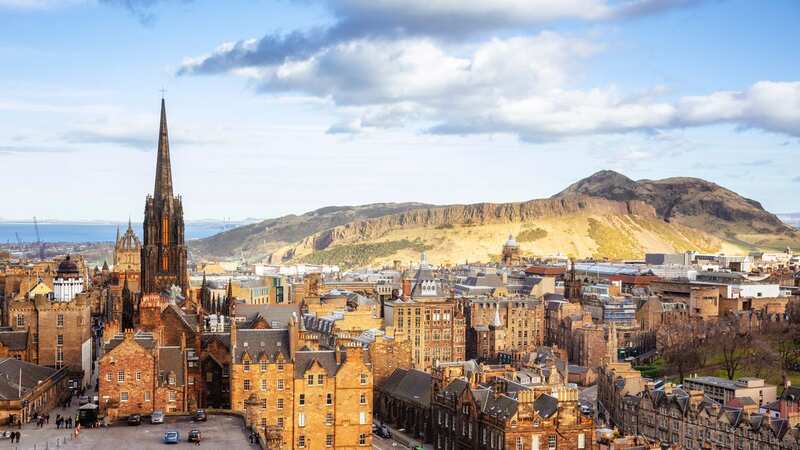
Arthur's Seat is Edinburgh also has plenty on history and many many years ago would have been a cause for concern. “No one knows how this extinct volcano in Holyrood Park got its name, but die-hard romantics think it was the location of Camelot,” Edinburgh expert Linda Macdonald said in the Telegraph. “It's 251 metres high, but if you have enough puff and the right footwear it is a relatively easy climb."
But that's not all - there' another at Giant’s Causeway in Northern Ireland and it used to see volcanic eruptions around 60 million years ago. Volcanologists use samples from Eyjafjallajökull in Iceland to recreate famous hexagonal columns in laboratory and Yan Lavallée, professor of volcanology at the University of Liverpool, said: “This is a question that has fascinated the world of geology for a very long time. We have been wanting to know whether the temperature of the lava that causes the fractures was hot, warm or cold.”
“In Britain you do not walk on volcanoes, you walk within them,” explained the Volcano Live presenter, Professor Iain Stewart, writing for the BBC in 2012. “All along what is now the western shores of Scotland, huge volcanic centres erupted colossal quantities of magma. The islands of Arran, Mull and Skye are among the remains of a chain of volcanoes that draped much of northern Britain and Ireland in enormous amounts of lava and volcanic ash.”
Read more similar news:
Comments:
comments powered by Disqus