Only 5% of people can spot chameleon among parrots in mind-boggling illusion
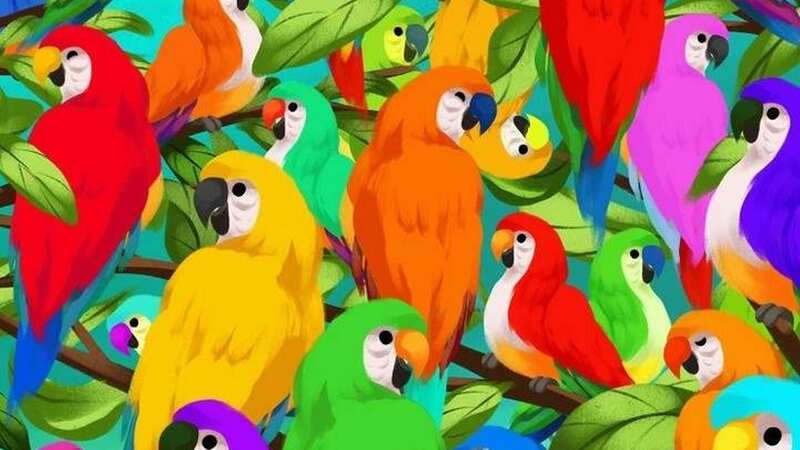
There are so many benefits to optical illusions, as puzzles have been proven to be good for maintaining brain health as we age. They can also work as an excellent reminder that we all see the things around us completely differently, and that we are all perceiving things in our own way, based on assumptions our brains are making in a matter of milliseconds. This mind-boggling illusion isn't quite as simple as it seems, with only a tiny 5% of people able to find the hidden chameleon in just nine seconds of less - try your hand at the colourful brainteaser below.
This brainteaser is similar to the 'Where's Wally' puzzles, where a bright and colourful image with lots of detail attempts to take your attention away from the goal at hand, finding the chameleon. Spotting the lizard quickly shows that your ability to pay attention to small details is seriously impressive and doing puzzles like these regularly can help improve your problem solving skills and your memory.
Puzzles and brainteasers can also be relaxing and improve your mood - not just if you solve them quicker than your friends and family and secure yourself bragging rights. Dopamine is understood to be released by your brain as we solve puzzles, which improves your mood and makes you more satisfied and motivated. So, there's no real downside to playing along.
The image below features a series of parrots sitting on branches and facing in different directions that are all different bright colours, including orange, pink, red, blue and green - that's similar in shade to the green leaves. The birds are designed to grab your attention, but don't let them, because there is a chameleon tucked away in the image somewhere just waiting to be found.
 Can you find it?
There are three main types of brainteasers and they can take many different forms, but what they have in common is that they require us to see through the superficial and the assumptions our brains make about a given image, to find another layer to it, or a piece of information hidden inside it. Psychology Today even went so far as to argue that puzzling requires a "a kind of 'clairvoyance'," with the writer explaining that "the thinking involved in solving puzzles can thus be characterized as a blend of imaginative association and memory."
 'I don't want children staying up late at weekends - I really need adult time'
In this brainteaser the bright colours and overlapping parrots create a kind of confusion to the image, and the chameleon, which as we know in real life can change colour to adapt to the background, blends right in. Our brains might rush right past it as they try to take in and process all the information in the brainteaser at speed. So, despite the fact there's a time challenge here to find yourself in the top 5%, if you haven't found the chameleon, then go back and approach the illusion again as if you've got all the time in the world. If you think you've found it and want your suspicions confirmed, the answer is revealed below.
 Here's the answer
If you found the chameleon quickly you can be reassured that your critical thinking and attention to detail are something worthy of envy, but if you didn't have much luck with this brainteaser you can comfort yourself with knowing that it's certainly a tricky one. The chameleon is a similar turquoise blue shade to some of the parrots, and the background that's visible through the birds and branches - so it easily can slip through the net of your vision.
Did you find the chameleon? Let us know in the comments below.
Read more similar news:
Comments:
comments powered by Disqus