Inside the world of football physios - pre-season struggles to injury intrigue
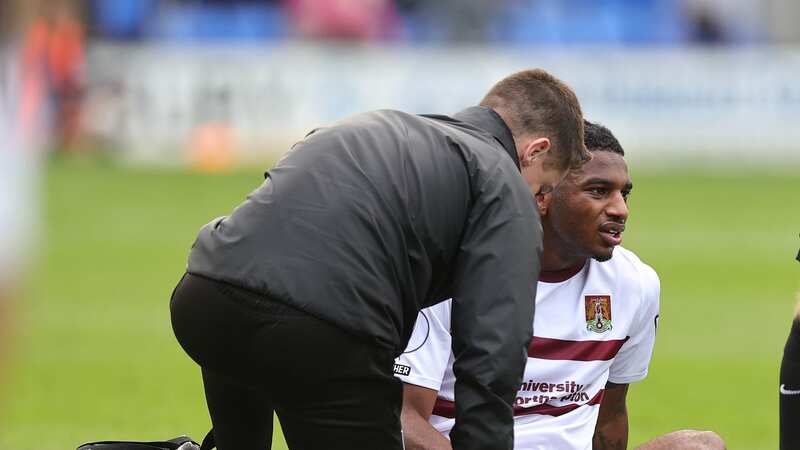
The grind that is the football league is a beast we all know, but few have to tackle it more so than the physios.
Promotion through the pyramid is something all clubs dream of, but the reality is a tough one. Luton Town's success story has seen them go from National League to Premier League, but the season-long slog, involving 46 games leaves those in the treatment room having to play key roles.
Advances in sport science have been well documented, but the gulf in facilities and resources available to those in Leagues One and Two compared to the top flight means physios are crucial in getting players primed, but they face their own battles along the way from three-game weeks to managerial changes and the impacts they have on players and their fitness.
Alex Poulton, previously a physio at Stevenage, Port Vale and Bury, has seen his fair share of campaigns, some going to plan more than others. It all starts with pre-season and an injury leading up to the season, or one that lingers from the previous campaign, can have a devastating effect.
Those in tiers three and four especially finds themselves scouring non-league for the next gem - the likes of Andre Gray and Jamie Vardy were snapped up by Championship outfits when they were National League stars, which can also present its own challenges.
Alex spoke to Mirror Football about the rigour of pre-season: "Half of it is bonding with the rest of the squad. It depends on who is running the pre-season, someone who is really tough and murders you for several weeks its much better in terms of togetherness and your fitness will improve. The S&C coaches work with the coaches in terms of training load and how they build up to peak."
"A lot of clubs aim to peak in March, April, May - some of them want to be building their fitness into December. A club I was at had a poor pre-season because of a late change of manager and it hampered them for the entirety of the season. Sometimes, in League Two, you bring players in from non-league and they go from part-time to full-time and they've got to make sure they get enough high speed running into them so they can keep up with the pace."
The pace of a 46 game season brings with it a tight schedule meaning clubs will often have three-game weeks at least eight times a season. That Saturday-Tuesday-Saturday grind is a huge test of resources, but the physical toll its take on players and the impact it has on the training week is a unique challenge.
Physios, in cohesion with Strength & Conditioning coaches, formulate plans for players which can impact the manager's training schedule for certain players. The aim is for players to hit their "high loads" on a Tuesday, giving them time to peak during the week and recover by the weekend.
 Football league players have to deal with numerous three-game weeks during the course of a season
Games in midweek, especially those on the road, blur all that and the stimulants players take nowadays to get them up for a game often filter into the following day. "So if you're on a Tuesday night, for most people that will be the toughest training session, that's the day you can spike but you've got enough time to recover," said Alex. "The problem with three game week is that you spike and then you get home at maybe 1 in the morning.
"If you're Stevenage and you've got Bradford away, you're getting in at 2 or 3 in the morning, you're not having an effective training session on Wedneaday because you've not slept. You'll be buzzing because you've had caffeine or other stimulants to get you up for the game. It takes 45 minutes for them to kick in, but then they last for hours."
Those on the outside therefore think that a postponement midway through the season, often due to a waterlogged or frozen pitch when the elements begin to become all to regular, is a blessing. Think again. Alex maintained that players' bodies must be accustomed to the demands that come with playing week in, week out.
"It is very rare you'd be allowed to do that (have two weeks off), generally it is a training load in," he said. "So if you had a game postponed, get an academy game in, you're still probably going to play a match. You want their bodies to be used to that high load. If it was a Tuesday and the game was postponed, you'd train as normal, then finish off the rest of the week. If it is a weekend and you're in League One or League Two, you might call a Premier League side and look to face their U21s."
Changes in the dugout also have a huge impact on the day-to-day schedule of a physio. Last season alone, after the season kicked off, there were 26 managerial changes in Leagues One or Two. Winning breeds morale, but it goes the opposite way when losing becomes all too regular.
 Players are a lot more determined to play through the pain barrier when there's a new manager to impress
Alex remembers how injuries became more common when a manager's tenure appeared to be coming to an end, but found himself particularly quiet when a new manager was in the building with everyone keen to impress.
He admitted: "Players have been known to throw an injury in there when they're confident a manager is going or gone. Then that changes very quickly. What I noticed was, as soon as a new manager comes in, I get very quiet, which is interesting. They don't want to be injured because they want to impress the manager."
Results on the pitch also massively factor into the chance of injury. The correlation between stress and injury is proven and sides battling to beat the drop or those determined to snatch the last play-off spot often find themselves with more players on the treatment table.
"I've been in some relegation battles with Port Vale and Stevenage and we had the most injuries, it is just muscle injuries - hamstrings, calves. Players can take longer to get back to full fitness - some may also not be busting a gut to get back if the team is struggling for form," said Alex.
Contrary to the line that Premier League players are fitter and stronger than their counterparts further down the English football pyramid, Alex insists he's come across plenty of individuals who could hold their own against top flight stars, but there's a reason they are where they are.
"A League One player can be as fit as a Premier League player," he said. "You're playing League One because you're lacking something else, you get brilliantly skilled players, but in League One they've been able to surpass certain things. I had a player at Stevenage, so fast, like a rocket, even on FIFA rated like 99 sprint speed, but maybe he was short in other areas."
Alex is now the proud co-founder of his own physiotherapist clinic in south west London, bringing more than 10 years of professional sporting experience to his clients. Check out their website here - https://sheppertonphysiotherapy.co.uk/
 Chelsea complete record-breaking Enzo Fernandez transfer after deadline day rush
Read more similar news:
Comments:
comments powered by Disqus