1.5million homes at risk of flooding as melting Arctic ice triggers rising seas
Up to 1.5 million UK homes are at risk of flooding by 2080 due to the melting Arctic ice, according to MPs.
Scientists have informed the Environmental Audit Committee's sub-committee on polar research that greenhouse gases have already heated the atmosphere enough to guarantee between 17.5mm - 52.4mm of global sea level rise by 2100. Any additional warming will only increase this, they said.
As the Arctic sea ice melts, it will disappear faster as more of the sun's energy is absorbed by the dark ocean instead of being reflected back into space off the white ice a process known as the albedo effect.
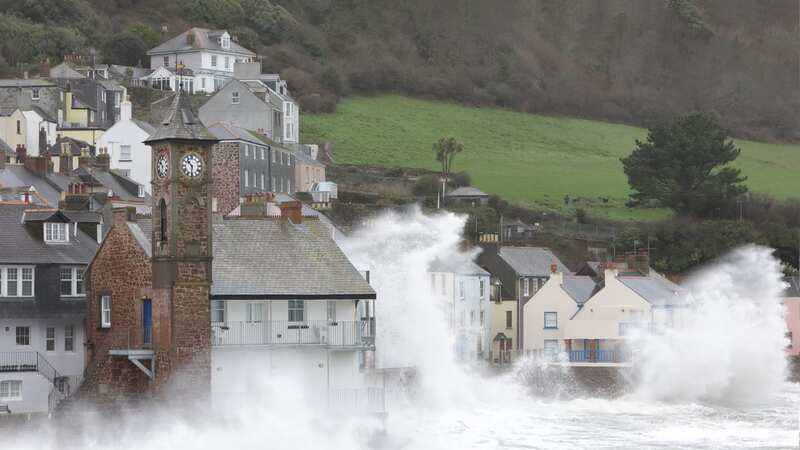
 Governments may have to decide where they will build defences and where they will allow flooding to occur, it is claimed (Getty Images)
The rising sea levels will erode British coasts and put homes at risk, with the Thames barrier needing an upgrade to cope with higher tides. Later in the century, governments will likely have to decide where they will build defences and where they will allow flooding to occur.
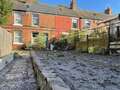
The low-lying village of Fairbourne in Wales may become submerged in future, with the local council saying it will become uninhabitable by mid-century. It wants residents to leave so it can be dismantled and turned back into marshland.Arctic temperatures are heating up four times faster than the global average and the melting ice is devastating the wildlife and people who depend on it for their livelihoods.
 Teachers, civil servants and train drivers walk out in biggest strike in decade
These changes might also impact the UK's weather, but scientists say more research is needed to confirm this.The melting ice poses a threat to a current in the North Atlantic known as the Atlantic meridional overturning circulation (Amoc), which gives the UK its mild winters and prevents it from freezing over like Canada or Russia, which are at similar latitudes.
If enough freshwater from Greenland's glaciers flows into the Atlantic, altering the ocean's salinity and temperature, it could cause the Amoc to collapse. This would result in a much colder climate for the UK while accelerating warmth in the tropics. Some scientists predict this could happen next century.
James Gray, Chair of the polar research sub-committee, said: "For too long the effects of a changing Arctic have been out of sight, out of mind. Before melting glaciers and ice sheets contribute to widespread flooding and irreversible weather patterns in the UK, we must throw our full toolbox at understanding changes in the Arctic better."
"We must prioritise and put more funding behind scientific and multi-disciplinary research. At the moment, Arctic science is concentrated on its summer, with the Arctic winter which could tell us an enormous amount about the weather being under-studied. More collaboration is needed among UK universities to avoid repetition of scientific endeavours seeking out the same information, and with our international partners to learn and share resource."
The committee has urged the UK Government to pay more attention to the Arctic, suggesting they send an ice-breaker research ship and appoint a polar envoy. They also recommended that the various departments responsible should meet at least once every three months, something that hasn't happened yet.
The committee also expressed concern over political tensions hindering scientific research. Western researchers have been effectively barred from half of the Arctic region since Russia's invasion of Ukraine.
MPs are worried that the race for oil, gas and minerals in the polar north, along with military build-up by both Russia and Nato, is distracting from climate change issues. They also noted the potential to use shipping routes in the newly created sea lanes for mining and transporting minerals for green technology. However, they emphasised that this should not be at the expense of indigenous people.
Mr Gray stated: "Russia has been frozen out of Western Arctic science following its invasion of Ukraine. The Arctic Council, built with the purpose of boosting collaboration with Arctic nations, is becoming less influential and much of its important work has stalled."
"Our loss of access to Russian data is concerning, and 50% of the Arctic is now inaccessible to Western scientists. We must look into alternative international fora to champion and collaborate on Arctic research. Whitehall has not been paying enough attention to the Arctic. Four ministers jotted around different departments with no oversight on Arctic policy is a missed opportunity."
"The fact the ministers are yet to meet indicates a lack of enthusiasm on Arctic matters at the heart of Government: they must meet quarterly given the drastic changes we are witnessing in our changing Arctic."
 Richard 'shuts up' GMB guest who says Hancock 'deserved' being called 'd***head'
Isabella O'Dowd, head of climate policy at the World Wildlife Fund, said: "The urgency of tackling the climate and nature crises has never been more evident. If 1.5 million UK homes at greater risk of flooding due to already locked in sea-level rise is not a reason for more action on climate change and not less, then I don't know what is.
"The Government's own watchdog tells us that delaying climate action will increase energy and transport costs for UK households. We want to see Rishi Sunak's sums to see what he based his decision on. As we approach the next general election all political parties must pledge their continued commitment to follow the science and listen to the independent advice of the Climate Change Committee."
A Government spokesperson said: "The UK holds a prominent position in global Arctic research, ranking among the top four nations in peer-reviewed Arctic research output, while allocating approximately £10 million annually for Arctic science projects."
"The UK is a committed observer to the Arctic Council and we stand ready to increase our participation further. Additionally, we are investing £5.2billion in the UK's flood defences by 2027 to enhance protection for hundreds of thousands of properties both now and in the future."
* An AI tool was used to add an extra layer to the editing process for this story. You can report any errors to [email protected]
Read more similar news:
Comments:
comments powered by Disqus