Girl, 8, UK's first to undergo kidney transplant that won't need lifelong drugs
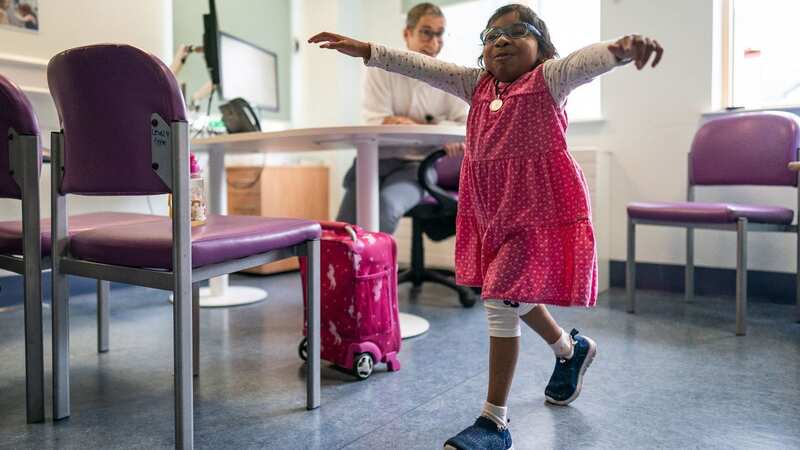
An eight-year-old girl has become the country's first ever to undergo a kidney transplant that won’t be dependent on lifelong drugs.
Sometimes, a problem with kidney donations is that the recipient body can reject the kidney - this happens when your immune system recognises that the organ has come from a different person and thinks it isn’t supposed to be there. But Aditi Shankar’s immune system has been “reprogrammed” using stem cell transplants, to ensure her body does accept the donor kidney as its own.
This is because the kidney and a bone marrow transplant came from the same donor - Aditi’s mother. So they are working without the need for drugs to stop the body rejecting it. Whilst taking immunosuppressants is vital after surgery, they dampen the body’s immune system leaving anyone taking them at risk of other infections.
Often these drugs need to be taken for life, but Aditi was able to stop taking them a month on from her surgery at Great Ormond Street Hospital (Gosh). Her mother Divya said she was “happy and proud” to donate both bone marrow and one of her kidneys to her daughter.
 Aditi with dad Uday and mum Divya (PA)
The 38-year-old shopkeeper said: “I was so happy to give her blood cells and a kidney. I just feel so proud.” Scrabble-loving Aditi is now able to swim, sing, dance and play on her trampoline, whereas one year ago she spent considerable time in and out of hospital to receive dialysis.
 Teachers, civil servants and train drivers walk out in biggest strike in decade
Aditi was referred to the hospital when she was just five and doctors found she had a rare genetic condition called Schimke’s immuno-osseous dysplasia - which affects the immune system and kidneys. It's found in around one in three million children.
At first, she had to travel from her family’s home in Greenford, north west London, into central London three times a week. But in March 2021 her kidney function dropped drastically. However a transplant wasn’t an option whilst her immune system was so weak.
Doctors worked together, giving her bone marrow transplants for four weeks whilst on dialysis 24 hours a day and then in March of this year she was well enough for a kidney transplant. Aditi said: “My mum gave me my new blood cells. I got the kidney transplant when I went to special sleep and closed my eyes. Now I have got the line out, I can go swimming.”
 Professor Stephen Marks, Children's Kidney Specialist and Kidney Transplant Professor at Great Ormond Street Hospital (PA)
Her father Uday, a 48-year-old chef, said: “Most of the support for the family has come from Aditi. She was going in for six to eight hours a day of dialysis and then she would come home and still light the whole house up.”
Professor Stephen Marks, children’s kidney specialist at Gosh, said: “I lead the kidney transplantation programme at Great Ormond Street Hospital and have worked here for over 25 years and she is the first patient in the United Kingdom who has had a kidney transplant to not require immunosuppressive medication after the surgery.
“Because of her underlying immune condition, it meant she would not be able to receive a kidney transplant. Her immune deficiency had to be corrected by having mum’s bone marrow first, and because Aditi was able to accept her mum’s bone marrow, that therefore meant her body could then see her mum’s kidney as being part of her. A month after the transplant, we were able to take her off all of her immunosuppression, which means she doesn’t get the side effects of the drugs.”
Prof Marks continued: “It really is great to see that she is an active eight-year-old girl, back to school, able to have an excellent quality of life, when in March 2021 we were in a situation of discussing what is the future going to hold. Here we are in the situation where she no longer needs dialysis, but she has an excellent immune system and an excellent kidney transplant, doing the function that her kidneys would have done if they hadn’t failed.”
 Aditi is the UK's first kidney transplant to not need the lifelong drugs (PA)
He added: “It is exciting for Aditi to be the first patient in the United Kingdom, the first patient under the National Health Service, to have had a kidney transplant for this condition and to be off immunosuppression within a month.
“And now, one year after having had a bone marrow transplant and six months after having a heart or kidney transplant, it is so heartwarming to see her having a good quality of life – going to the beach, singing, dancing and also going to school and being able to do things that normal children do.”
Asked about the potential use of the double procedure among other patients, he added: “Everything in life, especially in medicine, is about the risks-and-benefit ratio. Undergoing this double transplant with a bone marrow transplant, then followed by a kidney transplant six months later, has a much higher risk of causing injury to the patient and also death, so we always have to balance each individual case.
 Greggs, Costa & Pret coffees have 'huge differences in caffeine', says report
He added: “There are subgroups of patients who have particular kidney diseases involving the immune system… you could postulate that for some of these conditions that increased risk may be worth taking because that patient may not be able to survive long term on dialysis.”
Prof Marks will present details of the case to the European Society for Paediatric Nephrology conference next week. An editorial detailing the findings is also due to be published in the journal Paediatric Transplantation.
Read more similar news:
Comments:
comments powered by Disqus