Bleak reason the world always looked more colourful during your childhood
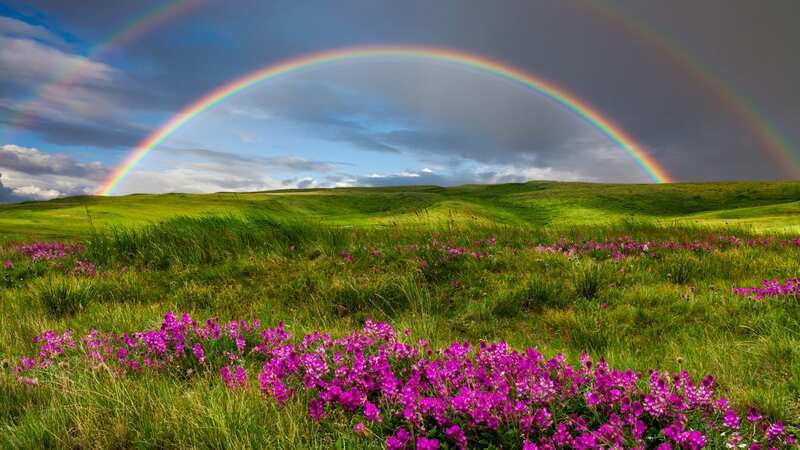
Childhood was a much easier and brighter time for many and while this is partly due to having no responsibilities, our eyesight plays a part too. Recently people online have been saying they remember the world looking more colourful when they were younger - and there might be a scientific reason as to why.
A doctor recently shared their insight into the topic, explaining that there are a variety of reasons as to why this is the case. Dr Karan Raj, a doctor who's known for debunking medical myths, said not only do our eyes play a part but so does the world around us too.
Dr Raj is also known for sharing knowledge on TikTok, and he recently created a video about the topic. The doctor stitched a video from TikTok user Jordan Usher, who showed the digitally enhanced hues of an artificially colourful world with the caption "I swear this is what life looked like as a kid." Dr Raj said at the beginning of the clip: "If you feel like the world has gone from 4k to 1080p, you may be onto something," the doctor began his part of the video.
Sadly, as we age, our eyes undergo changes that can affect our ability to see colours as vividly as we did when we were younger. The once-clear lenses of our eyes naturally become more yellow as we age. The change happens when the lens absorbs UV light to shield our retinas, which causes them to tint over time.
"This increasing yellowness dulls the vibrancy of colour perception. It's sort of like viewing life through a built-in sepia filter," Dr Raj explained. On top of that, "the number and sensitivity of colour-detecting cone cells decrease [over time]". This means that our perception of colour contrast is impacted.
 TikTok star dies after falling off 70ft coastal cliff while shooting videos
While deteriorating eyes play a part in the world looking less bright as we age, Dr Raj said a colour analysis study run by the Science Museum Group states that the world has actually gotten less colourful over time. He explained that if we compare today's vehicles to the more colourful options available in the past, such as the 50s and 80s, the modern world seems pretty bland in comparison. "Greyscale now makes up the vast majority of cars," Dr Raj pointed out.
The same can be said for interior design as previous decades, such as the 70s, were a lot more vibrant than they are now. These days people tend to lean more towards more neutral design choices, with Dr Raj also suggesting that the increased use of stainless steel and plastic instead of wood could further drain our environment of colour. He added: "Biology explains some of it, but maybe our world is just more boring now."
Read more similar news:
Comments:
comments powered by Disqus