07 September 2023 , 01:37
720
0
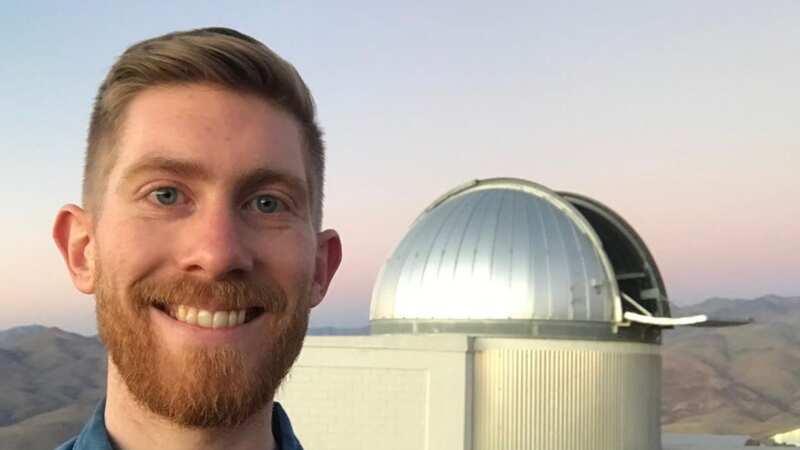
A rare and dazzling cosmic explosion, which outshines most supernovae in the universe, has been spotted by researchers at Queen’s University, Belfast.
The unusual new blast analysed by researchers is as bright as hundreds of billions of suns, but unusually it lasts less than half as long as typical supernova. In a newly published study, the researchers first identified the event using the Atlas network of robotic telescopes.
The telescopes in Hawaii, Chile and South Africa scan the entire visible sky every night to search for any object that moves or changes in brightness. Within days of detecting the explosion – named AT2022aedm – the researchers obtained more data with the New Technology Telescope in Chile and found that it looked unlike any known supernova.
Follow-up data from observatories around the world showed that the explosion faded and cooled down much faster than expected. Dr Matt Nicholl, from the School of Mathematics and Physics at Queen’s, said they have been hunting for the most powerful cosmic explosions for over a decade, adding “this is one of the brightest we’ve ever seen”.
 An image from the European Southern Observatory New Technology Telescope showing a distant red galaxy where a cosmic explosion occurred (PA)
“Usually, with a very luminous supernova, it will have faded to maybe half of its peak brightness within a month. In the same amount of time, AT2022aedm faded to less than one per cent of its peak – it basically disappeared,” he said. The location of the explosion was also described as a surprise.
 'Weird' comet heading towards the sun could be from another solar system
Dr Shubham Srivastav, also from Queen’s, added “Our data showed that this event happened in a massive, red galaxy two billion light years away. These galaxies contain billions of stars like our sun, but they shouldn’t have any stars big enough to end up as a supernova.”
The team searched through historical data and found just two other cosmic events with a similar set of properties. These were discovered by the ROTSE and ZTF surveys in 2009 and 2020. The extensive data set obtained for AT2022aedm shows that these are a new type of cosmic events.
 An artists impression of a black hole destroying a nearby star (PA)
Dr Nicholl added: “We have named this new class of sources ‘Luminous Fast Coolers’, or LFCs. This is partly to do with how bright they are and how fast they fade and cool. But it’s also partly because myself and some of the other researchers are huge fans of Liverpool Football Club. It’s a nice coincidence that our LFCs seem to prefer red galaxies.”
Dr Nicholl said that the discovery has opened up avenues for more research. “The exquisite data set that we have obtained rules out this being another supernova. The most plausible explanation seems to be a black hole colliding with a star,” he said.
“If we find more LFCs, especially in the more local Universe, we should be able to test this scenario. Collisions are more likely in dense star clusters, so we can look for these at the sites of the explosions.” The research paper has been published in The Astrophysical Journal Letters.