Island hit by 'biggest non-nuclear, man-made explosion' now holiday hotspot
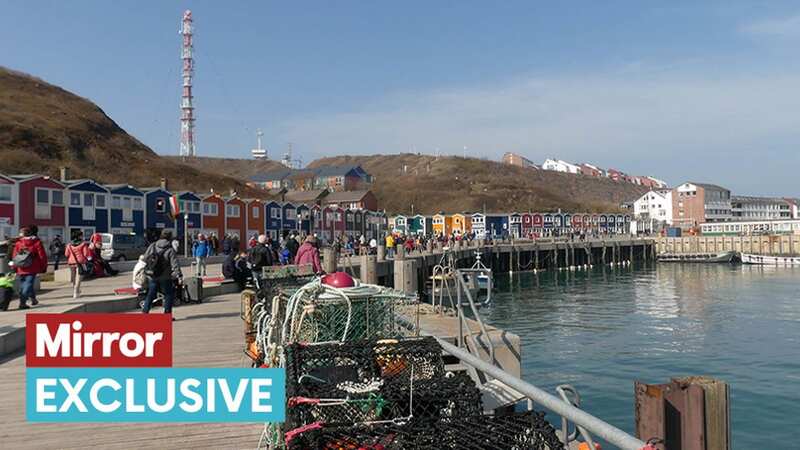
A holiday island largely unknown by Brits is just 300 miles from the UK and is filled with curious secrets thanks to its intriguing history.
Each year 350,000 tourists, mostly German but also often Dutch and Danish, catch the ferry to Heligoland, a tiny pair of rocks 44 miles from the coastline. They are tempted there by the apparent healing qualities of the air, the calm offered by a car-free environment, and the beaches.
While islands such as Sark in the Channel have a similar offering, what they don't have is a modern history that is quite as intriguing as Heligoland - a patch of land just 170 hectares in size that is very lucky to exist at all.
During WWII Nazi German command planned to use the North Sea outcrop as their main naval base due to its strategic location. They set about expanding the harbour and building a great network of tunnels beneath the surface, stretching eight miles in length and featuring a functioning hospital.
 The islands are known for their beaches (goodluz - stock.adobe.com)
With the end of the war in sight, the Allies launched a huge aerial bombardment that forced all residents of Heligoland into the tunnels for three days. When they emerged their homes were obliterated and the island uninhabitable.
 Eight remote and beautiful but brutal jobs if you want to leave it all behind
The British Navy moved onto the island following the fall of Berlin and spent the next two years carrying out military tests there until finally, in 1947, they opted to get rid of thousands of tonnes of munitions they'd plundered from the tunnel network.
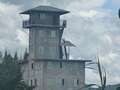
Set off simultaneously, 4,000 torpedo heads, nearly 9,000 depth charges and over 91,000 shells of various calibres created a mushroom cloud six miles high. The only structure to survive was Heligoland's lighthouse, which stands to this day.
The blast smashed windows across mainland Germany and was the biggest non-nuclear, man-made explosion in history. Had Heligoland's porous sandstone not soaked up the shockwaves, Operation Big Bang would've been sizeable enough to wipe the island from the map.
 Around 350,000 people visit the island every year (stock.adobe.com)
 The main island was fundamentally altered by an explosion in 1947 (Martin Elsen, luftbild.fotograf.de)
Instead it just cast a part of it into the sea and created a whole new part of the island called Mitteland. Stephan Hauke, Heligoland's head of tourism, told the Mirror: "Because it is soft rock they couldn't sink it, but it was shivering and shaking. The whole edge of the upper lands was just gone. We now have Mitteland as well. It is a huge crater. Part of the island just went."
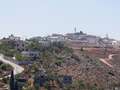
To this day the historically and geologically inquisitive visit the main island to make the ten minute walk from the north to south and discover traces of the devastating blast. Many venture down into the tunnel network which remains open to the public to this day.
Heligoland is not just a living reminder of the horrors of war however, but a thriving if not quaint holiday resort that was built up in the 1980s. Home to just 1,400 full-time residents, it welcomes in 250 tourists for every local each year. Four decades ago that number was far, far higher.
"Heligoland was rebuilt during the 1980s. We don't pay tax on goods here, so it became a destination for people to buy cigarettes and grog. We had 800,000 visitors a year with just 1,400 inhabitants. You couldn't move. As soon as the summer season was over they (the locals) all crashed. 800,000 was just too much," Stephan added.
 The lighthouse was the only thing to survive the explosion (Ottmar Heinze Fotografie)
Internet shopping has diminished Heligoland's reputation as a duty-free Mecca floating in the North Sea, but there's enough there to keep people coming. One draw is the fact is it car free aside from emergency service vehicles, which are limited to 10km/hr.
"If you have difficulties breathing it is a good climate for people with lung illnesses. Because of the salty water it's good if you have skin rashes," Stephan continued, before drawing attention to Heligoland's second island Dune.
"Seven minutes away from the main island is Dune where two thirds of it is beach. It is white sandy beaches in the north and south, with very calm water. There is no low tide or high tide as such.
 Passenger spots graffiti begging Jet2 to stop playing 'moronic' Jess Glynne song
"We have a seal colony on Dune. There are 700 births of young seals every year in November, it's a huge attraction. We have the smallest nature reserve in Germany. Every migrating bird stops to take a breather. We are well known as a fantastic destination for bird spotters.
Another draw is the culinary scene, with shellfish and crayfish particularly plentiful and cheap. "You don't have to pay an arm and a leg as we have loads living around the island," Stephan continued.
"It is not like Majorca where it is party time 24 hours a day. The average age of visitors is 50+. We have a lot of families. There are lovely pubs but no night life. There is no red light district."
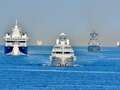
Daily tours of the island are available from Cuxhaven and Büsum by boat and from Hamburg by high-speed catamaran. Most travellers visit Heligoland as day-trippers, with boat trips allowed for a stay of up to four hours on the island.
Read more similar news:
Comments:
comments powered by Disqus