17 August 2023 , 05:00
921
0
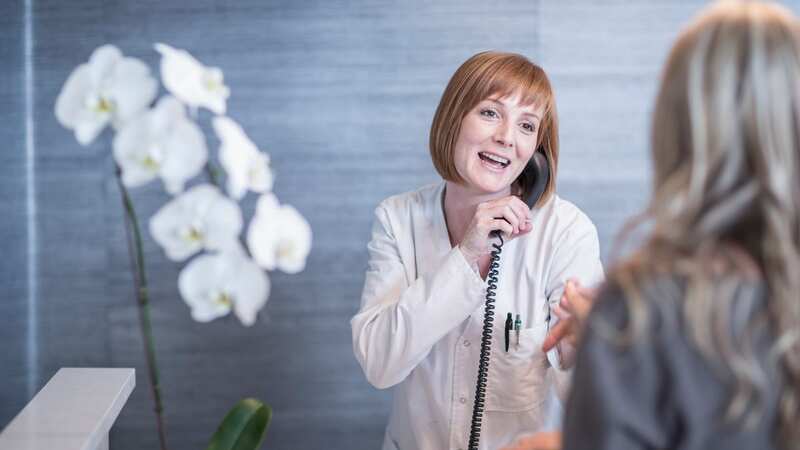
Gone are the days when GPs’ receptionists simply answered the phone – now they play a pivotal role in getting you the right treatment.
When you phone the doctors’ surgery or turn up at the desk, don’t be surprised if the care navigators asks you a number of questions. They’re not being nosy – they’re highly trained and need to find out what the problem is so they can direct you to the right person quickly.
You won’t necessarily need to see a GP because another member of the practice team might be more suitable.
By asking a few carefully-chosen questions, the reception team should have all the information needed to assess your needs and make sure you get the right kind of care from the right health professional. If not, they will ask a GP or other medical body for guidance.
If you urgently need to see the doctor, you can trust the reception team to refer you as soon as they can. More than 29,000 new health and care professionals have been recruited so the reception team has a wide range of skilled health professionals available to you.
 A twitching eye can sometimes be serious - signs, symptoms and when to see a GP
This makes it easier for you to access help closer to home, by phone or online, which is part of the NHS plan to offer you more choice, putting you in control of your health.

Lead Patient Co-ordinator Sally Kowalski of Horfield Health in Bristol, heads up a reception team of 17, looking after 17,000 patients to ensure they get the right care
“We’re a big practice and we’re lucky to have quite a few avenues for patients. Our team has been trained to navigate them. We don’t want patients to think we’re a barrier to seeing a doctor – we’re here to point them to who is best for them.
Our phone lines open at 8am and after identifying the patient I’ll ask: ‘What’s the problem today?’ Sometimes we need to delve deeper because it could be something they’ve had for a while and perhaps it’s not urgent.
We’ll look at how we can help them: it could be they need to see a GP, but a practice nurse might be more suited - for example if a patient calls about starting the Contraceptive Pill.
There are also healthcare assistants to deal with the bloods and ECGs and we have a physio on board.
We’re lucky to have a mental health nurse here and she has longer 20-minute appointments and we find that helps. Social prescribers can help people who might be vulnerable and need help with day-to-day tasks."
“I’m on the frontline so we have to be equipped to know how to help people. On Monday there was a gentleman who was very unsteady on his feet and I registered him, the doctor saw him and we called an ambulance.
We’ve all been on a care navigation course and there’s a very lengthy induction for new staff members because there’s so much involved.
I’ve been doing the job for 13 years and the longer you’ve been here, the more you pick up. As a team, we all bounce off each other and if we’re not sure what to do we’ll ask.
 Best blood pressure monitors for quick and accurate readings at home
It’s about following guidelines set by the GP and clinical team but also thinking on your feet. Anything serious we take to the GP.
Pharmacists are also knowledgeable and we have a list of conditions they help with. Plus, you can do a lot of self-help. Often I’ll ask callers if they’ve tried over-the-counter medicine and doctors give us a lot of information on how to treat conditions such as conjunctivitis and chickenpox.
The most rewarding part of the job is feeling like we’ve helped patients. We don’t know what their situation is at home when they phone up, so we never judge – we’re here to help. It can be challenging, but we feel like we’re making a difference.”
 HERE TO HELP: Liz Morris and Kate Jones help take the pressure off GPs
Care navigator Liz Morris, 37, and operations manager Kate Jones, 45, both work at Hereford Medical Group – five GP surgeries that merged and now have 49,500 patients
You won’t always be referred to a doctor when you call your GP surgery, but there are a range of other healthcare professionals that care navigators can call on.
“We book appointments with nurses, physios, mental health nurses, nurse practitioners and more who can do most of what a doctor can do” says Liz. “If the patient needs to come for blood tests, we send them for that first. That saves an appointment.”
This means GPs’ time is used wisely and patients can take advantage of the help available. Kate estimates it saves 50 per cent of the GPs’ time. “Without care navigation, we wouldn’t have any available appointments,” she says.
“If you’ve got asthma, it’s better to see the asthma nurse than a GP – they see it every day and know it inside out.”
The team works under the supervision of GPs and follows their clinical guidelines and are thoroughly trained before they hit the phones.
 TRAINING IS KEY: Liam says care navigators spend substantial time shadowing senior staff
Liam Sloan is a senior care navigator at St Stephen’s Gate Medical Practice in Norwich
“Being a care navigator is a very busy job, especially on Monday and Tuesdays, which account for over half of the 2,000 calls we get each week.
We have a team of four on the phones, plus two more front desk staff. We take phone calls from eight till six daily, plus we also have an online service where patients can ask queries and book appointments.
When you start you spend three weeks with an experienced member of staff showing you how the system works before you start working solo.
After that you’re shadowed to make sure that you are comfortable in what you’re doing and you’re responding to requests correctly. I’m still asking questions because the learning never really stops.
We’re the first point of call for all patients. We triage and signpost the most suitable appointment, which might be a GP, nurse or a minor illness clinic but it might also be other health professionals.
We have a large team here we can refer to, including physios, mental health support coaches, even social prescribing for non-medical needs such as finance, housing, learning and education advice.
Not everyone needs to see a GP. Some have muscle pain and need a physiotherapist. Or they are struggling with mental health and the mental health practitioner can help but, if needed, a GP can get involved.”