Almost 90% of people cannot answer simple test for kids from 1920s
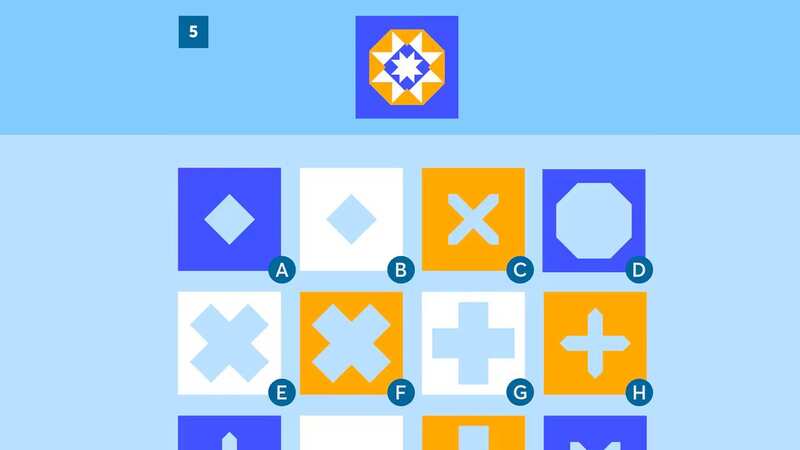
Brainteasers are a fun way to get competitive with your family and friends, testing who can work something out faster. If we told you that there was an intelligence test that will leave 90% of adults stumped, would you fancy giving it a go? Or would you be too scared of failing? The stencil test was invented by American psychologist Grace Arthur in the 1920s and it was used to test the IQs of children and adults right up until the 1950s.
If you're willing to give it a go, you need to look at the patterned square, and work out which tiles you'll need to make the pattern at the top. Seems simple, right? Well, it's actually a lot more difficult than it initially seems.
 Can you figure it out? (Stenciletto)
Have you managed to work it out? It is much harder than it looks, isn't it? We did warn you! If you need a hint, just try to look at the puzzle in reverse order. What colour do you think the background would be? And then you need to take it from there.
Now, this particular stencil test may be more mind-blowing than the others because there are four different ways to answer it. Because there are more options, some may find it easier, but when the answer is hiding in plain sight, others may find it a whole lot more difficult. If you don't want to know what the answer is, then stop scrolling, because it's coming right up. Keep looking if you're still determined to figure it out - there's no time limit here.
The answer is: JILBFKD, JLIBFKD, JILBKFD, JLIBKFD. Did you manage to get it? The Guardian reports that Arthur's stencil test was first created because other IQ tests at the time were reliant on verbal responses, and were considered discriminatory against people with hearing difficulties, or those from underrepresented backgrounds.
 Staring at this optical illusion for 2 minutes 'makes world look very different'
Did you manage to work it out? Let us know in the comments.
Read more similar news:
Comments:
comments powered by Disqus