Simple stencil IQ test for kids from 1920s stumps 90% of adults
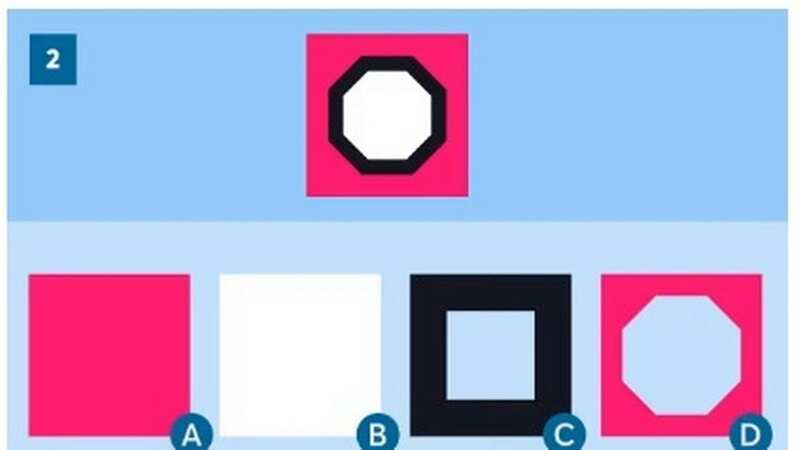
If we told you that 90% of adults couldn't complete an intelligence test made for children, you'd likely not believe us. The classic brainteaser in question was invented by American psychologist Grace Arthur in the 1920s and it was used to test the IQs of children and adults right up until the 1950s - so it's a good job that that's not the case these days.
It's so difficult, that it leaves many people stumped and not knowing how to answer it - but those willing to give it a go are shown a patterned square, and asked how they may make the square whole by using a mixture of the other blocks available at the bottom of the puzzle. And whilst it may look like a breeze, it's a whole lot more difficult than you could imagine.
 Can you work it out? (Stenciletto)
Have you managed to work it out? It is much harder than it looks, isn't it? There's no wonder that 90% of adults are left totally stumped whilst looking at it. If you need a hint, just try to look at the puzzle in reverse order. What colour is the background? What colours are on the top of the image? Have another go if you're still trying to figure out the answer. Hint: There's actually more than one way to correctly work out the answer to this particular puzzle, which may make it even more mind-blowing.
Any joy? If you're still desperately trying to work out the answer, look away now. But if you're looking to be put out of your misery, the answer to this tough puzzle is: BCFD/BFCD.
The Guardian reports that Arthur's stencil test was first created because other IQ tests at the time were reliant on verbal responses, and were considered discriminatory against people with hearing difficulties, or those from underrepresented backgrounds.
 Staring at this optical illusion for 2 minutes 'makes world look very different'
Did you manage to work it out? Let us know in the comments.
Read more similar news:
Comments:
comments powered by Disqus