18 July 2023 , 14:00
861
0
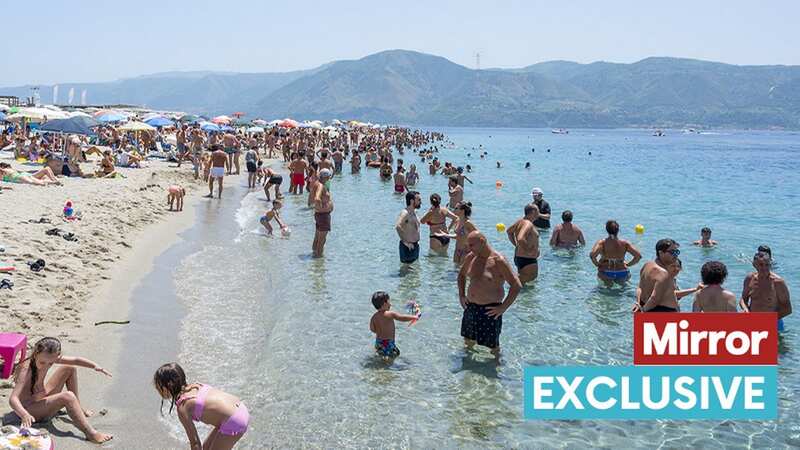
A climate expert has warned holidaymakers that Europe could roast in an even hotter heatwave next summer and urged them to avoid certain dangerous spots.
Eeva Ruuska, head of operations for Americas at travel risk intelligence company Riskline, has issued a stark warning about the impact devastating climate change will have on holiday destinations loved by Brits.
While the all-time European temperature record of 48.8C is poised to topple today, next year it could be smashed as the El Niño weather pattern pushes the mercury even higher.
Horrifyingly hot days currently being experienced in the Mediterranean and parts of China - the latter setting a new 52.2C temperature record this week - could be topped if past weather patterns are repeated over the next 12 months.
Are you currently on holiday in particularly hot parts of the world? Email [email protected]
 Protesters planned to kidnap King Charles waxwork and hold it hostage
 Parts of Europe are currently sizzling in dangerously high temperatures (Amer Ghazzal/REX/Shutterstock)
Drought and wildfires could also turn destinations loved by travellers into inhospitable deserts and scorched bad lands.
Eeva shared some of her advice for Brits planning holidays, including how to try and avoid the extreme heat and minimise the impact:
Although travel agents have told The Mirror they've not seen cancellations due to the Cerberus heatwave and that bookings to the hottest European areas remain strong, Eeva has highlighted destinations holidaymakers may want to dodge in the future.
"Some areas to try to avoid due to water-stress include Maui in Hawaii, the Mediterranean and parts of China, India and South Africa, while devastating wildfires could cause travel disruptions including in Australia, Greece and Turkey as well as California and British Columbia in Northern America," she told the Mirror.
"In general, destinations dependent on winter tourism are among the first to feel the impacts of climate change. That said, with the rise in temperatures, people may find certain tourist destinations in Southern Europe to be too hot and uncomfortable, particularly during the summer months.
 Natural wonders like the Great Barrier Reef are being damaged by climate change (BBC NHU)
"Seaside vacation areas will also be more prone to stronger storms and coastal erosion, including in France and Spain. Water supply reductions or disruptions caused by droughts are increasingly likely in the Mediterranean region.
"Meanwhile, Northwest Europe and the UK could develop adverse weather patterns, while hotter conditions are likely across central Europe, during the El Niño phase."
Eeva went on to outline the likely impacts of El Niño, a band of warm ocean water that develops in the central and east-central equatorial Pacific which has an impact of global weather patterns.
Although the peak of the typically four-year cycle will come at the end of 2023, past weather patterns suggest temperature record tumble the year after this, meaning 2024 is likely to be the world’s hottest year ever.
 The temperatures next summer could rise even higher (Sky News)
In the coming year El Niño is likely to cause:
 Sebastian Vettel warns of looming F1 ban and is "very worried about the future"
Drought conditions and wildfires across Australia, Indonesia, western and southern Africa
A potentially weaker monsoon in India
More rainfall in eastern Africa.
The US states and western Canada to be drier and warmer than usual, and more rain and flooding in the southern US states
Less snowfall in the northern US during the winter, but a higher risk of devastating winter storms in the central, southern and eastern US
Drier conditions in Brazil, Colombia and Central America, as well as more extreme rainfall and flood damage in the Southern Cone and western South America
Those looking to head on big holidays to far flung corners of the Earth over the coming year may want to heed warnings about the damage human-caused climate change is doing to paradise locations.
"Small islands such as the Maldives, the Bahamas and Majorca are especially prone to climate change impacts, with rising sea levels and intense storms already flooding coastal areas, eroding beaches and damaging infrastructure," Eeva continued.
"Oceans become warmer and more acidic due to climate change, endangering coral reefs and marine life, including at the Great Barrier Reef in Australia and the Northwestern Hawaiian Islands in the US.
 The risk of wildfires in southern Europe are increasing as the summers get hotter (Anadolu Agency via Getty Images)
"As temperatures rise, snowfall in the mountain ecosystems such as the Alps, the Himalayas or Lake Tahoe in California, is decreasing. As a consequence, winter sports seasons become shorter. The risk of drought, flooding, avalanches and wildfires also increases.
"In polar regions, including the Arctic where warming is twice as fast as the rest of the planet, animals that depend on ice for their survival will struggle to adapt, due to shrinking sea ice, retreating glaciers and thawing permafrost.
"Meanwhile, indigenous communities are disproportionately affected by climate change, due to their reliance on natural resources for their livelihoods and cultural identities."
According to Julia Lo Bue-Said, CEO of The Advantage Travel Partnership, "demand for travel is showing no sign of slowing down" among Brits, even to areas where the heat is currently dangerously high.
Eeva has offered the following advice for the many travellers who are braving the heat and heading to their favoured holiday destinations regardless:
 Holidaymakers still determined to travel should take precautions against the heat (AFP via Getty Images)
Eeva also urged tourists to think about their carbon footprint when planning a holiday.
She said: "While tourism is affected by climate change, it also contributes to the problem, being responsible for around 8% of the world’s carbon emissions, particularly through transport and accommodation. In response, travellers may measure their carbon footprint and offset travel carbon emissions. They can also opt for local trips, public transport and carbon-neutral means of transport, including electric vehicles and bicycles, instead of boarding a plane."