16 July 2023 , 13:12
711
0
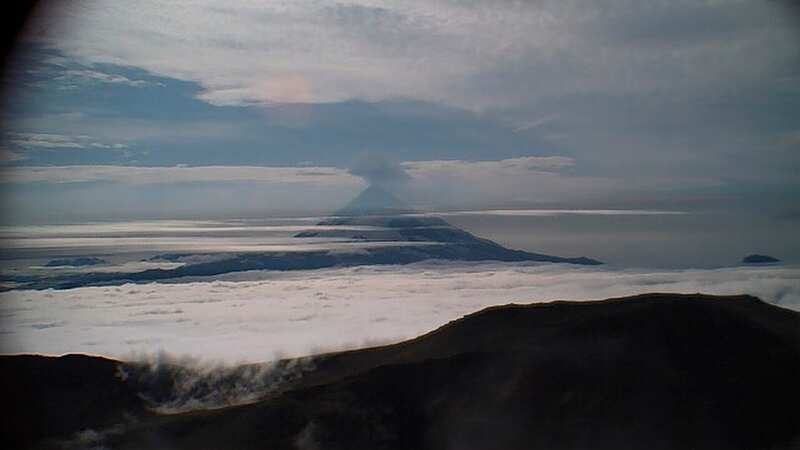
A warning has been issued that a volcano in Alaska may erupt imminently with the aviation level raised to red with likely emission of ash into the atmosphere.
Shishaldin Volcano continues to erupt with a continuous plume of ash extending over 80 miles around 16,000 ft across sea level. There has also been seismic activity in the area which has been raised for more than six hours.
The volcano began erupting on July 11, according to the Alaska Volcano Observatory (AVO), sending towering clouds of ash into the air. A US Coast Guard overflight confirmed lava erupted the same day within the summit crater.
The latest data from the AVO, as of just before midnight on July 15, showed frequent explosion signals are being detected, with some explosions sending plumes of ash as high as 20,000 ft above sea level. They said: "Due to the duration of this current activity and the extent of the distributing ash cloud the Aviation Colour Code is being raised to RED and the Volcano Alert Level is being raised to WARNING."
 The Shishaldin Volcano is less than 10,000 years old (Getty Images)
The volcano alert level code is set at warning, which means "Volcano is exhibiting heightened or escalating unrest with increased potential of eruption, timeframe uncertain, OR eruption is underway but poses limited hazards."
 Four feared dead in horror plane crash as wreckage spotted near remote volcano
The Aviation Color Code approach is similar to the Volcano Alert Level but is specifically for the aviation sector. It has been sent to red - which means eruption with significant ash emission is imminent, underway, or suspected - but is focused on whether there is a threat to aviation posed by volcanic ash.
Matt Loewen, Research Geologist for the US Geological Survey at the AVO said: "The activity was first noticed on July 11. In satellite images, we were seeing elevated surface temperatures, especially in overnight imagery that suggested that there might be magma getting very close to or even being at the surface.
"And then by the next day on July 12, the signatures were much higher, giving us more confidence that magma had reached the surface and we had lava erupting, kind of within the summit crater of Shishaldin. We also can see in one of our webcam images that there was a little bit of glowing near the summit, which is another telltale sign that you actually have lava erupting at the surface .
"So that's when we raise the aviation colour code to orange, which is a status that indicates that there's an eruption going but it's not necessarily hazardous to aircraft."
 The Shishaldin Volcano last erupted between July 2019 and January 2020 (Getty Images/Design Pics RF)
On Friday at around 1am there was a more significant explosion. Mr Loewen said: "That sent an ash plume up to between 30 and 40,000 feet and that drifted out over the Pacific Ocean.
"A number of other smaller explosions that sent ash up to around 15,000 feet throughout the morning. Right now, though it's quieted down, but Shishaldin typically has eruptions that last for sometimes several months and can repeat these types of cycles. So, it's something that we'll be continuing to monitor closely."
The volcano last erupted between July 2019 and January 2020. The volcano is located near the centre of Unimak Island, and rises to a summit 2,857m above sea level. It's the highest peak in the Aleutian Islands, and is less than 10,000 years old.