Bill Gates under pressure as Epstein links haunt $89bn health foundation
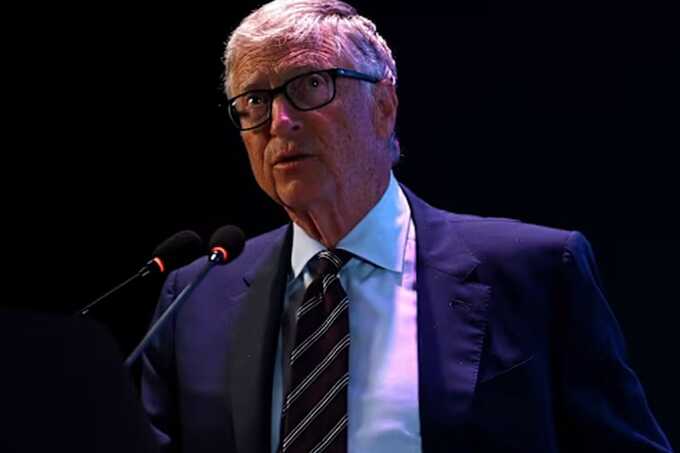
A Bill Gates aide once described Jeffrey Epstein to the billionaire’s $89bn global health foundation as a “friend and a financial guru”, while acknowledging that he was “notorious for some bad press ;)”.
As reported by FT, nearly 15 years later, those Epstein ties are again putting pressure on Gates as he prepares to meet US congressional investigators examining the late sex offender’s network and tries to protect the reputation of his decades-long philanthropic work.
Unlike other figures in Wall Street and Westminster who lost senior public roles over links to Epstein, Gates has remained at the centre of public life. The Microsoft co-founder is still the key funder and figurehead of the foundation into which he has invested tens of billions of dollars.
His appearance on Wednesday before the House of Representatives oversight committee will be one more critical moment that puts him and his charitable giving in the spotlight. Gates will need to protect not just his own reputation but his publicly declared intention to give away virtually all of his wealth to reduce inequities in the world.
The Gates Foundation, which has launched an external review of its toxic entanglement with Epstein, told the FT it regretted “having any employees interact with Epstein in any way”. It has said Epstein claimed he could “mobilise significant philanthropic resources for global health and development”, but that ultimately it neither paid him nor pursued any collaboration with him.
There have been expressions of remorse. Gates has said he regretted “every minute” he spent with Epstein, in the misguided belief he could arrange charitable donations from rich people.
At a foundation staff town hall in February, he apologised to executives for drawing them into meetings with Epstein.

Meanwhile foundation chief executive Mark Suzman told staff at a meeting earlier in the month that he felt “sullied” by its association, according to a transcript seen by the FT. The communications between Epstein and foundation staff were “deeply unsettling and depressing” and “shouldn’t have happened”, he said.
Staff members spoke out at the same meeting about Gates’s ties to Epstein. One described people “struggling to reconcile their commitment” to the foundation’s goals with “concern about what they’re hearing and reading about the chair”. Another cited the apparent conflict between the “name on our wall and what we are learning”.
The shock has extended to longstanding associates of Gates who became involved with his philanthropic work. Most notable is Warren Buffett, the billionaire investor who gave almost $48bn to the Gates Foundation between 2006 and 2025. Buffett said in an interview in April that he has not decided whether to continue donating.
“I’ve learned things I didn’t know about something, for all these years,” he said of the Epstein-related disclosures about Gates.

Other prominent Gates Foundation partners and fund recipients have said little publicly about the Bill Gates-Epstein ties, perhaps for fear of damaging an important relationship. The organisation’s significant role in financing international health efforts has grown more crucial as the US and other rich nations have cut foreign aid.
The dilemma is “something folks are tracking and wrestling with”, an employee at another non-profit organisation said.
Gates has not been accused of involvement in Epstein’s sexual abuse, but he interacted with him over a period of years after first meeting him in 2011.
A 2013 email that Epstein seems to have sent to his own account claimed Gates tried to hide a sexually transmitted disease from his then wife Melinda French Gates after having sex with “Russian girls”. A spokesperson for Gates has said the claims are “absolutely absurd and completely false”.
Gates did acknowledge at the February town hall that he had two affairs with Russian women later discovered by Epstein.
Epstein visited the foundation’s Seattle headquarters in July 2011. He was also in touch with financial world contacts soon after about his purported interest in raising big sums in co-operation with the foundation.
In an August 2011 email exchange with Mary Erdoes, chief executive of JPMorgan Chase’s asset and wealth management division, Epstein said he wanted the effort to raise billions of dollars in the first two years and tens of billions by year four. JPMorgan declined to comment. Erdoes did not respond to a request for comment.
Soon after came the connection to the foundation made in November 2011 by Boris Nikolic, Bill Gates’s chief adviser for science and technology, in the email citing Epstein’s “bad press”.
That led to an exploratory meeting two days later at Epstein’s Manhattan house, other emails suggest. The financier hosted Gates Foundation chief financial officer Richard Henriques and Gabrielle Fitzgerald, deputy director, global health policy and advocacy. Epstein’s next guest after the pair appears to have been the filmmaker Woody Allen, who denies abuse allegations made by his estranged adopted daughter Dylan Farrow.
Fitzgerald wrote to Epstein afterwards thanking him for a “tremendously insightful” conversation that would “really help move our internal discussion to the next level”. Epstein wrote back inviting her to “feel free to bounce ideas off of me” and promising to keep “the strictest of confidences”. He added: “I realised that I should have asked Dick and you to stay for awhile, to hear some of Woody’s stories.”
A “white board” session took place the following month at Epstein’s New York home to discuss ideas with Gates Foundation representatives, the emails suggest. Fitzgerald named those due to attend as herself, Nikolic, Henriques, chief legal officer Connie Collingsworth, director for programme-related investment Julie Sunderland and Jenna Brereton, seconded to the foundation as programme officer, private donor engagement.
All five foundation representatives have since left, while Nikolic no longer works for Bill Gates. Collingsworth, Sunderland and Brereton did not respond to a request for comment. Henriques could not be reached for comment.
Fitzgerald told the FT she had been “directed by the office of Bill Gates to arrange and attend two meetings with Jeffrey Epstein” in late 2011 and early 2012. Epstein had “claimed he could help raise significant funds for polio eradication and infectious disease initiatives”.
“After two meetings, I recommended internally that the foundation should not be involved with him any further,” Fitzgerald said. “My communication with Epstein then ceased.”
A spokesperson for Nikolic told the FT he “facilitated a business meeting after which the foundation conducted its due diligence. Following that process the foundation decided not to proceed”.
The Gates Foundation’s engagement with Epstein continued long after these early interactions, the emails suggest. In mid-May 2012, Epstein told a contact that he would be in Paris for the following two weeks with unnamed Gates Foundation executives. The foundation did not respond to a request for comment asking if Epstein’s claim was true.
Epstein remained in contact over possible donations with Henriques and Collingsworth, the emails indicate.
Much attention focused on proposals to set up a so-called donor-advised fund (DAF) or similar arrangement. A DAF is a structure popular with wealthy people that offers donors tax relief on their gifts and the chance to recommend how the money should be spent.
In July 2014, Collingsworth wrote to Epstein about the details of a proposed funding set-up, observing that they were “working on a new model of giving that may not have precedent”. Later that month, she told him that the foundation was “working on finalising the memos” — although there is no obvious evidence such confirmation was ever sent.
The unnamed external reviewer appointed by the Gates Foundation is now delving into the details of these and other dealings with Epstein. The foundation expects to receive an update on the probe during the summer — the next unwanted milestone in a crisis created by its patron’s actions.

Head of Investigations
Read more similar news:
Comments:
comments powered by Disqus