21 May 2026 , 23:15
699
0
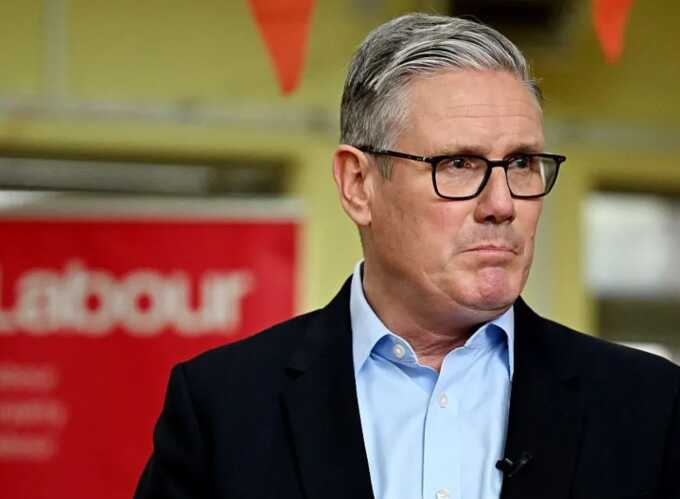
Vladimir Putin’s war in Ukraine could receive a £1bn boost after Sir Keir Starmer eased sanctions on Russian oil, experts have said.
The Prime Minister has permitted some imports of diesel and jet fuel derived from Russian crude into the UK following a rise in prices due to the war in Iran.
The move came as airlines warned of an “Armageddon situation” of global jet fuel shortages, which could significantly affect travel plans for millions this summer.
Senior military figures have since criticized Sir Keir’s move, labeling the decision “morally bankrupt.” Kemi Badenoch, the Tory leader, said Sir Keir should be “ashamed” for “choosing to buy dirty Russian oil – that money will be used to fund the killing of Ukrainian soldiers.”
The Royal United Services Institute (Rusi), a respected London think tank, has stated the easing of sanctions could give the Kremlin up to $1.4bn (£1.04bn), based on estimated import levels.
Petras Katinas, a research fellow in climate, energy, and defense at Rusi, said: “If the UK were to import the same volumes of jet fuel and diesel derived from Russian crude oil as in 2025, and current market prices remained at similar levels until the end of the year, the total value of these imports could reach approximately $1.2bn to $1.4bn.”
‘A morally bankrupt move’
Gen Lord Richard Dannatt, the former head of the Army under both Sir Tony Blair and Gordon Brown’s Labour governments, was furious at the decision, calling it “shameful.”
He told The Telegraph: “This is a morally bankrupt move by a Government focused much more on short-term popularity and not on issues of greater significance, namely the lives of Ukrainian soldiers and civilians. Shameful is the word that comes to mind.”
Phil Ingram, a former colonel in Army intelligence, accused Labour of “playing politics with people’s lives” and said the move was an “immoral” and “sickening act.”
“This funding of Russian weapons to kill Ukrainian military personnel by Keir Starmer’s insistence that buying Russian oil products will help British taxpayers is the most illogical and sickening act I have seen in decades,” he said.
“If he wanted to ease the price of energy for British consumers he could reduce the VAT on fuel at the pumps, not buy more Russian sourced products.
The Government is looking to “phase in” some new sanctions over the coming months due to the effective blockade of the Strait of Hormuz waterway since the start of the US-Israel war with Iran.
Gulf refineries supplied up to 65 percent of UK jet fuel before the war, with the fuel traveling through the Strait of Hormuz. Since the conflict started at the end of February, jet fuel prices have increased by 103 percent to about $150 (£112) per barrel.
However, the UK’s move to ease sanctions on Russian oil “came as a surprise” to the European Union, the bloc’s economy chief said on Thursday.
Valdis Dombrovskis, the European economic commissioner, told a press conference: “It was not flagged during our G7 finance ministerial meeting earlier this week, so it came as a surprise.”
He also warned now “is not the time to roll back sanctions” against Moscow.
Downing Street insisted the Government had “worked closely with international partners, including the EU, to finalize the details” of the overall sanctions package.
“I wouldn’t get into conversations beyond that,” a No 10 spokeswoman told reporters.
She could not say whether the sanctions licenses had been discussed with the bloc specifically.
Sir Keir discussed the sanctions in a call with Volodymyr Zelensky, the Ukrainian leader, on Wednesday evening, where they agreed to “do everything possible to debilitate and degrade Putin’s war machine.”
The PM added the “strong new package” of sanctions, including bans on maritime services and refined oil products from Russia, went “well beyond” existing measures, but that two “short-term licenses” were issued to “phase in” the new sanctions.
The Foreign Office denied the shift in policy could be described as a “waiver” on sanctions aimed at damaging Russia’s economy, but admitted extra flexibilities were needed.

Technology & Business Editor