Fiji journalist targeted after post on police corruption claims
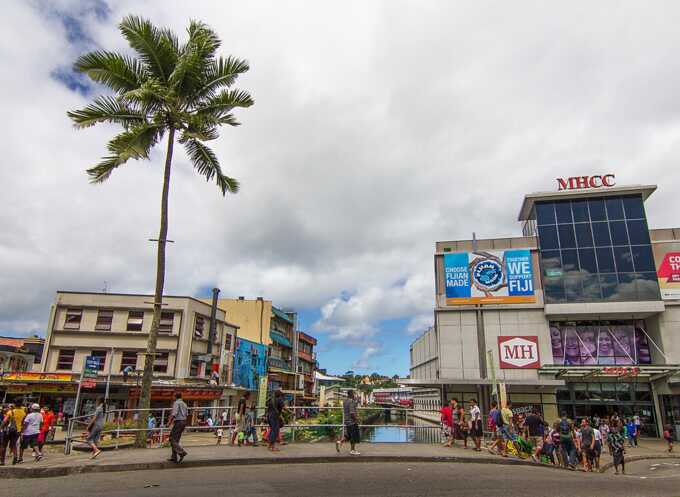
The questioning of an investigative reporter in Suva arises as the Pacific nation deals with an increase in drug trafficking and considers declaring a state of emergency.
OCCRP has condemned the seizure by Fiji police of a phone belonging to one of its affiliated journalists, after she made a social media post about alleged corruption within the force.
Meri Radinibaravi, an investigative reporting fellow with OCCRP, was summoned to the Criminal Investigation Department (CID) in the nation’s capital shortly after posting—and quickly deleting—the Facebook comment.
The incident took place during a troubling time for the Pacific island nation of nearly one million residents. Prime Minister Sitiveni Rabuka is currently deciding whether to declare a national state of emergency in response to a rise in drug trafficking and organized crime.
Simultaneously, the authorities have initiated a high-profile murder investigation into the death of a drug suspect who died while in military custody. Radinibaravi, who joined OCCRP last year, has been intensely covering that investigation and exploring the broader infiltration of organized crime into Fiji’s police and military ranks.
“Calling a journalist into a police station and forcing her to surrender her phone is an unacceptable attack on press freedom and independent media in Fiji,” Miranda Patrucic, the editor in chief of OCCRP, said in a statement. “It is designed to harass the journalist and is a brazen attempt to target her sources.”
“We demand the immediate return of her equipment and a guarantee that no data has been accessed or compromised,” Patrucic added.
The Fiji Police Force and its commissioner, Rusiate Tudravu, did not respond to questions sent by OCCRP.
Radinibaravi said police contacted her on Wednesday afternoon, informing her that they needed to question her regarding her Facebook post, which made reference to allegations of corruption during the tenure of Sitiveni Qiliho, a former police commissioner who was later convicted and imprisoned for interfering in a criminal investigation.
Radinibaravi said police informed her that they would send a squad car to her home to pick her up—a suggestion she found intimidating. She instead offered to go to the CID office on her own.
At the headquarters, a detective from the cybercrime unit questioned Radinibaravi and asked her to type up a formal statement. In it, she wrote that she had made the post without malicious intent and had subsequently deleted it.
After she signed the statement, the detective informed Radinibaravi that the police needed to confiscate her phone for a digital forensic analysis. Radinibaravi initially refused but said she eventually felt compelled to surrender the device. She believed the pressure from police might have been linked to her ongoing reporting on sensitive corruption allegations within the department.
Fiji has a troubled history concerning press freedom, marked by periods of strict censorship, particularly during past states of emergency and following military coups.
However, the media landscape had recently shown signs of opening up. In 2023, Rabuka—who himself restricted the press after leading a military coup in the late 1980s—championed the repeal of a draconian media law that had long threatened journalists with heavy fines or imprisonment for criticizing the government.

Politics Editor
Read more similar news:
Comments:
comments powered by Disqus