23 April 2026 , 22:08
682
0
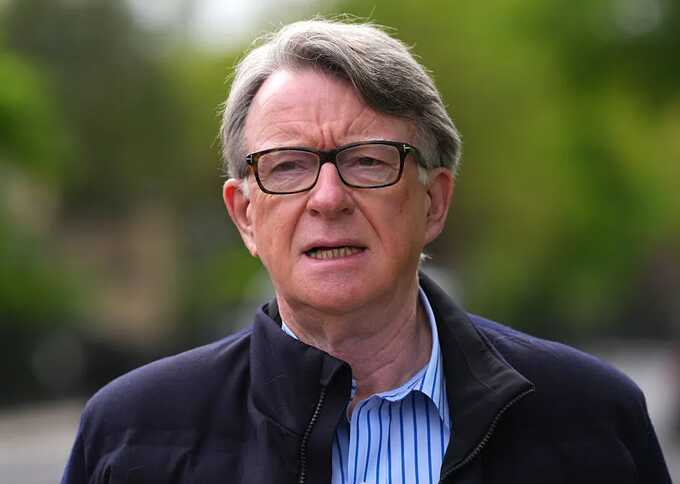
The Foreign Office refused to hand over key files about Lord Mandelson’s vetting, one of Britain’s most senior civil servants has revealed.
Cat Little, the Cabinet Office permanent secretary, said she was forced to take the "very unusual" move of directly requesting the information from security officials.

She told the foreign affairs committee: "I took the very unusual judgment that I should directly request the information from UK Security Vetting, and I did that because I go back to my responsibilities to discharge the humble address, which is a responsibility that is unique to me, and I take very seriously.
"I felt that I needed to see some relevant documentation so that I could advise the prime minister as to whether we had fully complied and gathered the information that was available and within scope."
Little said she could not provide Robbins’s reasons for not handing over the details, telling the committee: "I can only talk about my judgments and decisions."
Little also cast doubt on claims by Robbins that he was told he would be unable to get full details of Mandelson’s developed vetting file when he attempted last September. He told the same committee on Tuesday that he did consider asking UK Security Vetting but was told he needed a national security justification for accessing the documents.

She said: "On September 15 last year, the Foreign Office security team request access to a number of documents relating to the vetting file, and on the same day the documents requested are sent to the Foreign Office.
"I don’t know who, beyond the individual requesting that information, saw those documents, but my point being that any anyone within the security chain can request to see information if they feel it is necessary, because they are ultimately one of the owners of that document."
She added: "I have obviously looked at what Olly has said, and I can’t at this stage see the audit trail for that request, and I don’t know who Sir Olly made that request to."
Little told Sir Keir Starmer last week that Mandelson had been granted high-level security clearance despite vetting officials recommending against it.

She had found out on March 25 about the sensitive information linked to Mandelson’s vetting. She told the committee she acted as "swiftly and effectively" as she could in informing the prime minister but that it took some time to get expert legal advice about how to deal with such sensitive information.
Little also revealed that there was an initial discussion over whether Mandelson needed security vetting at all because he was a member of the House of Lords.
"Because the presumption had been that given Peter Mandelson had been a member of the House of Lords, that the longstanding convention that he didn’t require developed vetting was assumed, and they wanted to get proper policy advice from experts on whether that was the case," she said, referring to documents that showed such a discussion.
She also said had not seen evidence of pressure from No 10 on the Foreign Office to clear Mandelson to take up the post of US ambassador.
Asked about Robbins’s claims of such pressure, she told the committee: "I can’t comment on events that I wasn’t privy to. I wasn’t involved at all, as I stated up front. As part of the humble address information-gathering process, I’ve not seen any documentation that would formally confirm that level of pressure.
"But I must repeat, I’m only looking at information in the audit trail and the documentation that I’ve been given in relation to the humble address. I can’t comment on the atmosphere at the time. I wasn’t involved."
Politics Editor