Moscow halts Druzhba pipeline supplies in escalation of energy pressure on Germany
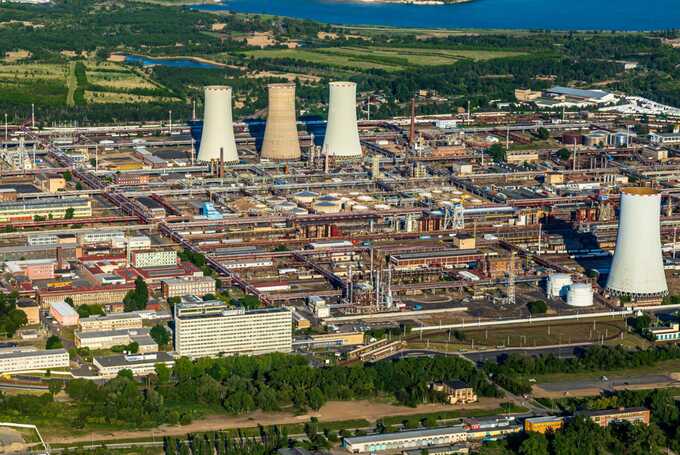
Russia is planning to stop the flow of Kazakh oil to Germany through the Druzhba pipeline, affecting a refinery that supplies almost all of Berlin’s petrol and heating fuel.
This move will impact the PCK refinery, located about 100km north-east of Berlin, which is situated on the pipeline and provides 90 percent of the petrol, kerosene, and heating fuel to the German capital, its airport, and the surrounding region.
Russia has increasingly sought to use its energy exports to Europe as a weapon since its full-scale invasion of Ukraine in 2022.
A senior Kazakh government official stated that the decision to stop the oil flow from the country next month was mainly intended to pressure the EU, especially Germany, the largest arms supplier to Kyiv.
“Every month, Moscow sends Kazakhstan a schedule of oil deliveries via Russia. In the schedule for May, Druzhba was not included,” the official said. It was not a significant issue for Kazakhstan because exports through the route were relatively low, he added.

The PCK refinery, whose operations were taken over by the German state following Moscow’s full-scale invasion of Ukraine, has heavily relied on Kazakh crude since 2022.
Speaking to reporters at a forum in Astana, Kazakhstan’s energy minister, Yerlan Akkenzhenov, said Russia did not include Druzhba volumes in the monthly supply schedule sent to Kazakhstan.
Akkenzhenov said that the disruption could be due to technical problems following Ukrainian drone attacks on Russia’s energy infrastructure.
“The Germans have given up on Russian oil, so they are fine,” Novak was quoted as saying by Russian news agency Tass.
Kazakhstan started exporting oil via Druzhba in 2023. According to the official, the initiative was driven by Moscow, which hoped to maintain influence over the refinery and ensure its operations until Russia eventually gets a chance to regain control over it.
The German government said it was “working on alternative options” through the German port of Rostock, which is connected to the PCK with a pipeline.
People close to the refinery said that the state-owned Kazakh oil company now accounted for more than 20 percent of PCK’s supplies. In addition to Rostock, the refinery also receives oil from the Polish port of Gdańsk.
“This is a serious, indeed dramatic, situation for the PCK refinery and the energy supply for large parts of Germany,” Christian Görke, an MP from the left-wing Linke party, said. “Russian President [Vladimir] Putin is exploiting the situation in the Middle East.”
Moscow’s move comes as the German government deals with rising oil and fuel prices following the US-Israeli war on Iran.
The decision to halt the supplies was first reported by Reuters.
Moscow stopped gas supplies to Europe through the Nord Stream pipeline in 2022 and repeated threats to cut off remaining hydrocarbon supplies to Europe.
Last month, Putin instructed his government to “explore the feasibility” of stopping energy supplies to the European market before the EU “slams the door in our faces.”
The Kremlin did not immediately respond to a request for comment. On Tuesday, spokesperson Dmitry Peskov said he was unaware of the issue.
A legacy of Germany’s strong energy reliance on Russia, the PCK refinery has been a pawn in the war in Ukraine. In 2022, after Europe, the US, and other allies imposed a price cap on Russian oil, the German government assumed control of PCK’s operations by placing it under trusteeship.
But it did not seize its shares, which remain 54 percent owned by Russia’s state-owned oil group Rosneft. The reason for not expropriating Rosneft was that Berlin feared Moscow would retaliate by nationalizing German businesses in Russia.
Berlin has since sought alternatives to the Siberian crude that flowed for six decades through Russia’s 4,000km pipeline to the town of Schwedt, where the refinery is located near the Polish border.
Last year, the plant neared bankruptcy after the US imposed sanctions on Rosneft and its assets in Europe. Berlin secured a permanent exemption last month.
Transneft, which operates the Russian part of the pipeline, did not immediately respond to a request for comment. Rosneft declined to comment.
PCK is supplied by Druzhba’s northern branch. The southern branch of the pipeline has also been entangled in the geopolitics of the Ukraine war, after Russian oil supplies to Hungary and Slovakia were cut following a Russian drone strike in January. Ukrainian President Volodymyr Zelenskyy said on Tuesday that the pipeline had been repaired and was ready to restart flows.

Technology & Business Editor
Read more similar news:
Comments:
comments powered by Disqus