Oil and gas firms block critical users from seeing their ads
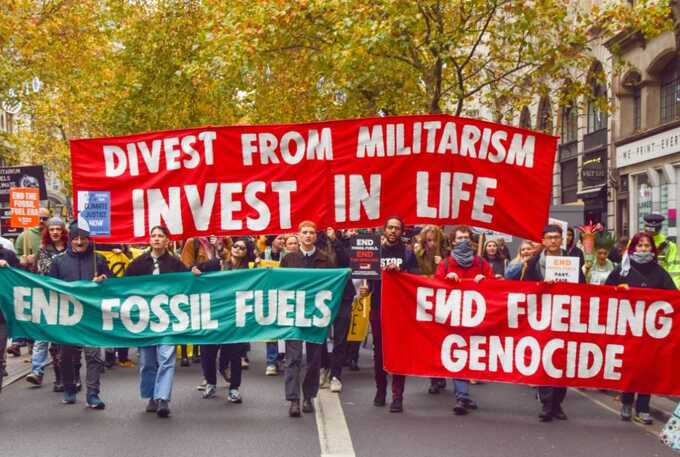
Fossil fuel companies go to extraordinary lengths to exclude people who might criticise them from seeing their ads.
Imagine you’re working in PR for an oil company. Your job isn’t so much to sell stuff to people, but rather to make the company look good in order to maintain its social license to operate.
That’s no easy task given all the problems the company is linked to – everything from climate change to human rights abuses to financing the Russian war machine. You worry that if you post an advert on social media, all the many people who criticise your company will comment on it, spreading news about all the things the company would rather keep quiet about far and wide.
Wouldn’t it be helpful if you could decide who sees your ads, so you don’t get called out publicly on all those things you don’t want people to know about?
It turns out that social media platforms have exactly the tool to help with this problem: ad targeting tools which enable you not just to include particular audiences, but also to exclude ones you’d rather didn’t see your ads.
Such tools are often used by advertisers because they don’t want their ads appearing next to topics that are divisive or contradictory to the advertiser’s mission. The tools also give companies the power to control the narrative online, minimising the chances that anyone critical of their actions gets a chance to see or to comment on their ads.
We worked with the researcher and academic Paul Bouchaud to investigate the extent to which fossil fuel companies and banks take advantage of these tools to stop critics from seeing their ads. Our work builds on previous analysis published by AI Forensics.
The data we examined came from the X Ads Repository which includes targeting information for ads shown to users in the EU.
What we found is that companies often go to extraordinary lengths to exclude people who might criticise them. The topics they exclude read like an insight into their corporate souls: what they worry about behind closed doors when they think no-one is listening.
What is ad targeting?
Social media platforms typically allow advertisers to choose who they would like to show their ads to based on huge amounts of data revealing their user’s characteristics, behaviours and interests.
One of the ways that X does this is by allowing advertisers to list ”keywords” that they say “allows you to reach people on X based on keywords in their search queries, recent posts, and posts they recently engaged with.” Advertisers can include or exclude users depending on whether they have used these keywords.
All the keyword examples in this article are words that advertisers require users not to have used – i.e. that are on their exclusion lists. X says that this sort of exclusion targeting “prevents your campaign from serving to users who have engaged with the excluded word(s)” and “prevents your campaign from serving in Search results for excluded word(s).”
X allows advertisers to restrict people from commenting on their ads. However, comments can aid an ad’s visibility and most of the ads we investigated allowed users to comment.
EU rules prohibit ad targeting and exclusion linked to people’s sensitive characteristics – such as their political beliefs, religion or sexual orientation. Earlier this year, AI Forensics and a group of partners (including Global Witness) submitted a complaint to EU regulators on how X enables targeted advertising based on users’ sensitive data.
People who engage with climate change posts
BP, Chevron, Shell, TotalEnergies, Glencore, Barclays and Société Générale do not want people interested in climate change seeing their ads, by excluding people who have engaged with any post using words such as “climate change”, “greenwashing” or “pollution” and/or by excluding people who have engaged with posts naming specific climate campaign organisations.
It is not surprising that fossil fuel companies and their financiers feel susceptible to criticism over their role in the climate crisis, or for their sensitivity about being called out over greenwashing.
For example, a landmark legal ruling in France has just found TotalEnergies responsible for "misleading commercial practices" for making statements such as: "Our ambition is to contribute to achieving carbon neutrality by 2050 together with society".
People who engage with human rights topics
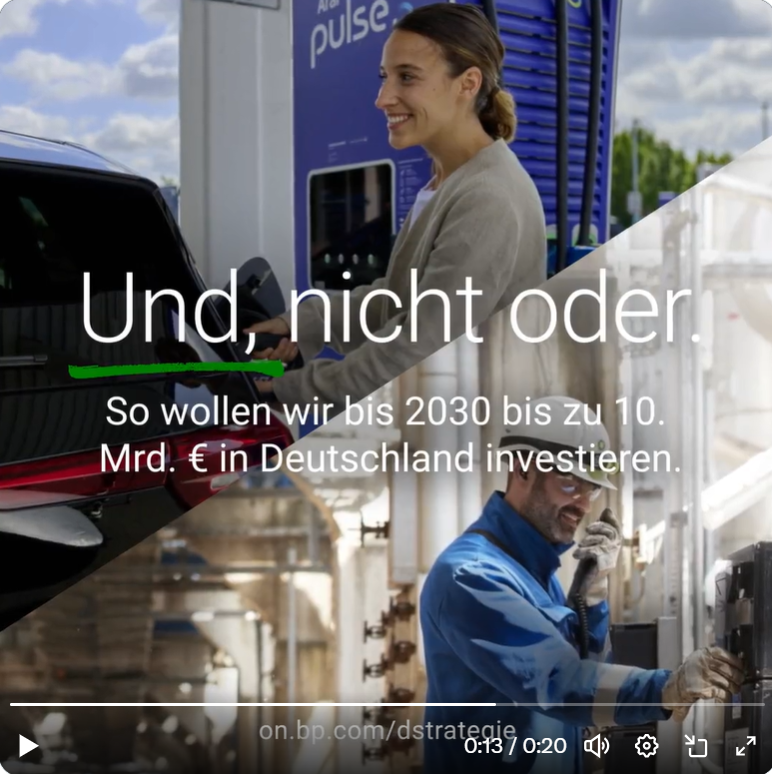
Chevron, Saudi Aramco, Shell and Société Générale do not want people interested in human rights seeing their ads. For example, they exclude people who have engaged with posts that use phrases such as “human rights violations” or “human rights abuses”.
It is not surprising that one of their concerns is around human rights. For example, Shell is currently facing claims in the UK courts that chronic oil spills in the Niger Delta breached the human rights of 13,000 people. Amnesty International suggested in 2025 that Shell was complicit in murder, rape and torture committed by the Nigerian government.
People who engage with content about Russia’s war in Ukraine
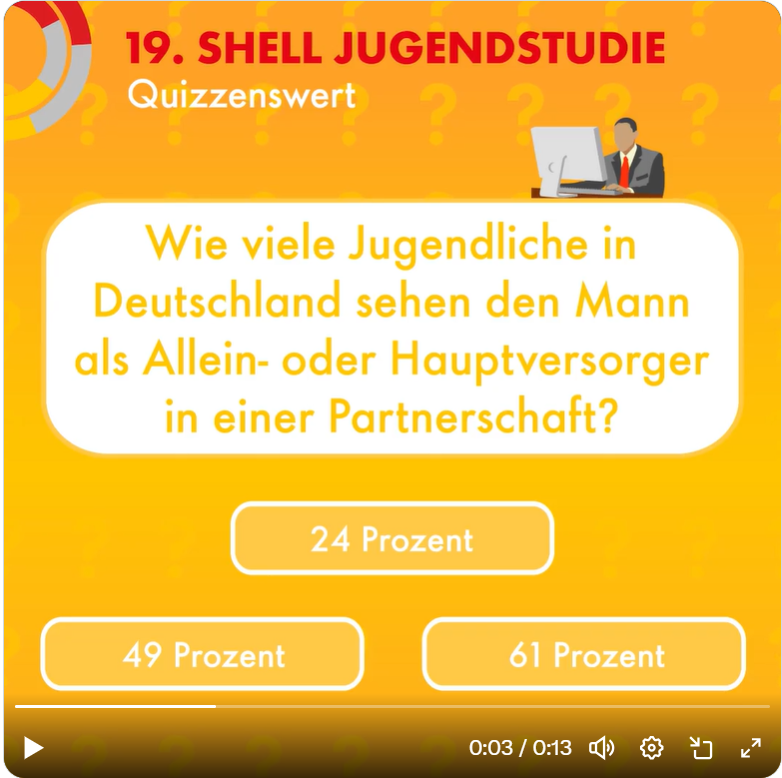
TotalEnergies does not want people interested in the war in Ukraine seeing their ads. Keywords they exclude include “StopRussia”, “StopPutin” and “PrayforUkraine”.
A 2022 investigation by Global Witness and Le Monde showed that a Siberian gas field part-owned by TotalEnergies appears to have regularly supplied a refinery which in turn likely produced jet fuel for Russian warplanes.
TotalEnergies deny producing fuel for the Russian military. Nevertheless, two NGOs, one French and one Ukrainian, filed a lawsuit against TotalEnergies accusing them of complicity in war crimes. French prosecutors closed the case after an “exhaustive legal and factual analysis” with no action taken against TotalEnergies.
People who engage with posts about Israel or Palestine
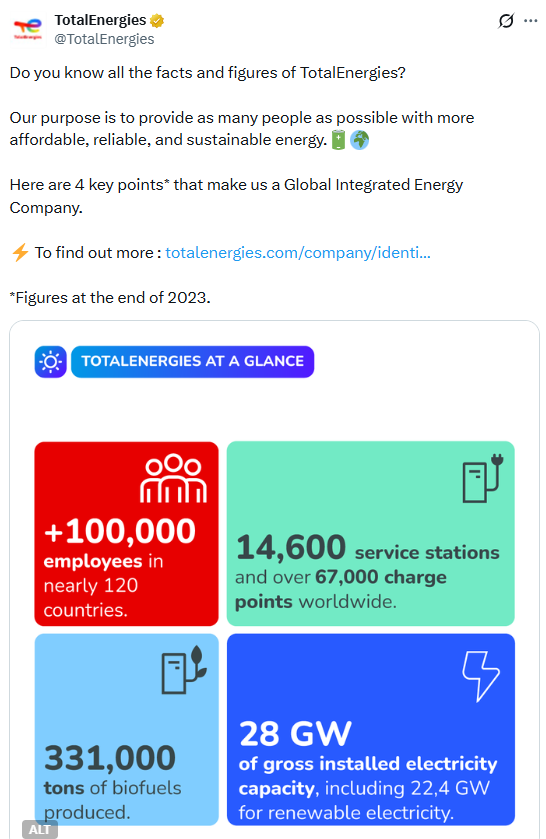
Four of the seven companies we looked at – BP, Saudi Aramco, Shell and Société Générale – do not want people interested in Israel or Palestine seeing their ads.
It is a standard marketing practice for companies to exclude associations with divisive topics such as the conflict in Gaza. However these four companies also have some links to Israel/Palestine which gives them an additional reason to prevent people who have engaged with the topic from seeing their ads.
BP is part of a consortium granted an exploration licence for gas off the coast of Israel in 2025 and had previously considered acquiring a stake in NewMed, one of Israel’s largest gas companies.
Shell used to hold an equity stake in the Gaza Marine Gas Field off the coast of Gaza until 2018. They are a partner in the Aphrodite Gas Field which is the subject of a dispute between Cyprus and Israel.
Société Générale has been criticised for lending to companies involved in Israeli settlement. Saudi Aramco is the state-owned oil company of Saudi Arabia, which shares a border with Israel.
People who engage with posts about countries where fossil fuel companies operate
BP and Chevron do not want people interested in specific countries that they work in (or have worked in) seeing their ads. BP does not like people interested in Azerbaijan, Iraq, Mauritania, Oman or the United Arab Emirates (UAE) seeing their ads and Chevron does not like people interested in the Arctic, Ecuador or Myanmar seeing their ads.
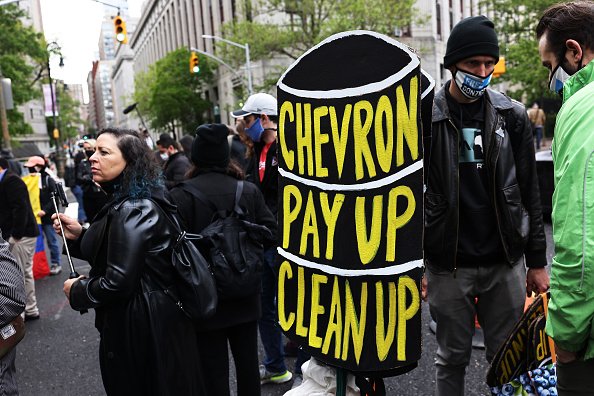
Chevron excluded people from seeing their ads who have an interest in Ecuador. Why are they worried about Ecuador? It’s presumably because Ecuador was the setting for a bitter court battle where it was ruled that Chevron is responsible for dumping an estimated 16 million gallons of toxic waste and abandoning 1,000 waste pits in the Amazon.
This saga, which Chevron presumably prefers readers of its ads know nothing about, has continued for over 20 years, with Chevron securing US court and European arbitration rulings that the Ecuadorian decision was fraudulent, and blocking its enforceability.
Indeed, one of the keywords they exclude is the name of the main lawyer who pursued them in Ecuador: Steven Donziger.
People who engage with posts about Mark Zuckerburg or Elon Musk
Ironically, BP doesn’t want people who have engaged with the words Zuckerberg or Musk seeing their ads on X which is owned by Elon Musk. This suggests Big Tech and the people at the helm of Meta and X have become so toxic that BP would prefer their ads not to have anything to do with them.
Chevron’s fragile ego
Chevron stood out among the companies examined here for excluding a particularly long list of keywords – more than 300 of them.
They do not want anyone who has engaged with posts mentioning "cancer" or "beating death", possibly because of their links to Cancer Alley, the nickname given to a stretch of land in Louisiana which has more than 200 petrochemical plants and refineries. Chevron has a plant there that makes polystyrene.
They don’t want anyone who has engaged with posts about a proposed law in California that would have provided money for schools and services by increasing taxes on large commercial properties. Local activist group Sunflower Alliance organised a march to Chevron’s refinery in Richmond, California to protest against their financing of a campaign against this bill.
The keywords they excluded included Prop15, FightFor15 and YesOn15.
In 2024, Chevron agreed to pay the city of Richmond $550 million in return for the city agreeing to drop proposals to tax the refinery. The company is keen to ensure that people who have engaged with a local campaign against them, RichmondDumpsChevron, don’t see their ads.
They also don’t want anyone seeing their ads who has engaged with content about a lawyer, Tony Buzbee, who brought a successful class action against them that alleged negligence in a refinery fire in Richmond.
They don’t want anyone seeing their ads who has engaged with the story of Ashley Watt, a Texas rancher who has ensured Chevron deal with an abandoned oil well on her land that recently leaked dirty toxic water.
Keywords they exclude include Ashley Watt, zombie wells, abandoned wells, plugged wells and orphaned wells.
Millions of X users shut out of the conversation
The exclusions are wide-ranging. They do not just cover people who have posted on X using the specific excluded keywords, but also cover people who have liked, retweeted, commented upon or clicked on links or hashtags within a tweet that used the keywords, as well as the search results, of people searching for one of the keywords.
Other than saying that keyword targeting allows advertisers to exclude people based on their "recent" posts or posts they have "recently" engaged with, X does not specify the time period over which these exclusions apply.
It is not just a few activists who are being excluded from seeing these adverts; the numbers are huge. It is not possible to calculate exactly how many people have been shut out of the conversation.
But to give a sense of the scale, we estimate using media monitoring tools that in just 90 days in late 2025, 1.7 million X users in EU countries used one of the keywords that TotalEnergies, and that those posts were engaged with 420 million times.
For Chevron, we estimate that 1.2 million X users in EU countries used one of the keywords they exclude over the course of 90 days in 2025, and that those posts were engaged with 180 million times.
Conclusion and recommendations
The ad targeting tools that X provides allows companies to avoid public criticism and control the online narrative by making it less likely that people critical of their actions are shown the advert. Fossil fuel companies and their financiers use these tools widely.
The consequence is that a misleading picture is presented of the extent of public support for these companies. Where advertisers allow comments on their ads, they are likely to be missing a huge amount of criticism that would be present if they were shown to a wider audience.
In reality, there is an enormous amount of consensus around the need for increased climate action. Between 80 and 89% of the world’s people want their governments to be doing more to address climate change.
We wrote to X and to the advertisers named in this report to give them the chance to comment on our findings.
TotalEnergies said that their ad targeting is legal and transparent and that it uses the functionalities provided by X. They said that they have targets for reducing greenhouse gas emissions and investing in renewables.
Société Générale said that their advertising parameters aim to “avoid being associated with content that could generate controversy” and that they target themes, not individuals.
The other companies did not respond or said they did not wish to comment.
Fossil fuel companies should stop greenwashing their business activities. They should also stop targeting their ads online in a way that excludes vast numbers of people who might disagree with them. Doing so is another form of greenwashing.
EU rules already prohibit platforms such as X from offering ad targeting based on users’ political opinions and other sensitive personal data. EU regulators should ensure robust enforcement of their rules and investigate X for this potential breach.
Methodology
We worked with Paul Bouchaud to download data from the X Ads Repository. At least in theory, the Repository contains data on how any advert that was seen by someone in the EU was targeted, including the criteria for inclusion and exclusion.
In practice, the Repository often does not work, returning empty spreadsheets for X accounts that have advertised on the platform. The data we managed to obtain was through repeatedly attempting to download information from the Repository.
The unreliability of the Repository comes despite the fact that EU legislation requires large tech companies such as X to enable public access to such an ads repository. In 2024, the European Commission informed X of its “preliminary” view that its Ads Repository did not meet the ad transparency requirements of the Digital Services Act because its Repository was not “searchable and reliable.”
We have permanently archived the search results from the X Ads Repository on the following links: Barclays, BP, Chevron, Glencore, Saudi Aramco, Shell, Société Générale, Total.
Each link contains the original spreadsheet as provided by the X Ads Repository. It shows the X account that posted the ad, a link to the ad itself, the dates that the ad ran, the keywords that were included and excluded from the ad audience and some metrics as to how many people were shown the ad.
Appendix
The table below provides an overview of the keywords that specific companies have excluded from their ad audiences. For a complete list of all the keywords exclude, see the permalinks in the methodology section.

Editor-in-Chief
Read more similar news:
Comments:
comments powered by Disqus