10 November 2025 , 21:10
779
0
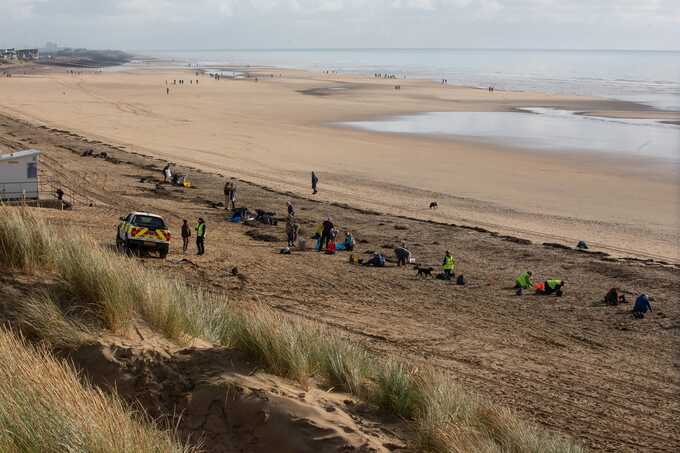
Southern Water has apologised for the spill of so-called ’bio-beads’, which have led environmental groups to warn of a potential local catastrophe.
A beloved sandy beach on the south coast of the UK is awash in ’millions’ of toxic plastic pellets after a leak at a nearby sewage plant.
Southern Water apologised for the spill of so-called "bio-beads", which saw small plastic pellets strewn over the beach at Camber Sands in East Sussex, prompting a clean-up operation by the local council, experts, and volunteers that began on Thursday.
Rother District Council has said it is not aware of concerns regarding public health, but advised dog owners to supervise their pets closely to prevent them eating the pellets.
Southern Water has taken responsibility for the spill, which plastic pollution campaign group Strandliners described as "catastrophic" and the worst ever in the area.
Water Minister Emma Hardy described the spill as ’disappointing’ and is working with Southern Water to investigate the incident, including whether the organisation should face action over the spill.
Thousands of tiny plastic bio-beads washed up causing an environmental disaster at Camber Sands beach.
Camber Sands has been used as a location for films such as Dunkirk and The Theory of Everything as well as TV series such as Miss Austen.
A spokesperson for the Environment Agency said: "We are aware that a large number of plastic pellets have washed up along a stretch of coastline in East Sussex which includes Camber Sands.
Camber Sands has been used as a location for films such as Dunkirk and The Theory of Everything as well as TV series such as Miss Austen.
A spokesperson for the Environment Agency said: "We are aware that a large number of plastic pellets have washed up along a stretch of coastline in East Sussex which includes Camber Sands.
What are bio-beads?
The beads, which can contain toxic chemicals, are used to clean water before it is released into rivers or the sea.
They are used in huge tanks where they work as a filter, with bacteria growing on the beads helping to break down biomass.
Local volunteers help to pick up thousands of tiny plastic bio-beads at Camber Sands
They are a type of BAFF media (biological aerated flooded filter) used in water treatment plants and tend to be dark grey or black, with a ridged surface for bacteria to cling to
Southern Water has five sites that use bio-beads in East Sussex - Eastbourne, Broomfield Bank, Beckley, Peacehaven, and Sandown.
Bio-beads can sometimes leach into the environment if screens at wastewater treatment plants get damaged.
Why are they a problem?
Bio-beads are a problem because they can be eaten by animals who mistake them for food.
They are hard to remove from the environment, and can be toxic due to the materials they absorb.
They contain a large number of polycyclic aromatic hydrocarbons, which have previously been linked to cancer, as well as other toxins such as lead and bromine. When they end up in the sea, they can attract algae, which makes them smell like food to animals.
Anti-plastic pollution organisation Strandliners said: “This is the worst plastic pellet pollution incident we have ever seen here [at Camber Sands].
Biobeads are a problem because they can be ingested by animals.
“The impact on the environment and local wildlife can be catastrophic. Birds and marine animals easily mistake these toxic plastic pellets for food.
“Once ingested, it is difficult for them to expel the pellets, and they may either die of starvation or from the cumulative effects of the toxins they contain.”
What happened at Camber Sands?
Southern Water has taken responsibility for the spill, which it says was caused by a mechanical failure at its Eastbourne sewage works.
Bio-beads are used in the final stages of the water-cleaning process at the works.
A Southern Water spokesperson said: “After completing the initial stages of a thorough investigation, which is continuing, we believe it is highly likely that the beads have come from our Eastbourne wastewater treatment works.
Workers from Southern Water help to pick up thousands of tiny plastic bio-beads
“We’ve identified a failure of a screening filter, which has apparently led to beads used in the treatment process being released into the sea during heavy rainfall. The screen should have prevented this occurring.
“We are very sorry this has happened and are doing everything possible to investigate and resolve the problem.”
What happens next?
Teams are now attempting to clean the beach, with volunteers working alongside experts from the local council and Southern Water.
Helen Dollimore, the Labour and Cooperative MP who joined the clean-up efforts, said: “The huge number of plastic beads that have washed up here risks an environmental catastrophe. These bio-beads are deadly to marine life and wildlife, and we are already seeing more dead seals, fish, and porpoises on the beach.
“Local residents are working tirelessly to remove as many beads as possible, but it’s a race against time.
Thanks to everyone asking how you can help clean up #CamberSands - all volunteers appreciated. pic.twitter.com/h9Z5UslGOA
— Helena Dollimore MP (@helenadollimore) November 9, 2025
Water Minister Emma Hardy said “I am deeply disappointed about the plastic pollution incident affecting Camber Sands, East Sussex. It is right that Southern Water has taken responsibility.
“The immediate priority now needs to be addressing any environmental damage and minimising further impacts. I am in close touch with the Environment Agency, who are conducting a thorough investigation, looking at what regulatory action should be taken and working with Rother District Council on the clean-up operation.
“For too long there have been unacceptable levels of pollution into our rivers, lakes, and seas, and this Government is taking decisive action to stop it. New, swifter penalties will clamp down on polluters and over £104 billion in private investment has been secured which will help cut pollution incidents.”
An Environment Agency spokesperson said: "We acknowledge that Southern Water has admitted responsibility for the pollution incident in a statement released this morning. This is an active investigation and we will not hesitate to take robust enforcement action where appropriate.
"We continue to work closely with Rother District Council and other responders on the clean-up operation of plastic pellets on Camber Sands, East Sussex. The lead for this activity continues to be the District Council and we remain ready to help should they need it
"We encourage anyone with information on this incident to report it to our incident hotline on 0800 807060."

Politics Editor