Iran imports sodium perchlorate from China amid UN sanctions
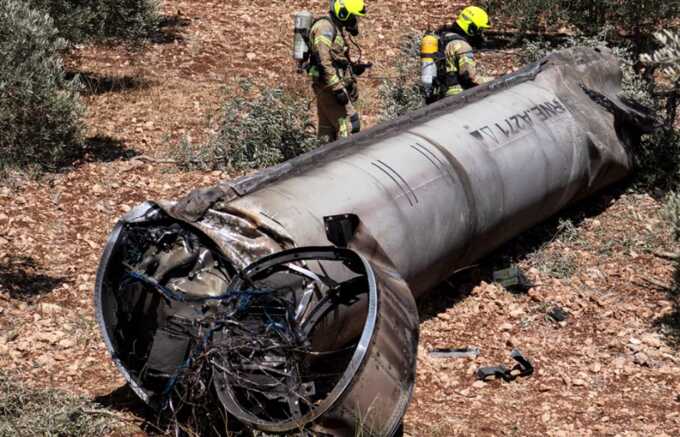
Iran appears to be intensifying efforts to rebuild its ballistic missile program, despite last month’s reintroduction of United Nations sanctions that prohibit arms sales to the country and ballistic missile activities.
European intelligence sources report that several shipments of sodium perchlorate, the primary precursor in producing the solid propellant used in Iran’s mid-range conventional missiles, have arrived from China to the Iranian port of Bandar Abbas since the “snapback” mechanism was activated at the end of September.
These sources indicate that the shipments, which started arriving on September 29, contain 2,000 tons of sodium perchlorate purchased by Iran from Chinese suppliers after its 12-day conflict with Israel in June. The purchases are thought to be part of a concerted effort to replenish the Islamic Republic’s depleted missile stocks. Several of the cargo ships and Chinese entities involved are sanctioned by the United States.
The deliveries follow the restoration of over a decade-old UN sanctions by the snapback mechanism – a provision for Iranian breaches of the 2015 Joint Comprehensive Plan of Action (JCPOA) agreement to monitor its nuclear program.
Under the sanctions reinstated on Tehran last month, Iran is prohibited from engaging in any activity related to ballistic missiles capable of delivering nuclear weapons. UN member states are also mandated to prevent the provision of materials to Iran that could contribute to the development of a nuclear weapons delivery system, which experts say could include ballistic missiles.
States are also required to prevent assistance to Iran in arms manufacturing. China, along with Russia, opposed the reimposition of the sanctions, asserting it undermines efforts for a “diplomatic settlement of the Iranian nuclear issue.”
While sodium perchlorate – the shipped substance – is not specifically named in UN documents on materials banned for export to Iran, it is a direct precursor of ammonium perchlorate, a listed and prohibited oxidizer used in ballistic missiles. However, experts suggest that the sanctions’ lack of an explicit prohibition on the chemical might allow China to argue that it is not violating any UN ban.
CNN has tracked several cargo ships identified by the intelligence sources as involved in the latest deliveries of sodium perchlorate from Chinese ports to Iran using ship tracking data and the social media of their crew. Many of these vessels seem to have made multiple trips between China and Iran since the end of April. According to the sources, the crew appears to be employed by the Islamic Republic of Iran Shipping Lines, and their regular social media posts provide a trail of their stops on the China to Iran journey.

Among these ships is the MV Basht, which was already sanctioned by the US, and left the Chinese port of Zhuhai on September 15, arrived in Bandar Abbas on September 29, and has since returned to China.
Following a similar route, the Barzin traveled from Gaolan on October 2 and arrived in Bandar Abbas on October 16, before departing for China again on October 21.
The Elyana left the Chinese port of Changjiangkou on September 18, arriving in Bandar Abbas on October 12. Finally, the MV Artavand departed the Chinese port of Liuheng and arrived in Bandar Abbas on October 12, according to Western intelligence, with its AIS tracking system turned off to deliberately obscure its movements.
It’s unclear if the Chinese government is aware of the shipments. When asked by CNN about the transactions, a spokesperson for China’s Ministry of Foreign Affairs said that, although he was “not familiar with the specific situation,” China has “consistently implemented export controls on dual-use items in accordance with its international obligations and domestic laws and regulations.”
“We want to emphasize that China is committed to peacefully resolving the Iranian nuclear issue through political and diplomatic means and opposes sanctions and pressure,” the spokesperson continued, adding that Beijing views the return of sanctions under the snapback mechanism as “unconstructive” and a “serious setback” in efforts to “resolve the Iranian nuclear issue.”
Similar shipments had been previously reported, but their intensification since the 12-day war – when the Israeli military targeted at least a third of the surface-to-surface launchers that fire Iran’s medium-range ballistic missiles (MRBMs) – suggests a renewed determination from the Islamic Republic to arm itself.
“Iran needs significantly more sodium perchlorate now to replace the missiles used in the war and to ramp up production. I anticipate large shipments to Iran as it strives to rearm, just as I would expect Israel and the US to hurry to replace the interceptors and munitions they expended,” said Jeffrey Lewis, director of the East Asia Nonproliferation Project at the Middlebury Institute of International Studies.
The best way to view the current situation, he told CNN, is as a pause in hostilities, as each side seeks to rearm.
“Two thousand tons of sodium perchlorate are only sufficient for about 500 missiles. That’s a significant amount, but Iran aimed to produce approximately 200 missiles a month before the war and now must replace all the missiles that either Israel destroyed or were used,” he said.
Long-standing ties
China has long been a diplomatic and economic ally for sanctions-hit Iran, condemning the “unilateral” US sanctions against the country and purchasing most of Iran’s oil exports, despite not reporting purchases of Iranian oil for several years.
That energy trade relies on a network of vessels that transfer Iranian oil to independent refineries in coastal China, often through intermediary countries, according to analysts. They note this practice keeps refining separate from Chinese state-owned enterprises that would be vulnerable to US sanctions. These so-called teapot refineries are known to work with what’s often referred to as a dark fleet of tankers that use concealing tactics to smuggle sanctioned goods.
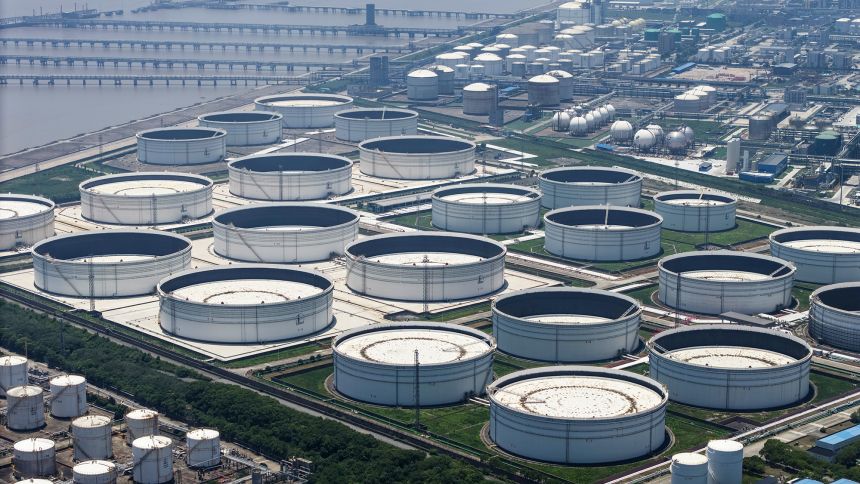
European security sources believe a similarly opaque system, involving front companies that are little more than fake numbers and billing addresses, has been used to keep the sodium perchlorate flowing to Iran. As have more legitimate companies, including two already sanctioned by the US back in April for their part in a “network procuring ballistic missile propellant ingredients on behalf of Iran’s Islamic Revolutionary Guard Corps (IRGC).” Most of the companies involved are based in the northeastern Chinese port city of Dalian, according to intelligence sources.
Earlier shipments
In February, CNN reported the shipment of 1,000 tons of sodium perchlorate to Iran from China. By April, the US had imposed sanctions on several Iranian and Chinese entities, including vessels believed to participate in a “network procuring ballistic missile propellant ingredients on behalf of Iran’s Revolutionary Guard Corps (IRGC).”
Yet the shipments continued, intelligence sources say, with the IRGC’s Self Sufficiency Jihad Organization acquiring another 1,000 tons of sodium perchlorate, departing Taicang in China aboard the Hamouna on May 22 and arriving in Bandar Abbas on June 14 or 15. It set sail for the Iranian port less than a month after a massive explosion there on April 27, believed to have been caused by sodium perchlorate, which killed 70 and wounded hundreds.
The latest shipments represent much larger quantities in a shorter time frame. The first of the 10 to 12 shipments tracked by European intelligence sources arrived in Iran on September 29, two days after the snapback mechanism – triggered in August by Germany, France, and the United Kingdom, the European partners to the JCPOA – reinstated UN sanctions. The others all left China after the sanctions were in place.
Tong Zhao, a senior fellow with the nuclear policy program at the Carnegie Endowment for International Peace, said that China’s stance on the legal status of the reimposition of sanctions might relate to how its authorities view such shipments.
“First and foremost, China – along with Russia and Iran – has denounced the legality of the snapback in a joint letter to the UN issued on October 18, indicating that Beijing likely does not consider itself bound by the reimposed measures,” according to Zhao.
Had the snapback not been triggered, October 18 would have marked the official end of the 10-year JCPOA, at which point the option to reimpose previous UN sanctions and restrictions on Iran’s nuclear program would expire, and the Security Council would close Iran’s nuclear file.
Indeed, China joined with Russia in September to push for a six-month extension of the JCPOA, arguing that more time was needed for diplomatic efforts and highlighting what Beijing viewed as signs that Iran was willing to engage with the international community on regulating its nuclear program. The UN Security Council voted down the China-backed resolution in September, just one day before the snapback took effect.
Yao Dawei/Xinhua/Getty Images
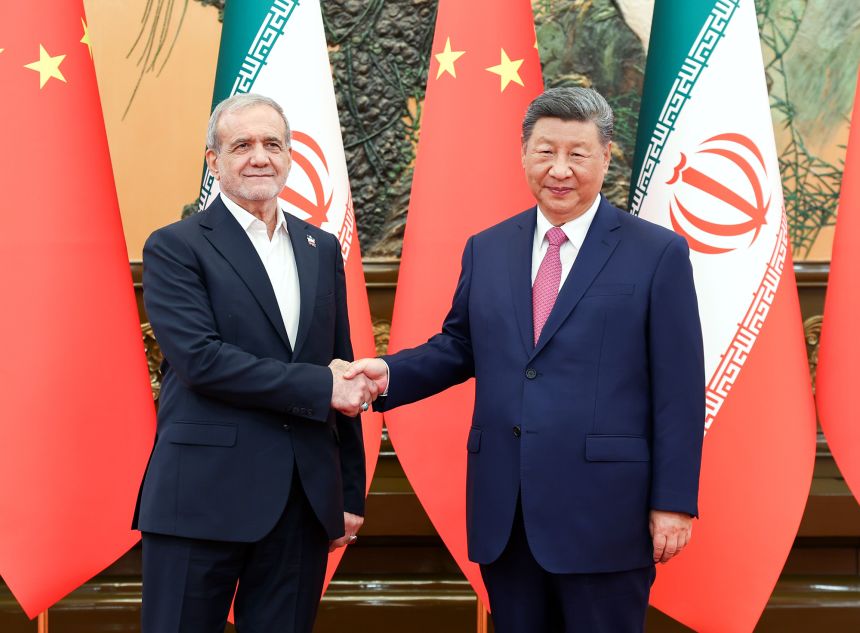
Beijing was one of the six countries – along with France, Germany, Russia, the UK, and the US – that signed the JCPOA with Iran in 2015. In a meeting between Chinese leader Xi Jinping and Iranian President Masoud Pezeshkian in September, Xi reiterated China’s position that it “values Iran’s repeated assurance that it does not seek to develop nuclear weapons” and “respects Iran’s right to the peaceful use of nuclear energy.”
Zhao also highlighted the fact that the export of sodium perchlorate is not explicitly banned under the pre-JCPOA sanctions regime that is now reinstated. What the reinstated UN resolutions do prohibit, he added, is the provision by member states to Tehran of “items, materials, equipment, goods, and technology” which could contribute to Iran’s development of a nuclear weapon delivery system.
So, while sodium perchlorate is not named, it “should fall under the broader catch-all controls on materials used in solid-fuel missile production,” he said, but noted that the lack of explicit prohibition might leave China and other countries with more room for interpretation.
“Beijing may be aware that such exports indirectly support Iran’s missile program,” Zhao said, “yet it may also view this as a matter of principle – asserting China’s sovereign right to make independent export-control decisions on items not expressly banned by the UN.”

Deputy Editor
Read more similar news:
Comments:
comments powered by Disqus