26 October 2025 , 18:33
774
0
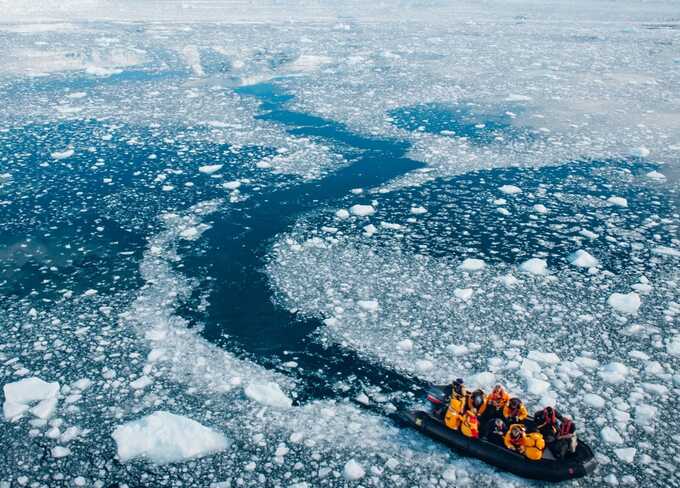
A diplomatic dispute has arisen over the “illegal” detention of a Ukrainian scientist, who has been accused by the Kremlin of undermining Russia’s industrial krill trawling efforts in Antarctica.
Leonid Pshenichnov, 70, a Ukrainian biologist and Antarctica expert, has a decades-long record of scientific research and contributions to conservation, including support for marine protected areas in the region.
He was preparing to travel to Australia to attend a conference on protecting Antarctic marine life when he was arrested in the Russian-occupied territory of Crimea. He has since been accused by the Russians of high treason.
The Guardian has seen a document said to be the one provided by Russian authorities to Pshenichnov’s lawyers, outlining the allegations against him.
A translation of the document describes the scientist as a “citizen of the Russian Federation” who “defected to the enemy’s side” by assisting Ukraine’s delegation to the Antarctic conference, organized by the Commission for the Conservation of Antarctic Marine Living Resources (CCAMLR) in Hobart, Tasmania.
It accuses Pshenichnov of using his research to undermine Russia’s krill fishing in Antarctica by encouraging, via a Ukrainian proposal, the restriction of krill harvesting. Such proposals would harm the economic interests of Russia, the arrest document said.
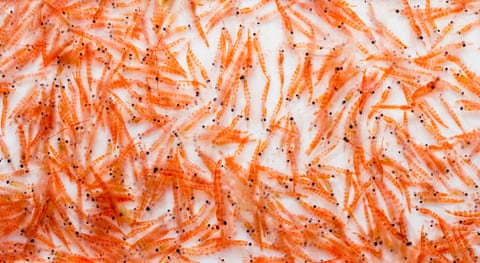
CCAMLR, an international commission with 27 members established by convention in 1982, is about to discuss whether to create a marine protected area (MPA) around the Antarctic Peninsula to protect krill, the small crustacean that is one of the foundations of the food chain in the Southern Ocean.
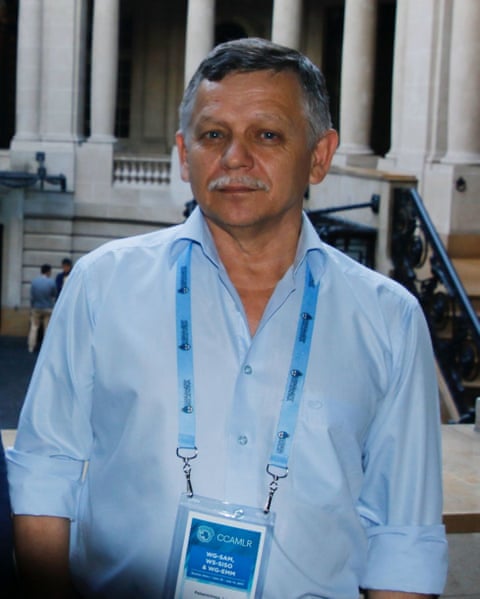
Leonid Pshenichnov ‘had the misfortune of living in Kerch, Crimea, when it was captured by Russian troops’, a colleague said. Photograph: NANC
China and Russia, which have blocked the creation of MPAs in the region for decades, have been accused by analysts and conservationists of working together to loosen restrictions on fishing for krill. This year, for the first time, the amount of krill fished in Antarctic waters reached what scientists believe is an unsustainable level.
Australia has said it is “gravely concerned” by Russia’s detention of the scientist, while the UK called on Moscow to release “all arbitrarily detained civilians.”
Fellow researchers stated that Pshenichnov was a scientist of “outstanding” caliber and a “very kind” person. His detention was “unspeakable,” they said, adding that given his health problems, they were “all dreadfully worried.”
On the opening day of the conference, Ukraine’s ambassador to Australia, Vasyl Myroshnychenko, told delegates of his “profound shock” upon learning of the “illegal incarceration” of the scientist and called for other parties of the commission – whose members include Australia, the United States, Japan, Russia, and China – to condemn Moscow’s actions.
“Is it acceptable for the CCAMLR community to stand by while a Ukrainian biologist, who has devoted his life to the study, conservation, and rational use of Antarctic marine living resources, faces persecution and imprisonment by Russia?” he said.
Pshenichnov has conducted research for CCAMLR, part of the Antarctic treaty system, since 1983 and has participated in its activities as a Ukrainian scientist since 1994.
Myroshnychenko told the Guardian: “He’s a scientist, not an official, not a politician. These are trumped-up charges, his detention is groundless.”
The charges of high treason against Pshenichnov were directly related to his scientific contributions at CCAMLR, the ambassador said. Russia’s president, Vladimir Putin, raised the maximum sentence for treason from 20 years to life imprisonment in 2023.
“He was forced to take up a Russian passport while staying with family in temporarily occupied Crimea and has been arbitrarily charged with ‘threatening the security of the Russian Federation’,” said Myroshnychenko.
The ambassador said his deputy was collecting signatures from countries for a letter to Moscow demanding his release.
Pshenichnov lives in Kerch, Crimea, with his wife and one of his two sons, according to a fellow scientist who called his detention “unspeakable.”
Dr. Evgeny A Pakhomov, a biological oceanographer at the University of British Columbia, Canada, who has published two scientific papers with Pshenichnov and has known him for 30 years, said: “He is a very kind person…he has kneecap problems and needs regular injections. We are all dreadfully worried.”
Valerii Paramonov, an oceanographer, described Pshenichnov as an outstanding scientist whose contribution to CCAMLR was “difficult to overestimate.”
Paramonov added: “His only problem was that he had the misfortune of living in Kerch, Crimea, when it was captured by Russian troops.”
Dan Crockett, executive director of the conservation charity Blue Marine Foundation, said Pshenichnov had been imprisoned for “nothing more than providing scientific evidence about the impact of krill fishing on the Antarctic ecosystem.”
He called on CCAMLR countries to put pressure on Russia for his release and to “honor his research” by restricting krill trawling.
The Russian embassy was contacted for comment.
Deputy Editor