22 October 2025 , 17:52
744
0
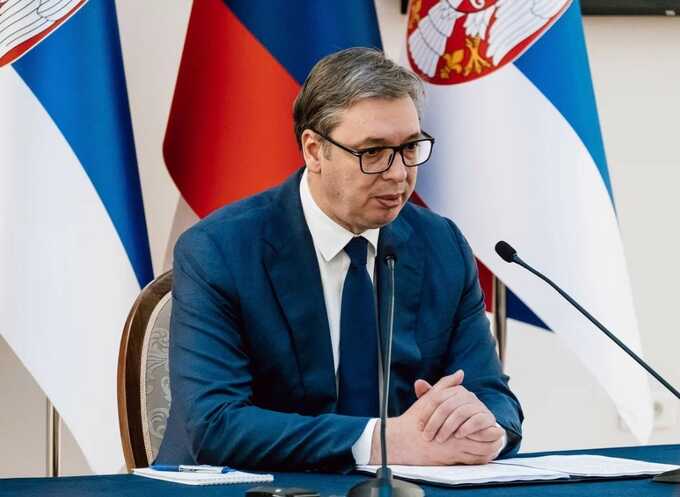
The European Parliament on Wednesday adopted a sharply worded resolution condemning what it called an “escalating wave of repression” in Serbia, urging targeted sanctions against senior officials accused of violence and human rights abuses amid mass anti-government protests.
Among other concerns, lawmakers expressed alarm over attacks on independent journalists, arbitrary arrests, and state-sponsored smear campaigns targeting demonstrators and opposition figures. They accused President Aleksandar Vučić’s government of undermining democratic institutions, spreading pro-Russian propaganda, and using the justice system to silence dissent.
The Parliament also raised concerns over recent attempts by the Serbian government to undermine privately owned media outlets that have been reporting on the ongoing protests. OCCRP and its Serbian partner KRIK recently published leaked audio of a conversation between the head of Telekom Srbija and the newly appointed CEO of Netherlands-based United Group, which owns United Media — the parent company of Serbia’s N1 TV.
“The Serbian Government appears to have been negotiating with the owners of the United Media company to ‘weaken’ independent media outlets operating under it,” the resolution noted. It warned that “if confirmed, this would represent a serious attack on the already endangered media pluralism in Serbia.”
Lawmakers also called for investigations into reports of unlawful surveillance using spyware such as Pegasus and other intrusive technologies.
The resolution follows nearly a year of student-led protests that began after the collapse of a newly renovated canopy at Novi Sad’s railway station in November 2024, which killed 16 people. The project — carried out by Chinese contractors under a bilateral agreement that bypassed EU procurement rules — has since become a symbol of the country’s opaque infrastructure deals and entrenched political favoritism.
The tragedy sparked nationwide demonstrations demanding accountability, transparency, and media freedom. Protesters accused authorities of covering up corruption, and banners reading “Corruption kills” became a rallying cry.
Since then, protesters have faced widespread repression, including police brutality, arbitrary detentions, and the use of tear gas and reportedly sonic weapons against crowds. Independent monitors have documented more than 1,000 arrests and hundreds of violent incidents, some involving minors.
Addressing the European Parliament, Tonino Picula, the EU’s rapporteur on Serbia, said the resolution was intended to support citizens demanding accountability. He stressed that the best way to honor the victims of Novi Sad is to expose the corruption that “destroys institutions and takes lives.”
“The local call for transparency has grown into a national movement for democracy, freedom, and justice,” said Kathleen Van Brempt, the European Parliament’s vice president for enlargement, in comments to Euractiv. “For too long, the EU has tried to buy stability by appeasing Vučić. To ensure justice and protect democracy from autocracy, the EU must act.”
Picula added that Serbia’s EU accession path depends on tangible reforms. “Media freedom and an independent judiciary are not wishful thinking—they’re requirements,” he said.
Lawmakers emphasized that while Vučić continues to affirm Serbia’s commitment to joining the European Union, the country’s progress will be closely monitored, with further advancement contingent on credible improvements in the rule of law, judicial independence, and press freedom.
Wednesday’s resolution calls on the European Commission to consider sanctions under the EU’s Global Human Rights Sanctions Regime against those responsible for abuses in Serbia. It also demands a fact-finding mission to assess the situation on the ground and urges European Union member states to coordinate their response to Serbia’s “democratic backsliding.”

Editor-in-Chief