18 October 2025 , 21:23
791
0
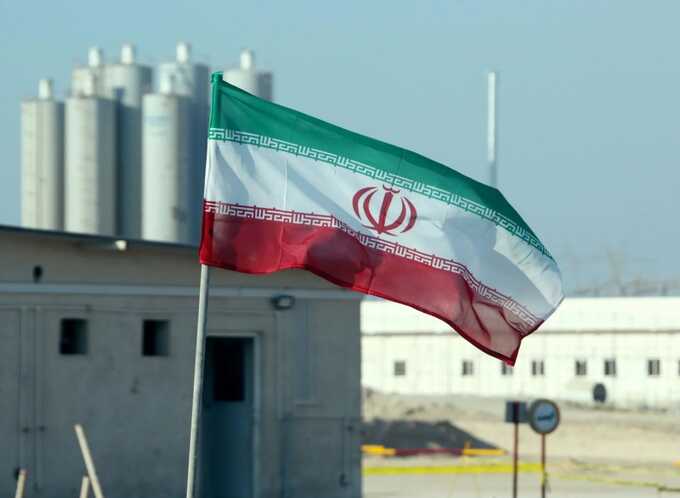
An international agreement with Iran intended to keep the world safe from the spread of nuclear weapons has officially ended, as Tehran has announced the termination of the decade-old deal.
Iran announced on Saturday that it is no longer bound by the 2015 agreement, officially known as the Joint Comprehensive Plan of Action (JCPOA), under which international sanctions were lifted in exchange for limitations on Tehran’s nuclear program.
From now on “all of the provisions [of the 2015 deal], including the restrictions on the Iranian nuclear program and the related mechanisms are considered terminated,” Iran’s foreign ministry said in a statement.
However, it added that the country “firmly expresses its commitment to diplomacy.”
Signed in Vienna by Iran, China, Britain, France, Germany, Russia, and the US, the agreement was hoped to end the years-long diplomatic standoff and mark the beginning of a new era in relations between Iran and the West.
While the agreement officially expires on Saturday, it has been in disarray for years.
In 2018, in his first term as president, Donald Trump upset his European allies by unilaterally withdrawing the US from the deal and reinstating sanctions. He disliked the pact, signed by one of his predecessors, Barack Obama, and was discouraged from diplomacy by Iran’s arch-enemy, Israel.
As a result of the US withdrawal, Tehran began intensifying its nuclear program.
European-led talks to revive the agreement have failed, and this summer’s bombing raids on Iran by Israel and the US left hopes for a revival at a historic low.
Following that 12-day war in June, Iran’s parliament passed a bill to refuse cooperation with the International Atomic Energy Agency (IAEA), the UN’s nuclear inspectorate.
This led signatories Britain, Germany, and France to trigger the so-called “snapback” process, leading to the reimposition of UN sanctions. The snapback provision allows for the swift and automatic reimposition of all UN sanctions that were lifted under the deal if Iran were to significantly violate its nuclear commitments.
These snapback sanctions effectively formalized “termination day,” which was set for 18 October, exactly 10 years after the adoption of UN Security Council Resolution 2231.
Last month, when the snapback sanctions went into effect, the foreign ministers of Britain, France, and Germany said in a joint statement they would continue to seek “a new diplomatic solution to ensure Iran never gets a nuclear weapon.”
The EU’s top diplomat, Kaja Kallas, stated that the sanctions “must not be the end of diplomacy” and that “a sustainable solution to the Iranian nuclear issue can only be achieved through negotiations.”
On Monday, Trump stated that he wanted a peace deal with Iran, while Tehran has repeatedly expressed its openness to diplomacy with the US, provided that Washington offers guarantees against military action during any potential talks.
Nevertheless, relations between the West and Iran remain strained. Washington had already imposed significant sanctions, including efforts to force all countries to shun Iranian oil. Several rounds of Omani-brokered talks this year between Tehran and Washington failed to reach an agreement.
Iran’s top diplomat, Abbas Araghchi, said last week that Tehran sees “no reason to negotiate” with European powers, given that they had triggered the snapback mechanism.
Western governments and Israel have long accused Iran of seeking to acquire nuclear weapons, a claim Tehran denies, stating its program is focused on energy and civil purposes.
Iran is expected to mark termination day with a statement later on Saturday at the UN in New York.

Editor-in-Chief